Clinical Data Management Career for Freshers: A Guide for Pharmacy Grads

Clinical Data Manager (CDM) is an excellent career for freshers with a BPharm or MPharm degree. It involves managing clinical trial data, ensuring its accuracy, and preparing it for analysis. A successful clinical data management career for freshers requires practical skills in EDC software, CDISC standards, and data validation.
If you're a BPharm or MPharm graduate tired of facing rejection in campus placements, this guide is for you. A clinical data management career for freshers is a powerful option you might be overlooking, but over 90% of applicants fail the interview. Why? Because they show up with a degree, but no job-ready skills.
Companies are not looking for someone who can recite definitions from a textbook. They need someone who can manage data on day one. This isn't just another job; it's a high-demand, stable career in the backbone of clinical research.
Build These Skills Now
Programs from ZANE ProEd Academy that directly address the skill gaps discussed above.
Let’s break down what recruiters actually want and how you can stop getting rejected and start getting hired for high-paying Clinical Data Manager (CDM) roles.
What does a Clinical Data Manager do?
A Clinical Data Manager (CDM) is responsible for the quality and integrity of data from clinical trials. Think of them as the guardians of the data. Their work ensures that the information used to approve new medicines is accurate, reliable, and complete. This is a critical role regulated by international standards. For more on guidelines, you can refer to official sources like ICH.org.
The clinical data manager job description includes several key tasks:
- Data Management Plan (DMP): Creating a master plan that outlines how data will be collected, reviewed, and managed for a specific clinical trial.
- Case Report Form (CRF) Design: Designing the forms (now mostly electronic) where patient data is entered at hospitals and clinics.
- Database Setup: Working with developers to build and test the clinical database where all trial data will be stored.
- Data Validation: Writing and running checks to find errors or inconsistencies in the data. For example, checking if a patient's age is entered as '500' instead of '50'.
- Query Management: Raising questions (queries) to the hospital staff to clarify any data issues and tracking them until they are resolved.
- Database Lock: Finalizing and 'locking' the database after all data is clean, so it can be sent for statistical analysis.
Essentially, a CDM ensures that the data story told by a clinical trial is true and trustworthy.
What is the salary of a CDM in India?
The CDM salary in India is very competitive, especially for candidates with the right skills. Unlike some roles, salary in CDM grows quickly as you gain experience with different tools and trial phases. Recruiters value practical skills over just a degree certificate.
Here is a typical salary range you can expect:
- Clinical Data Associate (Fresher): ₹3.5 Lakhs to ₹5.5 Lakhs per annum. This is the entry-level position.
- Clinical Data Manager (2-4 years experience): ₹6 Lakhs to ₹10 Lakhs per annum.
- Senior Clinical Data Manager (5+ years experience): ₹12 Lakhs to ₹20+ Lakhs per annum.
Your starting salary depends heavily on your practical knowledge of tools like Medidata Rave and your understanding of standards like CDISC. A certified candidate with project experience can command a higher starting package than a fresher with only theoretical knowledge.
How to start a career in clinical data management?
Starting a clinical data management career for freshers requires a strategic plan. Your BPharm or MPharm degree is the entry ticket, but it's not enough to win the game. Recruiters reject candidates who cannot talk about practical scenarios.
Here is a step-by-step plan to become job-ready:
- Strengthen Your Foundation: Go beyond your college syllabus. Master Good Clinical Practice (GCP) and understand the full drug development lifecycle. Know the regulations set by bodies like the CDSCO in India.
- Learn the Core Tools: This is non-negotiable. You must get hands-on experience with at least one Electronic Data Capture (EDC) system like Medidata Rave or Oracle Clinical. This is the biggest skill gap for most freshers.
- Understand Data Standards: Learn about CDISC, especially SDTM. You don't need to be an expert, but you must understand why it's used and how it works.
- Build a Portfolio: Work on sample projects. Create a dummy Data Management Plan, design a sample eCRF, and practice writing data validation checks. This gives you something real to show recruiters.
- Optimize Your Resume: Replace generic phrases like 'hard-working' with specific skills like 'Trained in Medidata Rave EDC' or 'Knowledge of CDISC SDTM standards'.
Many graduates wonder about different roles. While a CDM focuses on data integrity from the central office, a Clinical Research Associate (CRA) works at the hospital sites. You can learn more about the CRA career path to compare.
What is CDISC and why is it important for CDM?
CDISC stands for Clinical Data Interchange Standards Consortium. In simple terms, it is a set of global standards for collecting, formatting, and submitting clinical trial data. Think of it as a common language that everyone in clinical research agrees to use.
For a CDM, CDISC is crucial because regulatory bodies like the U.S. FDA require data to be submitted in this standard format. If the data isn't in the correct CDISC format, it can be rejected, costing companies millions of dollars and delaying new medicines.
One of the most important CDISC models for beginners to know is SDTM (Study Data Tabulation Model). SDTM provides a standard structure for organizing and presenting patient data. Understanding the basics of CDISC SDTM for beginners shows recruiters that you are serious about a career in data management and understand industry requirements.
What tools does a Clinical Data Manager use?
Modern clinical data management relies heavily on specialized software. Your proficiency in these tools is what makes you valuable to an employer. Simply listing 'Microsoft Office' on your resume is not enough.
Key tools and software categories in CDM include:
- Electronic Data Capture (EDC) Systems: This is the most important category. These are web-based systems used to collect clinical trial data. Examples include:
- Medidata Rave
- Oracle Clinical / Oracle InForm
- Veeva Vault EDC
- Medrio
- Clinical Trial Management Systems (CTMS): Used to manage the operational aspects of a clinical trial, like tracking patient enrollment and site monitoring.
- Safety Databases: Software like Argus and ArisG are used to manage drug safety data, which often overlaps with clinical data.
- Reporting and Visualization Tools: While not always managed by the CDM, understanding tools like SAS or basic SQL can be a huge advantage. Many data-driven roles, like a Clinical SAS Programmer, work with the data a CDM prepares.
Recruiters will almost always ask which EDC systems you have hands-on experience with. This is where most freshers get stuck.
The Skill Gap: What Your College Didn't Teach You
Your BPharm or MPharm program gave you a great foundation in pharmacology and human anatomy. But it likely taught you very little about data management plans, EDC software, or CDISC standards. Companies expect you to know this from day one.
This is the reality trigger: recruiters are not hiring you for what you learned, but for what you can *do*. They need people who can navigate Medidata Rave, understand the logic of a data validation plan, and speak the language of clinical data. This gap between academic theory and industry reality is why so many qualified graduates fail interviews.
Your Structured Pathway to a CDM Career
Don't let the skill gap discourage you. Here is a clear, actionable pathway to become a top candidate:
- Master the Theory (The Right Way): Focus on industry-relevant theory like GCP, 21 CFR Part 11, and the lifecycle of clinical data.
- Get Hands-On Software Training: This is the most critical step. You must get access to and learn an industry-standard EDC system. Simulated projects are the best way to do this.
- Learn CDISC Fundamentals: Dedicate time to understanding the 'why' and 'how' of SDTM. You don't need to be a programmer, just understand the structure.
- Build Your 'Recruiter-Ready' Project: Document your work on a simulated project. Create a portfolio that includes an eCRF design, sample queries, and a data validation plan.
- Network and Prepare: Connect with professionals on LinkedIn. Prepare for interviews by practicing answers to scenario-based questions, not just definitions. Learn more about our approach on our about page.
The Bridge from Theory to Job-Readiness
The fastest way to cross the skill gap is through simulation-based learning. Instead of just watching videos, you need a system where you work on realistic projects using the actual software and processes used by top pharma companies. This is how you build confidence and the practical evidence recruiters are looking for.
Build These Skills Now
Programs from ZANE ProEd Academy that directly address the skill gaps discussed above.
Why a System is Better Than a Certificate
At ZANE ProEd, we don't just sell courses; we build job-ready professionals through a system. Our programs like the Clinical Data Management and EDC Certification are designed around real-world simulations. You're not just learning about CDM; you're performing the job in a controlled environment.
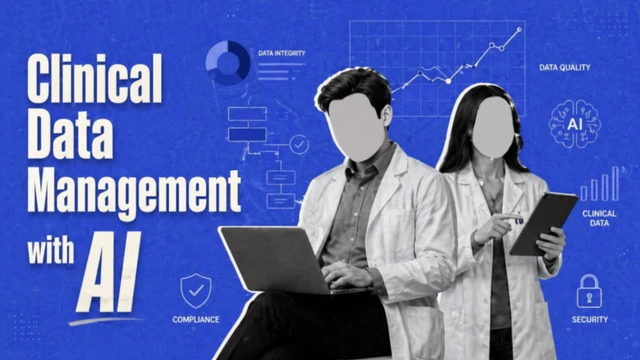
As the industry evolves, so do our systems. With the rise of artificial intelligence, our advanced Clinical Data Management with AI program prepares you for the future, teaching you how AI is used to automate data cleaning and identify trends faster. This isn't just about getting a job now; it's about building a future-proof career.
Are You Ready to Become a Clinical Data Manager?
Stop collecting certificates that don't lead to jobs. It's time to build the skills that get you hired. The demand for skilled CDMs is growing every day as clinical trials become more complex and data-driven.
Take the first step. See how your current skills compare to what top pharmaceutical companies are actually looking for. Check your job readiness and understand the specific gaps you need to fill to land your first high-paying CDM role.
Build These Skills Now
Programs from ZANE ProEd Academy that directly address the skill gaps discussed above.
Follow Zane ProEd on Google
Preferred SourceAdd our publication as a preferred source to get the latest clinical research guides, industry updates, and career intel directly in your Google Top Stories & AI Overviews.