Clinical Data Management Career for Freshers: A Guide for BDS & BAMS Graduates

Clinical Data Management career for freshers is an excellent path for BDS, BAMS, BHMS, and Nursing graduates. It involves managing clinical trial data to ensure it is accurate and complete. Key skills include using EDC systems, understanding CDISC standards, and performing data validation for regulatory submissions.
If you've recently finished your BDS, BAMS, BHMS, or Nursing degree, you might feel a bit lost. Your training was clinical, but maybe the traditional path doesn't feel right. This is a common feeling. You're looking for a way to use your medical knowledge in a high-growth industry. A clinical data management career for freshers is one of the best ways to do that.
This field is all about ensuring the data from clinical trials is perfect. Think of it as being the guardian of medical research data. Every new drug or treatment depends on high-quality data, and Clinical Data Managers (CDMs) make that happen.
Build These Skills Now
Programs from ZANE ProEd Academy that directly address the skill gaps discussed above.
This guide will give you a clear, step-by-step roadmap. We will cover what a CDM does, the salary you can expect, and exactly how you can start this exciting career, even with no prior experience in data management.
What does a Clinical Data Manager do?
A Clinical Data Manager (CDM) is responsible for all the data collected during a clinical trial. Their main job is to ensure data is accurate, reliable, and ready for analysis. They are the bridge between the clinical trial sites and the data analysts.
The clinical data manager job description includes several key tasks. You aren't just looking at spreadsheets; you are actively managing the data lifecycle from start to finish. Here’s what a typical day might involve:
- Designing the Database: Creating the Electronic Case Report Forms (eCRFs) where doctors and nurses enter patient data. This requires a good understanding of the clinical trial protocol.
- Data Entry Guidelines: Writing clear instructions for the clinical sites on how to enter data correctly into the Electronic Data Capture (EDC) system.
- Data Validation: Creating and running checks to find errors or inconsistencies in the data. For example, a check might flag if a patient's age is entered as 150 years.
- Query Management: When an error is found, the CDM sends a 'query' (a question) to the hospital or clinic to get it corrected. They track these queries until they are all resolved.
- Database Lock: Once all the data is clean and all queries are closed, the CDM 'locks' the database. No more changes can be made. This clean data is then sent to statisticians for analysis.
Essentially, a CDM ensures that the final data submitted to regulatory authorities like the FDA is trustworthy. Your medical background gives you a huge advantage because you understand the clinical context of the data you're managing.
What is the salary of a CDM in India?
Salary is a major factor when choosing a career. The good news is that clinical data management offers competitive pay, even for freshers. The demand for skilled CDMs is high in India's growing clinical research industry.
For a fresher starting in the field, the average CDM salary in India is typically between ₹3.5 Lakhs to ₹5.5 Lakhs per annum. This can vary based on the city (like Bangalore, Mumbai, or Hyderabad) and the size of the company (CRO, pharma, or biotech).
Your salary growth is impressive in this field. With 2-4 years of experience, you can expect your salary to increase to ₹6 Lakhs to ₹9 Lakhs. Senior CDMs or managers with 5+ years of experience can earn well over ₹12 Lakhs per year. Your skills in specific tools and your understanding of global standards directly impact your earning potential.
How to start a career in clinical data management?
Starting a clinical data management career for freshers requires a clear plan. Your degree in allied health or medicine is a great foundation, but you need to add specific technical skills. Here is a simple path to follow:
- Understand Clinical Research Basics: You need to know how clinical trials work. Learn about the different phases, key documents (like the protocol), and the importance of Good Clinical Practice (GCP) guidelines from authorities like the ICH.
- Learn Specific CDM Skills: This is the most important step. You must learn how to use EDC systems, design eCRFs, write data validation plans, and manage queries. This is not taught in college. A specialized clinical data management course is the best way to gain these practical skills.
- Get Certified: A certification from a reputable institution proves to employers that you have the job-ready skills they need. It shows you are serious about the career and have hands-on knowledge.
- Build Your Resume: Tailor your resume to highlight your new CDM skills. Mention any projects you completed during your training, the tools you learned, and your understanding of regulations.
It's also helpful to understand how CDM differs from other roles. In a CDM vs CRA career comparison, a Clinical Research Associate (CRA) travels to hospital sites to monitor trials, while a CDM is typically an office-based role focused purely on the data. If you prefer a more analytical, detail-oriented job, CDM is a perfect fit. You can learn more about the CRA role in our guide to becoming a Clinical Research Associate.
What is CDISC and why is it important for CDM?
CDISC stands for Clinical Data Interchange Standards Consortium. In simple terms, CDISC provides a standard format for collecting, organizing, and submitting clinical trial data around the world.
Imagine different companies using different languages to record patient data. It would be impossible for regulatory bodies to review and approve new drugs efficiently. CDISC creates one common 'language' that everyone must use. For anyone looking into CDISC SDTM for beginners, SDTM (Study Data Tabulation Model) is one of the most important CDISC standards. It defines how to structure the data that is submitted for analysis.
For a Clinical Data Manager, understanding CDISC is not optional—it's mandatory. Here’s why:
- Global Standard: Companies worldwide use CDISC standards to submit data to regulatory agencies like the FDA in the US and the EMA in Europe.
- Efficiency: It makes the data review process much faster and easier for everyone involved.
- Data Quality: Following a standard from the beginning of a trial ensures higher quality and more consistent data.
As a fresher, having knowledge of CDISC standards makes you a much more valuable candidate to employers.
What tools does a Clinical Data Manager use?
Clinical Data Management is a tech-driven field. Your ability to use industry-standard software is critical for getting a job. While your medical degree is your foundation, your software skills are what will get you hired.
The most important category of tools is Electronic Data Capture (EDC) systems. These are web-based applications used to collect clinical trial data from hospitals and clinics. Some of the most common EDC systems used in India and globally are:
- Medidata Rave: One of the most widely used EDC systems in the industry.
- Oracle Clinical / InForm: A powerful and popular suite of tools for data management.
- Veeva Vault EDC: A modern, cloud-based system that is gaining popularity quickly.
Besides EDC systems, CDMs may also use:
- SAS: A software used for data analysis and reporting, often to run data validation checks.
- Clinical Trial Management Systems (CTMS): Software used to manage the operational aspects of a clinical trial.
The Gap: What College Taught You vs. What Companies Need
Your BDS, BAMS, or Nursing degree gave you a strong understanding of human anatomy, physiology, and diseases. This is valuable. But companies hiring for CDM roles are looking for something more.
What your college taught you:
- Deep knowledge of medical science.
- Understanding of patient care and terminology.
- Discipline and a scientific mindset.
What employers actually expect:
- Hands-on skill in a major EDC system like Medidata Rave or Veeva.
- Knowledge of creating Data Management Plans (DMP) and Data Validation Plans (DVP).
- Practical understanding of CDISC standards, especially SDTM.
- Experience with the full data management lifecycle, from study start-up to database lock.
This gap is why many freshers struggle to get their first job. You have the theoretical knowledge but lack the practical, job-ready skills that companies demand from day one.
Your 5-Step Pathway to a CDM Career
Here is a structured, actionable plan to bridge that gap and land a job as a Clinical Data Manager.
Step 1: Master the Fundamentals of Clinical Research: Go beyond your college curriculum. Learn the drug development process, the phases of clinical trials, and ICH-GCP guidelines inside and out.
Step 2: Get Hands-On Training in an EDC System: You cannot learn this from a book. You need to work inside a real EDC environment. Practice designing eCRFs, entering data, and running validation checks.
Step 3: Learn to Manage the Entire Data Lifecycle: Understand every document and process, from writing a Data Management Plan to performing the final database lock. This end-to-end view is what separates a candidate from an employee.
Step 4: Understand Data Standards (CDISC): Learn the basic principles of CDISC and SDTM. You don't need to be an expert, but you must understand why it's used and how it impacts your work as a CDM.
Step 5: Work on Industry-Simulated Projects: The best way to learn is by doing. Work on a project that mimics a real clinical trial. This gives you valuable experience to talk about in interviews and put on your resume.
How to Gain Real-World Skills Companies Are Looking For
The biggest challenge is getting practical experience. How can you learn to use Medidata Rave if you don't have a job? How do you practice locking a database for a real trial? This is where simulation-based learning becomes critical. It's designed to give you the exact experience that employers are looking for, allowing you to practice real-world tasks in a controlled environment before you even step into your first interview.
Build These Skills Now
Programs from ZANE ProEd Academy that directly address the skill gaps discussed above.
At ZANE ProEd, we've built a system to turn your academic knowledge into job-ready expertise. Our Clinical Data Management & EDC Certification program is not just a course; it's a complete career transformation system. You will work on real-world case studies and master the entire CDM workflow, from eCRF design to database lock. You will gain practical skills in high-demand EDC systems, making you confident and prepared for any interview.
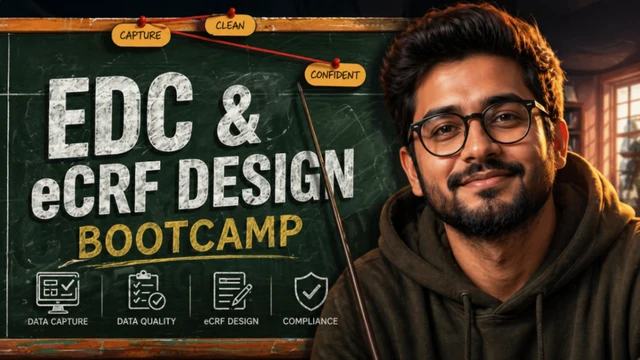
This program, along with specialized training like our EDC & eCRF Design Bootcamp, ensures you don't just learn the theory—you learn how to perform the job. It's the most direct path to transitioning from your medical or allied health degree into a successful data-focused career. While you are exploring data-centric roles, you might also be interested in other areas like drug safety, which you can learn about in our guide to pharmacovigilance jobs.
Are You Ready for a Career in Clinical Data Management?
A career in Clinical Data Management is a stable, rewarding, and intellectually stimulating path for any medical or allied health graduate. It allows you to stay connected to medical innovation while building a future-proof career in data.
If you're ready to move from feeling uncertain to feeling confident, it's time to build the skills that matter. See how your current knowledge compares to what top pharma and CRO companies are looking for. Check your job readiness and take the first step towards your new career.
Build These Skills Now
Programs from ZANE ProEd Academy that directly address the skill gaps discussed above.
Follow Zane ProEd on Google
Preferred SourceAdd our publication as a preferred source to get the latest clinical research guides, industry updates, and career intel directly in your Google Top Stories & AI Overviews.