Clinical Data Management Career for Freshers: A Step-by-Step Guide

Clinical Data Manager (CDM) is an excellent clinical data management career for freshers with BSc, BPharm, or IT backgrounds. The role involves managing clinical trial data to ensure it is accurate, complete, and ready for analysis. Entry-level positions focus on data entry, data cleaning, and running validation checks.
Are you a recent BSc, BCA, or BTech graduate feeling unsure about your next step? Maybe you're working in IT or a BPO and seeking a more stable, high-growth career. There is a hidden path in the healthcare industry that doesn't require a medical degree, and it's perfect for people with an eye for detail. This guide will show you everything you need to know about starting a clinical data management career for freshers.
This field is all about ensuring the data collected during clinical trials is perfect. It's a mix of science, technology, and process management. For freshers, it's a fantastic entry point into the world of clinical research, offering great stability and growth.
Build These Skills Now
Programs from ZANE ProEd Academy that directly address the skill gaps discussed above.
Let's break down how you can build a successful career in this exciting domain.
What does a Clinical Data Manager do?
A Clinical Data Manager (CDM) is like the guardian of clinical trial data. Their main job is to make sure all the data collected from patients is clean, accurate, and reliable. This is a critical role because this data is used to decide if a new drug is safe and effective.
The typical clinical data manager job description includes tasks like:
- Designing the clinical database and Case Report Forms (CRFs) where data is entered.
- Writing a Data Management Plan (DMP) that outlines all data handling procedures.
- Performing data validation, which means running checks to find errors or inconsistencies in the data.
- Managing queries, which is the process of asking clinical sites to clarify or correct data entries.
- Locking the database once all the data is clean and ready for the statistics team.
Many freshers wonder about the difference in a CDM vs CRA career comparison. A Clinical Research Associate (CRA) travels to hospitals to monitor trials, while a CDM is typically an office-based role focused entirely on the data. If you enjoy working with data and technology, CDM is a better fit. You can learn more about the CRA role in our guide to becoming a CRA.
What is the salary of a CDM in India?
The CDM salary in India is very competitive, especially for a career path accessible to non-medical freshers. Your salary will grow as you gain experience and specialized skills.
Here is a typical salary range you can expect:
- Entry-Level (0-2 years): As a fresher, you can expect a starting salary between ₹3.5 Lakhs to ₹5.5 Lakhs per annum.
- Mid-Level (2-5 years): With a few years of experience, your salary can increase to ₹6 Lakhs to ₹9 Lakhs per annum.
- Senior-Level (5+ years): Senior CDMs, Team Leads, and Managers can earn ₹12 Lakhs to ₹20+ Lakhs per annum.
Companies are always looking for skilled professionals who understand data standards and software. This high demand keeps salaries competitive and growing.
How to start a career in clinical data management?
Starting a career in clinical data management is a clear process. You don't need a medical background, but you do need to build specific skills that companies are looking for.
Here’s how to get started:
- Meet the Educational Requirements: A bachelor's degree in Life Sciences (BSc, BPharm), Computer Science (BCA, BTech), or a related field is the first step.
- Understand Clinical Research Basics: You must learn the fundamentals of clinical trials and Good Clinical Practice (GCP). These are the ethical and scientific quality standards. You can read about these guidelines on official sites like the ICH website.
- Learn the Essential Skills: This includes understanding database concepts, data cleaning processes, and data standards like CDISC.
- Get Certified: Taking a specialized clinical data management course is the most important step. A good course will teach you the practical software skills and industry processes that recruiters want to see.
What is CDISC and why is it important for CDM?
CDISC stands for Clinical Data Interchange Standards Consortium. Think of it as a 'common language' for clinical trial data. It provides a set of rules and standards for how to collect, organize, and submit data.
Why is this so important? When every company uses the same standard, it makes it much easier for regulatory bodies like the US FDA or India's CDSCO to review and approve new drugs. It saves time and reduces errors.
For beginners, the most important CDISC standard to learn is the Study Data Tabulation Model (SDTM). For CDISC SDTM for beginners, just know that it's the standard format for organizing the data you collect. Knowing SDTM is a non-negotiable skill for any serious CDM professional.
What tools does a Clinical Data Manager use?
Modern clinical data management relies heavily on specialized software. Knowing these tools is what gets you hired as a fresher. The most common category of software is called Electronic Data Capture (EDC).
Here are the key tools used in the industry:
- Medidata Rave: This is one of the most widely used EDC systems in the world. Many large pharmaceutical companies and CROs use it.
- Oracle Clinical: A powerful and long-standing platform for managing clinical trial data.
- Veeva Vault EDC: A modern, cloud-based platform that is quickly gaining popularity.
- SAS: While more common in statistical programming, CDMs often use SAS for data validation and reporting.
Having hands-on experience with at least one major EDC system like Medidata Rave is a huge advantage for your resume.
The Skill Gap: What Your College Degree Doesn't Teach You
Your BSc, BPharm, or BTech degree gives you a strong theoretical foundation. You understand biology, chemistry, or basic coding. However, it doesn't prepare you for the practical demands of a CDM job.
Recruiters reject freshers because they lack hands-on skills in EDC software, data validation programming, and knowledge of CDISC standards. Companies need people who can start working on a project with minimal training. This is the gap you need to fill.
Your Step-by-Step Pathway to a CDM Job
Here is a clear, actionable roadmap to land your first CDM role.
- Step 1: Master the Fundamentals. Go beyond your degree. Deeply understand the clinical trial process, GCP guidelines, and the role of a CDM.
- Step 2: Learn the Industry Standards. Focus on CDISC. You must be able to explain what SDTM is and why it's used.
- Step 3: Gain Hands-On Software Skills. This is the most critical step. You must learn how to use a major EDC system. Don't just read about it; get practical experience.
- Step 4: Work on Simulated Projects. Build a portfolio by working on projects that mimic real-world CDM tasks like creating CRFs, writing validation checks, and managing queries.
- Step 5: Build a Skill-Based CV. Update your resume to highlight your new software skills and project experience. This shows recruiters you are job-ready.
Bridging the Gap with Simulation-Based Learning
So, how do you get this practical experience without having a job? The old way was to hope a company would train you, but in today's AI-driven healthcare industry, employers expect you to be skilled from day one.
The solution is simulation-based learning. This approach lets you work on real-world case studies using the same software and processes as top pharma companies. You build real skills and confidence before your first interview.
Build These Skills Now
Programs from ZANE ProEd Academy that directly address the skill gaps discussed above.
The ZANE ProEd System for Career Success
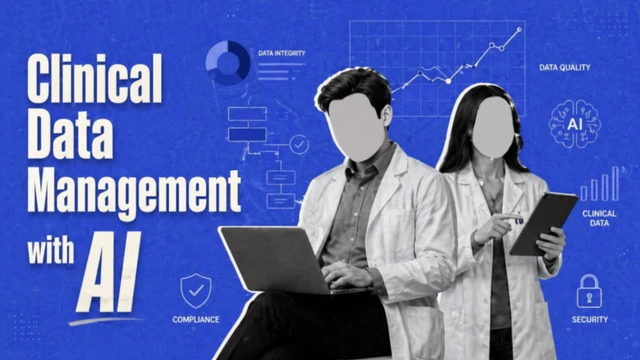
At ZANE ProEd, we don't just offer courses; we provide a system designed to make you job-ready. Our programs, like the Clinical Data Management with EDC Certification and the advanced Clinical Data Management with AI, are built on this principle.
You will work within our AI-powered simulated work environment, which mirrors the workflows of a top pharmaceutical company. This allows you to learn the entire system of data management—from study start-up to database lock—not just isolated software skills.
This system ensures you can confidently answer any technical interview question and prove to employers that you have the practical skills they need from the first day on the job.
Are You Ready for a Career in Clinical Data Management?
A career in clinical data management is an amazing opportunity for science and tech graduates. It offers stability, growth, and the chance to contribute to healthcare innovation.
The key is to move beyond theory and build the practical, in-demand skills that companies are hiring for right now. By focusing on hands-on experience with industry-standard tools and processes, you can successfully launch your career. Find out more about how we build careers on our about page.
Build These Skills Now
Programs from ZANE ProEd Academy that directly address the skill gaps discussed above.
Follow Zane ProEd on Google
Preferred SourceAdd our publication as a preferred source to get the latest clinical research guides, industry updates, and career intel directly in your Google Top Stories & AI Overviews.