Clinical Data Management Career for Freshers: Your Complete Step-by-Step Guide

Clinical Data Manager (CDM) A clinical data management career for freshers means you handle clinical trial data to make it accurate and ready for analysis. This job is ideal for medical graduates who want a structured, desk-based role with strong growth. You don’t need prior experience—just the right training and skills.
Feeling Lost After Your Medical Degree? Here’s Why Clinical Data Management Makes Sense
You spent years earning a BDS, BHMS, BAMS, or Nursing degree. But now you’re staring at a wall of confusion. The hospital route feels uncertain. Private practice needs investment. And you’re asking, “What else can I do with my medical knowledge?” That gap between college and job is real—and it’s massive.
Here’s the truth: the clinical research industry is booming in India, and it’s hungry for people like you. A clinical data management career for freshers is one of the most practical, high-stability paths you can take. You don’t need a license to practice. You don’t need to stand all day. You just need a sharp eye for detail and a system to learn.
Build These Skills Now
Programs from ZANE ProEd Academy that directly address the skill gaps discussed above.
This guide breaks down exactly what a CDM does, how much they earn, and how you can step into this role—even if you’re starting from zero.
What does a Clinical Data Manager do?
A Clinical Data Manager (CDM) is responsible for collecting, cleaning, and managing the data from clinical trials. This isn’t about treating patients directly. It’s about making sure every single data point—from a lab result to a patient’s symptom report—is correct, complete, and ready for regulators like the FDA or CDSCO.
Daily tasks of a CDM include:
- Reviewing electronic case report forms (eCRFs) for errors or missing data.
- Writing data validation rules to catch mistakes automatically.
- Coding medical terms using MedDRA and WHO Drug dictionaries.
- Working with clinical programmers to build the study database.
- Ensuring the data follows global standards like CDISC SDTM.
In simple words: you are the guardian of trial data quality. Without you, new drugs and devices can’t get approved.
What is the salary of a CDM in India?
Let’s talk numbers because they matter. The CDM salary in India varies by city and company, but here’s a realistic range for freshers:
- Fresher (0-1 year): ₹3.5 – 6 Lakhs per annum
- Mid-level (3-5 years): ₹6 – 12 Lakhs per annum
- Senior (8+ years): ₹12 – 20 Lakhs per annum or more
In cities like Pune, Hyderabad, Bengaluru, and Chennai, salaries tend to be higher. Global CROs like IQVIA, Parexel, and Syneos Health often offer better pay than smaller Indian companies. Compared to many other roles for medical graduates, CDM gives a quick return on your learning investment.
How to start a career in clinical data management?
You don’t need to go back to college for another degree. The fastest way is to build targeted skills through a clinical data management course that focuses on practical tools and real-world scenarios. Here’s a step-by-step roadmap:
- Learn the lifecycle: Understand how a clinical trial works from protocol to database lock. ICH guidelines are essential reading.
- Master CDISC standards: These are the rules for structuring clinical data. Employers expect you to know CDISC SDTM for beginners at the very least.
- Get hands-on with EDC tools: Electronic Data Capture systems like Medidata Rave, Oracle Clinical, or OpenClinica are used daily. Practice on these through simulations.
- Build data management skills: Learn to write query management protocols, do medical coding, and perform reconciliation of SAE data.
- Certify yourself: A recognized certification validates your skills and makes your resume stand out—especially since you lack direct experience.
We’ve also compared the CDM vs CRA career comparison in another article. If you like travel and site visits, CRA may suit you. If you prefer a stable office job with deep data focus, CDM is the winner.
What is CDISC and why is it important for CDM?
CDISC SDTM for beginners might sound intimidating, but it’s simply a standard structure for trial data—like a common language. CDISC stands for Clinical Data Interchange Standards Consortium. Its SDTM (Study Data Tabulation Model) organizes data into standard domains so that regulators and sponsors can review it easily.
Why it matters for your career: almost every sponsor and CRO now requires SDTM-compliant data submissions to the FDA or EMA. As a CDM, you won’t necessarily map data to SDTM yourself (that’s often done by statistical programmers), but you need to understand the domains and ensure the raw data can be mapped correctly. It’s a hard skill that directly impacts your employability.
What tools does a Clinical Data Manager use?
You’ll live inside software platforms. Here are the key ones:
- EDC Systems: Medidata Rave, Veeva Vault CDMS, Oracle Clinical, OpenClinica.
- SAS / SQL: Used to run data listings and checks. Knowing basic queries gives you an edge.
- Medical Coding Dictionaries: MedDRA (for adverse events) and WHO Drug (for medications).
- Microsoft Excel: Still used heavily for initial data reviews and tracking.
- Discrepancy Management Systems: Many EDCs have built-in modules, but external tools like JReview or Spotfire are also common.
Don’t panic—you don’t need to master all these before your first job. But showing familiarity with even one EDC system during an interview moves you to the top of the pile.
What Colleges Teach vs. What CDM Employers Actually Expect
The gap is wide, and it’s why many medical graduates feel stuck. Let’s break it down:
| What Your College Taught | What Employers Actually Want |
|---|---|
| Anatomy, physiology, pathology (theory-heavy) | Knowledge of ICH GCP guidelines and clinical trial phases |
| Patient care and diagnostics | Data cleaning, query management, and medical coding |
| Manual record-keeping | Proficiency with EDC tools and database software |
| Individual assignments | Cross-functional teamwork with biostatisticians and project managers |
Your medical background gives you a strong base in terminology and disease understanding. But the lack of practical exposure to data management tools and regulations creates a skill gap that stops you from getting hired. The good news? This gap is entirely bridgeable with the right focused training.
Your 5-Step Action Plan to Become a Clinical Data Manager
Ready to move from confusion to clarity? Follow this sequence and you’ll be job-ready in months, not years.
- Grasp the fundamentals: Spend one week reading the ICH E6(R2) guideline for Good Clinical Practice. It’s free on the ICH website. Also, go through the CDSCO website to understand Indian regulations.
- Get CDISC-trained: Find a beginner-friendly course or study material for CDISC SDTM and ADaM. Understand the core domains: DM, AE, LB, CM. Even a basic knowledge helps.
- Practice on an EDC: This is the most critical step. You can’t learn an EDC just by watching videos. You need to build a study, design eCRFs, and resolve queries—exactly like on the job. Look for simulation-based learning platforms (more on this below).
- Do a mock project: Create a sample clinical trial database from scratch. Include a data management plan, annotated CRF, query logs, and a clean dataset. This becomes your portfolio.
- Apply strategically: Target entry-level CDM or Junior Data Coordinator roles at CROs and pharma companies. LinkedIn, Naukri, and company career pages are your best channels.
Remember: employers know you’re a fresher. They don’t expect you to know everything. They do expect you to have done your homework and show initiative.
How to Bridge the Skill Gap Without Getting Stuck
Reading blogs and watching YouTube is not enough. You need a system that simulates a real CDM environment. That’s where simulation-based learning comes in. Instead of just learning theory, you work on realistic case studies, navigate EDC software, and handle the same challenges you’ll face on day one of your job.
This approach builds confidence and gives you concrete stories to tell in interviews. You can say, “I’ve built a study database on an EDC platform, managed 200+ queries, and ensured SDTM compliance.” That’s what hiring managers want to hear.
Build These Skills Now
Programs from ZANE ProEd Academy that directly address the skill gaps discussed above.
Building Clinical Data Management Skills the Right Way
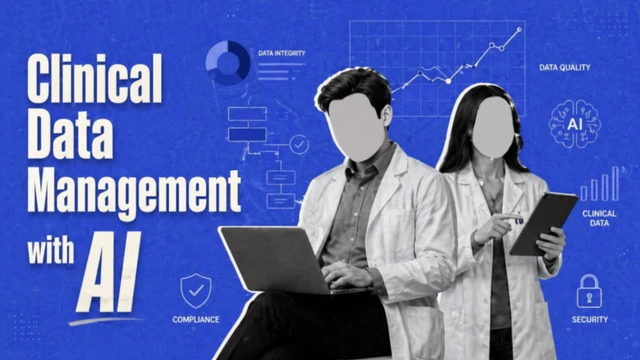
If you’re serious about starting your CDM career, the quickest path is through structured, industry-aligned programs. Our Clinical Data Management with AI and Clinical Data Management EDC Certification offerings focus on exactly what employers need. They don’t just teach you concepts—they put you inside a simulated CDM workflow.
You’ll work on live-like projects, master two in-demand EDC platforms, and build a portfolio that proves your ability. The programs also cover CDISC standards, medical coding, and the basics of AI in data management—all tailored for medical graduates like you. It’s a system designed to take you from “lost” to “hired.” Many of our alumni have successfully transitioned into CDM roles at top CROs.
For a deeper look at the realities of this field, read our article on CDM career myths vs. reality. And if you’re still exploring other roles, check out our guide on how to become a Clinical Research Associate in India for a side-by-side comparison.
Your Next Move: Check Your Readiness
You don’t have to figure this out alone. Take a moment to honestly assess where you stand. Can you explain CDISC SDTM to a colleague? Have you ever logged into an EDC system? If the answer is no, it’s time to build those skills.
See how your current knowledge compares to the industry standard. Visit our about page to understand how we’ve helped thousands of medical graduates like you. Then, take the first concrete step—because the clinical data management industry is waiting for detail-oriented, driven people exactly like you.
Build These Skills Now
Programs from ZANE ProEd Academy that directly address the skill gaps discussed above.
Follow Zane ProEd on Google
Preferred SourceAdd our publication as a preferred source to get the latest clinical research guides, industry updates, and career intel directly in your Google Top Stories & AI Overviews.