Clinical Data Management Career for Freshers: Complete Guide for Pharmacy Graduates

Clinical Data Management Career for Freshers is a strong option for pharmacy graduates. You can start as a Clinical Data Coordinator with a salary of ₹3-5 LPA in India. Learn EDC tools, CDISC SDTM, and data cleaning workflows to get hired without industry contacts.
Are you a BPharm or MPharm graduate looking for a clinical data management career for freshers? You are not alone. Many pharmacy graduates feel stuck because they have no industry connections. But here is the truth: companies care more about your skills with clinical data tools than your network.
Behind the scenes of every new drug, Clinical Data Managers (CDMs) clean, organize, and protect patient data. It is a stable, office-based job with clear growth. This playbook shows you exactly what to learn, which tools to master, and how to get job-ready without any inside contacts.
Build These Skills Now
Programs from ZANE ProEd Academy that directly address the skill gaps discussed above.
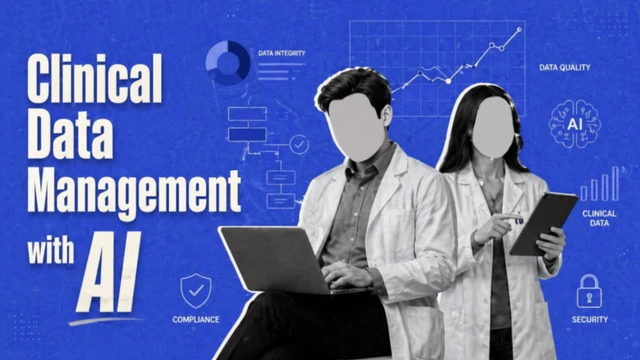
What does a Clinical Data Manager do in a Clinical Data Management Career for Freshers?
The clinical data manager job description is not about lab work. It is about data quality and compliance. A CDM works with clinical trial data from start to finish. Key daily tasks include:
- Review patient data from clinical trials for errors or missing values.
- Send queries to clinical sites to fix data issues.
- Ensure data follows ICH GCP and FDA rules.
- Lock databases after cleaning for final analysis.
- Work with EDC systems like Medidata Rave or Oracle InForm.
In simple terms, a CDM is the guardian of clinical data. Without clean data, no drug can get approved.
What is the salary of a CDM in India?
The CDM salary in India depends on your experience and tools you know. Here are typical ranges in 2024:
- Fresher Clinical Data Coordinator: ₹2.5 - 4 LPA
- Clinical Data Manager (2-4 years): ₹5 - 8 LPA
- Senior CDM (5-8 years): ₹9 - 15 LPA
- CDM Manager/Director: ₹18 - 30 LPA
Cities like Bangalore, Hyderabad, Pune, and Mumbai pay higher. Learning EDC tools like Medidata Rave can push your starting salary to the higher end.
How to start a career in clinical data management?
You do not need a PhD or years of experience. You need the right skills. Here is a high-level path:
- Learn clinical trial basics: phases, protocols, data flow.
- Get trained on one EDC tool (Medidata Rave is most demanded).
- Study CDISC SDTM and ADaM standards.
- Practice data cleaning on sample datasets.
- Build a portfolio: show a query log or data validation report.
- Apply for Clinical Data Coordinator or Data Management Associate roles.
A clinical data management course can speed up your learning, but only if it includes hands-on tool practice. Compared to a CRA career, CDM has less travel and more technical data work. If you prefer desk-based data analysis over site visits, CDM is a better fit. Read more about CRA career path to see the difference.
What is CDISC and why is it important for CDM?
CDISC stands for Clinical Data Interchange Standards Consortium. For beginners, think of CDISC SDTM as a universal language for clinical trial data. Every sponsor and regulator understands it. The FDA requires CDISC SDTM for drug submissions.
- SDTM = Study Data Tabulation Model, a format for organizing data.
- CDMs map raw data to SDTM domains like Demographics (DM), Adverse Events (AE), Lab (LB).
- Tools like Pinnacle 21 validate SDTM datasets before submission.
Learning CDISC SDTM for beginners is not optional. It is a core skill that separates trained CDMs from those who just know theory.
What tools does a Clinical Data Manager use?
Employers expect you to use at least one EDC confidently. Here are the main tools in a CDM's toolkit:
- EDC Systems: Medidata Rave, Oracle InForm, Veeva Vault CDMS, OpenClinica.
- Query Management: built into EDC, or separate tools like JReview.
- SAS: for data transformation and reporting.
- Pinnacle 21: for SDTM validation.
- Advanced Excel: for quick checks and reconciliation.
Most companies train you on internal SOPs, but they expect you to know the basics of an EDC before day one.
Why do pharmacy graduates struggle to get CDM jobs without experience?
This is the skill gap. Colleges teach you the science, but not the workflow.
- College: pharmacology, pharmaceutics, but barely touches clinical data tools.
- Employer: expects you to open an EDC, navigate case report forms, raise queries, understand SDTM mapping.
- College: focuses on theory and exams.
- Employer: wants you to handle real data issues from day one.
This gap is why many freshers fail interviews. The solution is not more theory. It is simulated practice.
What is the exact step-by-step roadmap to become a Clinical Data Manager?
- Build clinical research foundation: learn ICH GCP, trial phases, and data lifecycle. Free resources from WHO and ICH.
- Master one EDC tool: choose Medidata Rave (industry standard) and complete certification or a practice course.
- Learn CDISC SDTM: understand domains, variables, and how to map data. Practice with sample datasets.
- Simulate real projects: clean a messy dataset, create queries, and generate a data review report. This becomes your portfolio.
- Apply to entry-level roles: target CROs and pharma companies for Clinical Data Coordinator positions. Use your portfolio to show skills.
Follow these steps in order. Do not skip the simulation step. That is what builds real confidence.
How can I get practical CDM experience without a job?
Simulation-based learning is the bridge you need. Traditional courses teach concepts from slides. But you need to practice on actual tools. Simulation labs let you work on real EDC screens, create queries, map data to SDTM, and receive feedback. This builds confidence for interviews and day one on the job.
Build These Skills Now
Programs from ZANE ProEd Academy that directly address the skill gaps discussed above.
What is the ZANE ProEd system for CDM career preparation?
ZANE ProEd is not just a course provider. It is a system designed to make you job-ready. The system includes:
- Simulation-based labs with real EDC interfaces.
- AI-driven feedback on your data cleaning.
- Workflow training from trial startup to database lock.
- Courses like clinical-data-management-with-ai and clinical-data-management-edc-certification integrated into a step-by-step pathway.
This approach closes the skill gap by giving you the same tools and workflows used in industry. You practice, make mistakes, and learn in a safe environment.
Are you ready to check your CDM job readiness?
Compare your current skills against the employer checklist above. If you can navigate an EDC, create queries, and explain SDTM, you are ahead. If not, that is your next step. The clinical data management career for freshers is open, but you must bring the right tools to the table. No more guessing. Start building your system today.
Build These Skills Now
Programs from ZANE ProEd Academy that directly address the skill gaps discussed above.
Follow Zane ProEd on Google
Preferred SourceAdd our publication as a preferred source to get the latest clinical research guides, industry updates, and career intel directly in your Google Top Stories & AI Overviews.