Clinical Operations Career Path India: Step-by-Step Guide for Medical Graduates

Clinical Operations Executive: The clinical operations career path India involves managing day-to-day clinical trial activities, from site activation to data collection. It is a growing field for allied health graduates, offering roles in CROs and pharma companies with entry-level salaries from ₹3–6 LPA.
If you are a BDS, BHMS, BAMS, or Nursing graduate in India, you have already proven your grit. Your degree took years of hard work. But now you sit in placement drives, watching your name get skipped again and again. You are not alone. Many allied health graduates face the same wall. The good news? The clinical operations career path India is wide open for people exactly like you.
Here is the truth: your degree is not the problem. The problem is that colleges teach you patient care, but the pharma and CRO industry wants trial management skills. This guide fixes that gap. We will show you exactly what clinical operations is, how much it pays, and how to get hired in 3–6 months—even if you have failed placements before.
Build These Skills Now
Programs from ZANE ProEd Academy that directly address the skill gaps discussed above.
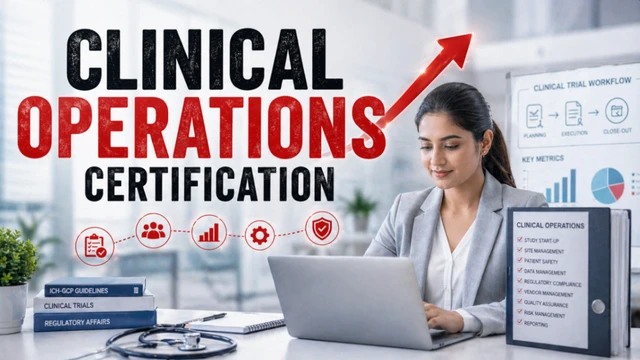
Clinical Operations Career Path India: What Does a Clinical Operations Executive Do?
A Clinical Operations Executive (also called Clinical Operations Associate or Coordinator) supports the planning and execution of clinical trials. They work in Contract Research Organizations (CROs), pharmaceutical companies, or hospitals. Their main job is to make sure trials run smoothly, on time, and within budget.
Here are the typical daily tasks from a clinical operations job description:
- Prepare and maintain trial documents like informed consent forms and case report forms.
- Coordinate with clinical trial sites, investigators, and ethics committees.
- Track patient recruitment and data collection progress.
- Ensure compliance with regulatory guidelines from ICH-GCP and CDSCO.
- Assist in site initiation, monitoring, and close-out visits.
- Manage essential documents in the Trial Master File (TMF).
In a CRO, you will often rotate across multiple studies. This gives you fast exposure to different therapeutic areas. That is why clinical operations in CRO is a great entry point for freshers.
What is the salary of a Clinical Operations Executive in India?
Salary is a big question. For freshers, the clinical operations executive salary in India typically ranges from ₹3–6 LPA. In metro cities like Mumbai, Bangalore, and Hyderabad, you may get the higher end. With 2–3 years of experience, you can move to ₹6–10 LPA as a Senior Executive or Assistant Manager.
Here is a quick breakdown:
- Entry-level (0–1 year): ₹2.5–4.5 LPA
- Executive (1–3 years): ₹4–7 LPA
- Senior Executive / Lead (3–5 years): ₹7–12 LPA
- Manager (5+ years): ₹12–20+ LPA
Salaries are higher in global CROs like IQVIA, Parexel, and Syneos Health. But you need the right skills to get in. A clinical operations manager career can be your long-term goal.
How to start a career in clinical operations?
Starting is simpler than you think. You do not need another 3-year degree. Follow these steps:
- Learn the basics of clinical trials: Understand phases I–IV, ICH-GCP guidelines, and key documents. The WHO provides free resources on clinical trial registries.
- Get certified: A focused clinical operations certification bridges your medical background to industry needs. Look for programs that simulate real CRO workflows, not just theory.
- Build a project portfolio: Show that you can create a trial master file, track recruitment metrics, or draft a site activation checklist. Use free tools like Excel and Google Sheets to demonstrate your skills.
- Target the right job titles: Apply for Clinical Operations Coordinator, Clinical Trial Assistant, or Site Activation Specialist roles. Check our guide on clinical trial coordinator jobs for freshers.
- Network with CRO professionals: Use LinkedIn to connect with recruiters and clinical operations managers. Ask for informational interviews.
Many freshers skip steps 2 and 3, then wonder why they get rejected. Employers do not have time to train you from zero. They want proof you can handle the work.
What is the difference between clinical operations and clinical research?
This is a common confusion. Clinical research is the broad field of studying new drugs and devices in humans. Clinical operations is the engine that makes that research happen. Think of clinical research as the 'why' and clinical operations as the 'how'.
Here is a simple clinical operations vs clinical research breakdown:
- Clinical Research: Focuses on scientific design, data analysis, and medical writing. Roles include Clinical Research Associate (CRA), Biostatistician, and Medical Writer.
- Clinical Operations: Focuses on project management, site coordination, and logistics. Roles include Clinical Operations Executive, Clinical Trial Coordinator, and Site Activation Specialist.
If you want to become a CRA later, check our detailed CRA career guide. But for now, clinical operations is often easier to enter for allied health graduates because it values organizational skills and communication—skills you already have from patient care.
What skills are needed for clinical operations roles?
Recruiters look for a mix of soft and technical skills. Here are the top ones:
- Regulatory knowledge: ICH-GCP, Schedule Y, and CDSCO rules. These are the backbone of trial conduct.
- Document management: Experience with TMF, eTMF systems like Veeva Vault.
- Communication: Clear written and verbal English for emails, calls, and site visits.
- Time management: Juggling multiple studies and deadlines.
- Basic data tools: Excel, Google Sheets, and maybe clinical trial management systems (CTMS).
- Problem-solving: When a site is behind on recruitment, you need to find solutions fast.
Colleges rarely teach these. That is why many medical graduates struggle. But these skills can be learned in 8–12 weeks with the right simulation-based training.
Why do BDS, BHMS, BAMS, and Nursing graduates fail clinical operations interviews?
Let us be honest. Your medical degree is valuable, but it does not automatically prepare you for clinical operations. Here is the gap:
- Colleges teach patient care. You learn anatomy, pharmacology, and bedside manners. You do not learn how to manage a trial master file or track recruitment metrics.
- Employers expect trial management skills. They want someone who can handle regulatory documents, coordinate with sites, and use CTMS. If you cannot speak this language, you get rejected.
- Placement drives are generic. Many companies come for sales or production roles, not clinical operations. You may not even see the right opportunities.
The fix is not to get another degree. It is to close the skill gap quickly with practical, simulation-based learning.
Your step-by-step roadmap to a clinical operations job in India
Here is a 5-step plan you can start today:
- Assess your current skills. List what you know about clinical trials, documents, and regulations. Be honest.
- Complete a simulation-based clinical operations certification. This should take 4–6 weeks and include real-world scenarios like site activation, TMF management, and recruitment tracking.
- Build a mini portfolio. Create sample documents: a site initiation checklist, a recruitment tracker in Excel, and a TMF index. Share these with recruiters.
- Apply to 20–30 targeted roles. Use job portals with keywords like 'clinical operations executive', 'clinical trial assistant', and 'site activation specialist'. Tailor your resume for each.
- Prepare for interviews. Practice common questions: 'How do you handle a site that is behind on enrollment?' 'What is the difference between ICH-GCP and Schedule Y?'
This roadmap works. Many of our learners have landed jobs in 3–6 months by following it.
How simulation-based learning bridges the clinical operations skill gap
Reading theory is not enough. You need to practice the actual work. Simulation-based learning places you in a virtual CRO environment. You handle mock trials, create documents, and solve real problems. This is exactly what employers want to see.
Build These Skills Now
Programs from ZANE ProEd Academy that directly address the skill gaps discussed above.
ZANE ProEd's clinical operations system: more than a course
At ZANE ProEd, we do not just sell courses. We build a system to get you job-ready. Two of our most popular pathways are:
- Clinical Operations Certification: Covers trial phases, ICH-GCP, TMF, and site coordination. You work on simulated trials and build a portfolio.
- Clinical Trial Site Activation Fast-Track: Focuses on the critical first step of clinical operations—site activation. Learn how to select sites, handle ethics submissions, and get trials started quickly.
Both programs include mentor support, resume reviews, and interview prep. They are designed for BDS, BHMS, BAMS, and Nursing graduates who want to enter clinical operations without another degree.
Check your job readiness. See how your skills compare to what employers expect. It takes 2 minutes.
Start your clinical operations career path India today. You already have the medical foundation. Now add the operational skills that recruiters demand.
Build These Skills Now
Programs from ZANE ProEd Academy that directly address the skill gaps discussed above.
Follow Zane ProEd on Google
Preferred SourceAdd our publication as a preferred source to get the latest clinical research guides, industry updates, and career intel directly in your Google Top Stories & AI Overviews.