Your Complete Guide to the Clinical Operations Career Path in India

Clinical Operations Executive: The clinical operations career path in India typically starts with roles like Clinical Trial Coordinator or in-house CRA. With experience, you can progress to a field-based Clinical Research Associate (CRA), then to a Senior CRA, Clinical Project Manager, and eventually a Clinical Operations Manager or Director.
Starting your clinical operations career path India can feel confusing, especially when you're a Life Science graduate with only textbook knowledge. Recruiters in top CROs and pharma companies have revealed a key secret: they don't just look at your degree. They look for practical, job-ready skills.
You have the theoretical foundation from your BSc or MSc in Biotechnology, Microbiology, or Biochemistry. But the gap between your college lab and a real clinical trial site is massive. This guide gives you the step-by-step roadmap that recruiters wish freshers knew.
Build These Skills Now
Programs from ZANE ProEd Academy that directly address the skill gaps discussed above.
We will break down the exact roles, salaries, and skills you need to not just get a job, but to build a successful, long-term career in the competitive Indian clinical operations market.
What does a Clinical Operations Executive do?
A Clinical Operations Executive is the engine of a clinical trial. Their job is to make sure the trial runs smoothly, on time, and according to the rules. This is a hands-on role that connects the sponsor (the pharma company) with the hospital sites where the trial happens.
The clinical operations job description usually includes these daily tasks:
- Site Management: Assisting in the selection, initiation, monitoring, and close-out of clinical trial sites (hospitals/clinics).
- Documentation: Collecting, reviewing, and managing essential documents in the Trial Master File (TMF). This is critical for audits.
- Compliance: Ensuring the trial follows the protocol and guidelines like ICH-GCP. You can learn more about these guidelines directly from the source at ICH.org.
- Coordination: Working with Clinical Research Associates (CRAs), investigators, and other teams to solve problems and keep the trial on track.
- Reporting: Tracking trial progress, site performance, and patient recruitment, then reporting the data to the project manager.
Essentially, you are responsible for the day-to-day execution of the clinical trial plan at the ground level. It's a role with high responsibility and a great entry point into the industry.
What is the salary of a Clinical Operations Executive in India?
Salary is a major factor for any fresher. The clinical operations executive salary in India is competitive and grows quickly with experience. Here’s a realistic breakdown:
- Fresher / Entry-Level (0-2 years): As a Clinical Trial Coordinator (CTC) or Trainee, you can expect a starting salary between ₹2.5 Lakhs to ₹4.5 Lakhs per annum. This depends on the company (CRO vs. Pharma) and city.
- Mid-Level (2-5 years): As a Clinical Research Associate (CRA) or a Clinical Operations Executive with some experience, your salary can increase to ₹5 Lakhs to ₹9 Lakhs per annum.
- Senior-Level (5-8+ years): Moving into a clinical operations manager career path, salaries see a significant jump. A Clinical Project Manager or Operations Manager can earn ₹12 Lakhs to ₹20 Lakhs per annum or more.
Working in a large Contract Research Organization (CRO) often offers a structured salary path and faster growth opportunities compared to smaller companies. Your performance, communication skills, and knowledge of regulations directly impact how fast you climb this ladder.
How to start a career in clinical operations?
For a Life Science graduate, the path isn't always direct, but it is very achievable. You need to bridge the gap between your academic knowledge and the industry's practical needs. Here’s how to start:
- Master the Foundation: Your first step is to learn ICH-GCP (Good Clinical Practice) guidelines. These are the rules for all clinical trials. You must know them inside and out. Indian regulations are managed by the CDSCO, which you can read about at cdsco.gov.in.
- Gain Practical Skills: This is the most important step. Since you don't have on-the-job experience, you need to find ways to gain it. This is where simulation-based training on tasks like TMF management, site feasibility checks, and budget creation becomes critical.
- Target Entry-Level Roles: Don't just apply for 'Clinical Operations Executive'. Look for roles like 'Clinical Trial Coordinator (CTC)', 'Clinical Trial Assistant (CTA)', or 'In-house CRA'. These are the real entry points. For more details, see our guide on CTC jobs for freshers.
- Build a Skill-Based CV: Your CV should scream 'job-ready'. Instead of listing your college projects, list the practical skills you've acquired: 'Proficient in Trial Master File (TMF) index structure', 'Trained on Site Selection and Initiation Processes', etc.
What is the difference between clinical operations and clinical research?
This is a common point of confusion. Think of it this way: 'Clinical Research' is the entire field, while 'Clinical Operations' is a specific, vital part of that field.
- Clinical Research: This is a broad umbrella term. It includes everything from discovering a new drug molecule, pre-clinical testing on animals, all phases of clinical trials on humans, data analysis, and getting the drug approved. It includes roles in clinical data management, regulatory affairs, and medical writing.
- Clinical Operations: This is the 'execution' team within clinical research. Its focus is purely on the planning, setup, and running of clinical trials. If clinical research is the entire movie production, clinical operations is the director, crew, and on-set team making sure the movie gets filmed correctly.
So, when you choose a clinical operations career path in India, you are choosing the active, management-focused part of bringing a new medicine to the world. It’s about logistics, project management, and people management.
What skills are needed for clinical operations roles?
Recruiters look for a specific mix of hard and soft skills. Your degree gives you the science background, but these are the skills that will get you hired and promoted:
Hard Skills (Things you can learn)
- ICH-GCP Knowledge: Non-negotiable. You must understand the principles of ethical and scientific quality in clinical trials.
- Regulatory Awareness: Basic knowledge of Indian (CDSCO) and global (e.g., FDA, EMA) regulations.
- TMF Management: Understanding how to organize and maintain the Trial Master File.
- Clinical Trial Phases: A clear understanding of what happens in Phase I, II, III, and IV.
- Software Familiarity: Basic knowledge of what EDC (Electronic Data Capture) and CTMS (Clinical Trial Management System) are used for.
Soft Skills (How you work)
- Attention to Detail: One small error in documentation can cause big problems.
- Communication: You will be talking to doctors, nurses, and project managers. Clear and professional communication is key.
- Problem-Solving: Clinical trials never go perfectly. You need to be able to think on your feet and find solutions.
- Time Management: You will be juggling multiple tasks and deadlines at once.
The Skill Gap: College vs. Company
Your MSc in Biotechnology taught you about PCR and cell cultures. Recruiters need you to know how to review an Informed Consent Form (ICF) for GCP compliance. Your college taught you theory. A company needs you to execute tasks on day one. This gap is the single biggest reason freshers struggle to get hired in clinical operations.
Your Step-by-Step Career Roadmap
Here is a clear, actionable timeline to follow:
- Year 0 (Now): Master the Core. Focus on getting certified in ICH-GCP and clinical research fundamentals. Spend 2-3 months on this.
- Year 0-1: Get Your First Job. Target roles like Clinical Trial Coordinator (CTC) or a similar position in a CRO. Your goal is to get inside the industry and learn the processes.
- Year 1-3: Become a CRA. After proving yourself as a CTC, aim for a promotion or new job as a Clinical Research Associate (CRA). This role involves travel to hospital sites and is a major step up.
- Year 3-6: Senior CRA / Project Lead. Excel as a CRA. Take on more complex trials or mentor junior CRAs. This prepares you for management.
- Year 6+: Clinical Project/Operations Manager. Transition into a management role. Here, you will oversee entire trials, manage budgets, and lead teams. This is the goal of the clinical operations manager career track.
Bridging the Gap with Practical Experience
How do you get practical skills without a job? Traditional online courses give you certificates, but they don't make you job-ready. They teach you 'what' TMF is, but not 'how' to actually manage one during a busy trial.
The solution is simulation. By working on real-world case studies and projects in a simulated environment, you build the muscle memory for the job. You learn to handle the same documents, solve the same problems, and use the same logic that a Clinical Operations Executive uses every day.
Build These Skills Now
Programs from ZANE ProEd Academy that directly address the skill gaps discussed above.
A System, Not Just a Course
At ZANE ProEd, our approach is designed to make you job-ready from Day 1. Our programs like the Clinical Operations Certification are not just video lectures. They are end-to-end systems that immerse you in real-world scenarios.
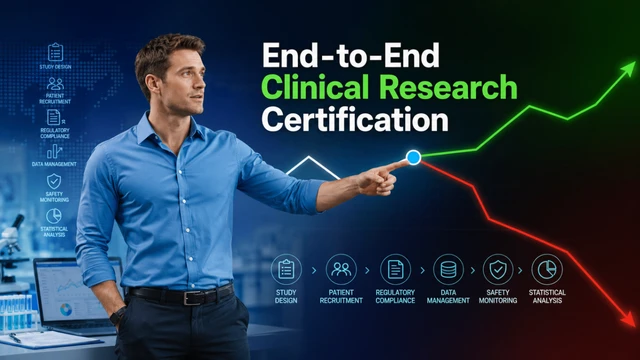
The End-to-End Clinical Research Certification goes even broader, giving you a full view of the industry landscape. You don't just 'learn about' clinical operations; you perform the tasks. This is what gives you the confidence to ace interviews and the competence to excel from your first week on the job.
This system is built by industry experts who know exactly what hiring managers are looking for. We focus on building the practical skills that bridge the gap between your degree and your first high-paying job in clinical operations.
Are You Ready for a Real Clinical Operations Role?
Reading about a career is one thing. Knowing if you have the skills for it is another. The Indian job market is competitive, and being prepared is your biggest advantage.
See how your current skills compare to what top CROs and pharma companies demand. Take the first step on your new career path with clarity and confidence.
Build These Skills Now
Programs from ZANE ProEd Academy that directly address the skill gaps discussed above.
Follow Zane ProEd on Google
Preferred SourceAdd our publication as a preferred source to get the latest clinical research guides, industry updates, and career intel directly in your Google Top Stories & AI Overviews.