Clinical Operations Career Path India: How to Crack Interviews Confidently

Clinical Operations Career Path India: For pharmacy graduates, a clinical operations career in India starts as a Clinical Operations Executive, handling trial documentation, site coordination, and regulatory tasks. With 2-4 years, you can become a Senior Executive or Associate Manager, then Clinical Operations Manager. Strong growth exists in CROs and pharma companies.
If you’re a BPharm or MPharm graduate feeling nervous about interviews for clinical operations roles, you’re not alone. Many freshers have low confidence because they don’t know what recruiters actually expect. Understanding the clinical operations career path in India can change that.
As a recruiter, I see too many pharmacy graduates walk into interviews with only textbook knowledge. They miss practical know-how about clinical trial phases, ICH-GCP guidelines, and document management – the real needs of clinical operations jobs. That’s why they get rejected despite a good degree. This blog will give you an insider view of what employers look for and how to prepare.
Build These Skills Now
Programs from ZANE ProEd Academy that directly address the skill gaps discussed above.
What is the Clinical Operations Career Path in India?
The clinical operations career path in India typically begins with roles like Clinical Trial Assistant or Clinical Operations Executive. After gaining 2-3 years of experience, you can move to Senior Executive, then Associate Manager, Manager, and finally Head of Clinical Operations. This path is common in clinical operations in CRO, pharmaceutical companies, and biotech firms. Key responsibilities evolve from operational support to full project management, including budget handling and team leadership.
What does a Clinical Operations Executive do?
A Clinical Operations Executive (also called a Clinical Operations Coordinator or Associate) supports the day-to-day activities of a clinical trial. Your main job is to ensure that trials run smoothly, follow regulations, and stay on schedule. The clinical operations job description includes:
- Preparing and maintaining trial documents like the Master Trial File and Case Report Forms.
- Coordinating with clinical sites, investigators, and vendors.
- Assisting in regulatory submissions to authorities like the CDSCO in India or the US FDA.
- Using Clinical Trial Management Systems (CTMS) to track progress and data.
- Planning and organizing site initiation visits, monitoring visits, and close-out visits.
- Ensuring compliance with ICH-GCP guidelines.
You won’t be designing the study or analyzing results – that’s clinical research. Here, you’re the operational backbone, making sure everything works in the real world. It’s a role that demands organization and attention to detail.
What is the salary of a Clinical Operations Executive in India?
The clinical operations executive salary in India varies by city, company, and your skills. For freshers with a BPharm or MPharm, the typical starting salary is between ₹2.5 lakhs to ₹4 lakhs per annum. In top cities like Mumbai, Bangalore, or Delhi, you may get higher offers, especially in multinational CROs. After 2-3 years, as a Senior Executive, your salary can rise to ₹4.5 lakhs - ₹7 lakhs. Moving up to a clinical operations manager career can push your pay to ₹10 lakhs and above. Bonuses and benefits are common in larger companies. The key to a higher starting salary is demonstrating practical skills during the interview, not just a degree.
How to start a career in clinical operations?
Starting a clinical operations career is easier than you think if you follow a clear path:
- Get the right degree: A BPharm or MPharm is the basic requirement. Life science degrees like BSc can also work if you build relevant skills.
- Learn the fundamentals: Study ICH-GCP guidelines thoroughly. Know the clinical trial phases, essential documents, and terminology. These are often asked in interviews.
- Gain practical exposure: Since colleges don’t teach hands-on CTMS tools, take a simulation-based course. It will give you confidence and a resume boost. See the clinical trial coordinator freshers guide for more tips.
- Build an interview-friendly resume: Highlight any projects, internships, or certifications related to clinical research or operations. Use keywords from job descriptions.
- Apply to entry-level jobs: Target CROs, pharmaceutical companies, and biotech firms. Roles like Clinical Operations Associate, Clinical Trial Assistant, or Junior Clinical Operations Executive are good starts. Check company websites and job portals.
- Prepare for interviews: Practice answering common questions about trial phases, documentation, and how you would handle real scenarios. Recruiters value problem-solving and clarity.
What is the difference between clinical operations and clinical research?
This is a classic confusion. Clinical operations vs clinical research: they are two sides of the same coin. Clinical research focuses on the science – designing the trial, writing the protocol, analyzing data, and writing reports. It’s more desk-based and academic. Clinical operations, however, is about executing the trial in the field. You manage sites, coordinate with doctors, handle logistics, and ensure regulatory compliance. Think of clinical research as the “why” and clinical operations as the “how”. Both are critical, but operations is where you get more on-the-ground exposure. For freshers, clinical operations often offer faster growth because you learn the entire trial flow.
What skills are needed for clinical operations roles?
Employers look for a mix of hard and soft skills beyond what your college taught. Here’s what really matters:
- Hard Skills:
- Deep knowledge of ICH-GCP guidelines (ICH official site).
- Proficiency in CTMS software like Oracle Siebel, Medidata, or in-house systems.
- Understanding of regulatory requirements from CDSCO, FDA, or EMA.
- Ability to prepare and review essential documents: Master Trial File, CRF, Informed Consent, SOPs.
- Basic data management and MS Office skills (Excel for tracking).
- Soft Skills:
- Communication: You’ll be talking to investigators, vendors, and teams daily.
- Problem-solving: Trials never go exactly as planned. Quick thinking is valued.
- Attention to detail: A misspelled drug name can cause a major issue.
- Time management: Juggling multiple sites and tasks is normal.
The gap is that most BPharm/MPharm programs focus on theory, not these practical skills. Recruiters know this, and they test for it in interviews. Bridging that gap puts you ahead of 90% of applicants.
The Real Interview Killer: Skill Gaps Colleges Never Fix
Pharmacy colleges in India do a great job teaching pharmacology, pharmaceutics, and drug design. But when it comes to clinical operations, they often stop at a single chapter on clinical trials. You might memorize the phases of a trial, but that’s not enough. Recruiters expect you to know how a clinical site works, what a query resolution is, or how to prepare for an audit. These things aren’t in your textbooks.
This is why many BPharm/MPharm freshers stumble in interviews. They can’t answer scenario-based questions like “What will you do if a site misses a data entry deadline?” or “How would you organize a site initiation visit?” Your degree proves you’re smart, but your lack of practical insight makes recruiters hesitate. The result? Rejection emails, or being stuck in low-paying quality control jobs when you really want clinical operations.
Don’t let a one-chapter gap define your career. The industry moves fast, and you need to show you’ve moved with it.
Your 5-Step Interview Readiness Plan for Clinical Operations
Follow this roadmap to turn your low confidence into a job offer:
- Master ICH-GCP by heart: Print the guidelines, highlight key points, and recite them. Most interview questions twist around these rules. Know E6(R2) well.
- Get virtual hands-on training: Use simulation platforms that mimic real CTMS systems. This gives you the experience you’d otherwise need a job to get. It’s the fastest way to speak confidently about daily tasks.
- Build a document portfolio: Learn to create a mock Master Trial File, a sample status report, and a close-out checklist. Show these in your interview if possible – it impresses recruiters enormously.
- Practice with industry peers: Join online groups, attend webinars, or do mock interviews with friends already in the field. Feedback is gold.
- Target your applications: Don’t spray and pray. Research CROs that hire freshers, and tailor your resume to each job description using keywords like “CTMS,” “site coordination,” and “GCP compliant.”
Why Simulation Learning Wins Over Theory
Reading about a CTMS is like reading about driving a car – you need to sit in the driver’s seat to actually learn. Simulation-based learning puts you inside a virtual clinical operations environment. You’ll handle fake trials, resolve real-time issues, and use the same tools that CROs do. It bridges the gap between your textbook and the interview room. Recruiters respect candidates who can discuss tools and processes they’ve actually used, not just studied.
Build These Skills Now
Programs from ZANE ProEd Academy that directly address the skill gaps discussed above.
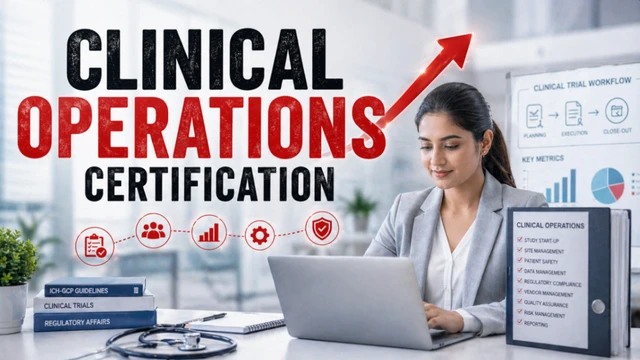
At ZANE ProEd, the clinical operations certification isn’t just a set of videos. It’s a system designed to build your job-ready skills from the ground up. You’ll work on simulated trials, manage virtual documents, and get feedback on your performance. It’s like a rehearsal for your first day at work. The system focuses on the exact skills we discussed above: CTMS usage, regulatory compliance, and site coordination. No fluff, no theory overload – just what you need to walk into an interview and say, “I know how to do this.”
Check your job readiness: Before your next interview, take a moment to honestly assess your skills. Can you explain the lifecycle of a clinical trial from start to finish? Do you know the difference between an audit and an inspection? If there’s hesitation, it’s time to bridge that gap. The clinical operations career path in India is waiting – make sure you’re ready to step on.
Build These Skills Now
Programs from ZANE ProEd Academy that directly address the skill gaps discussed above.
Follow Zane ProEd on Google
Preferred SourceAdd our publication as a preferred source to get the latest clinical research guides, industry updates, and career intel directly in your Google Top Stories & AI Overviews.