Clinical Quality Assurance GCP Auditor Career US: Practical Checklist for Science Graduates

Clinical QA / GCP Compliance Specialist A US clinical quality assurance GCP auditor career focuses on protecting trial integrity, auditing sites and vendors, managing CAPA, and preparing for FDA inspections. Recent science graduates enter through GCP training, 21 CFR Part 11 knowledge, and audit-ready portfolio proof.
If you are a recent BS in Biology, Biochemistry, or Chemistry graduate who left the pre-med track and now wants corporate biopharma experience, a clinical quality assurance GCP auditor career in the US can feel like a structured way out of the residency-or-nothing trap. You do not need an MD to protect patients and trial data. You need documented skills, regulatory fluency, and proof you can work inside a quality system.
The relief is this: clinical QA teams hire people who can read protocols, spot deviations, write CAPA records, and support GCP audit preparation FDA inspection activities. Your science degree is the foundation, not the finish line.
Build These Skills Now
Programs from ZANE ProEd Academy that directly address the skill gaps discussed above.
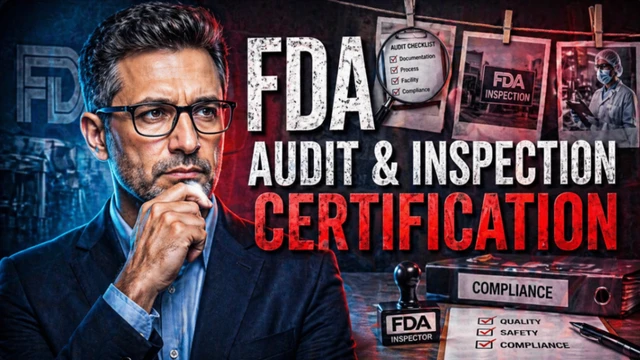
This checklist-style guide maps the tools, salary benchmarks, inspection expectations, and step-by-step pathway for breaking into quality assurance biopharma jobs in the next US hiring cycle.
What does the clinical quality assurance GCP auditor career us pathway involve, and what does a Clinical Quality Assurance Specialist do in biopharma?
A Clinical QA Specialist protects the integrity of clinical trials by checking whether sites, vendors, labs, and internal teams follow GCP, ICH E6, FDA regulations, and company procedures. You are part investigator, part document detective, and part trainer.
Daily work usually includes:
- Auditing clinical sites, vendors, central labs, and internal trial processes against GCP and protocol requirements.
- Reviewing informed consent forms, source documents, investigator site files, and eTMF records for completeness and accuracy.
- Writing audit findings, risk statements, and corrective action requests tied to CAPA management clinical trials.
- Supporting GCP audit preparation FDA inspection readiness by running mock audits and evidence checks.
- Reviewing electronic records and signatures for 21 CFR Part 11 controls, audit trails, access permissions, and validation evidence.
- Training study teams on deviations, document control, data integrity, and inspection behavior.
This is why quality assurance biopharma jobs reward people who can connect regulations to real trial evidence. Start with ICH guidance and ClinicalTrials.gov trial records to see how protocols, endpoints, and site documentation connect.
What is the average salary of a GCP Auditor in the United States?
For a clinical QA specialist salary US benchmark, expect entry-level QA associate roles around $65,000 to $85,000. GCP auditors and clinical QA specialists commonly earn $85,000 to $115,000. Senior auditors, lead QA specialists, and inspection-facing roles can reach $115,000 to $150,000+.
Location matters. Boston, Research Triangle Park, San Diego, Philadelphia, and South San Francisco often pay above national averages because of biopharma density and cost of living. Sponsor companies may pay more than CROs, but CROs often provide faster entry and broader audit exposure.
- QA Associate / Audit Coordinator: $65,000 to $85,000.
- Clinical QA Specialist / GCP Auditor: $85,000 to $115,000.
- Senior GCP Auditor: $115,000 to $150,000+.
- QA Manager / Inspection Lead: $140,000 to $180,000+.
Certification does not replace experience, but structured professional preparation can close qualification gaps fast. Review the clinical QA GCP auditor career roadmap to compare titles and progression.
How do you transition from CRA monitoring to GCP Quality Assurance?
If you have CRA monitoring exposure, you already understand site visits, source verification, informed consent, and protocol deviations. The QA transition requires shifting from site-level monitoring to system-level control. You move from checking one site to evaluating processes, vendors, and risk across trials.
- Translate monitoring evidence into audit evidence. Show how you reviewed source documents, resolved queries, and documented findings.
- Learn CAPA root cause analysis. QA teams need people who can separate correction from corrective action and preventive action.
- Master Part 11 and data integrity. Understand audit trails, electronic signatures, access controls, and validation documentation.
- Build audit checklists and mock inspection packs. This proves you can prepare a team for an FDA inspection, not just visit a site.
- Target QA associate, audit coordinator, and compliance specialist roles. These titles create the bridge into GCP auditing.
For recent graduates without CRA experience, use simulated monitoring and TMF review projects to show similar judgment. The CRA career guide helps you understand the monitoring baseline QA teams expect.
What does the FDA look for during BIMO clinical site inspections?
The FDA Bioresearch Monitoring program, often called BIMO, inspects clinical sites, sponsors, CROs, and IRBs to protect trial participants and data integrity. Inspectors follow the evidence trail from consent to source documents to reported results.
Common inspection focus areas include:
- Protocol adherence: eligibility, randomization, dosing, visit windows, endpoints, and prohibited medications.
- Informed consent: correct version, signatures, dates, and documentation of questions or re-consent.
- Source documents: original records that support CRF and EDC entries, including corrections and audit trails.
- Investigational product accountability: receipt, storage, dispensing, return, and temperature logs.
- Adverse event and safety reporting: timely assessment, follow-up, and reporting to sponsor and IRB.
- Electronic records: 21 CFR Part 11 compliance, user access, audit trails, and system validation evidence.
- Training and delegation: delegation logs, GCP training, CVs, licenses, and role-specific qualifications.
- CAPA evidence: root cause, corrective action, effectiveness checks, and closure documentation.
Prepare by building a mock inspection binder and running a question-by-question evidence test. Use FDA compliance guidance and ACRP resources to understand inspector expectations.
Why is 21 CFR Part 11 electronic signature compliance critical in trials?
21 CFR Part 11 sets FDA rules for electronic records and electronic signatures. In clinical trials, it protects data integrity when teams use EDC, eTMF, electronic consent, safety databases, and quality systems. If the system cannot prove who changed what and when, the data may be questioned during an inspection.
Key controls include:
- Unique user IDs and role-based access.
- Secure electronic signatures linked to the signed record.
- Computer-generated, time-stamped audit trails.
- Validation documentation for intended use.
- Controls against unauthorized access or record alteration.
- Backup, retention, and retrieval procedures.
A 21 CFR Part 11 validation specialist helps confirm that Medidata Rave EDC, Veeva Vault eTMF, and other regulated systems meet these expectations. Missing evidence can trigger Form 483 observations, warning letters, or data rejection. That is why Part 11 fluency is a core QA auditor skill.
What skill gap should recent US biology graduates close before applying to clinical QA jobs?
Conventional science education teaches lab technique, research methods, and scientific reasoning. Modern employers expect regulated documentation, audit logic, and tool fluency. That gap is exactly where many recent graduates lose interviews.
- What school teaches: experiments, lab reports, citations, and scientific presentation.
- What employers expect: protocol review, deviation classification, CAPA writing, TMF structure, audit trails, and inspection readiness.
- What school rarely covers: 21 CFR Part 11, ICH E6, vendor oversight, root cause analysis, and evidence-based audit findings.
- What hiring managers test: can you spot a missing consent date, trace a source document discrepancy, and write a clear corrective action request?
Your degree proves you can learn science. Your portfolio must prove you can work inside a regulated quality system.
What is the step-by-step pathway into clinical quality assurance in the US?
- Learn the regulatory core. Study GCP, ICH E6, FDA 21 CFR Part 11, and basic CAPA principles. Focus on how each rule appears in trial documents.
- Build tool fluency. Practice with EDC, eTMF, and quality management concepts used in biopharma. Learn how audit trails and access controls are reviewed.
- Create an audit-ready portfolio. Include mock audit checklists, CAPA examples, Part 11 review notes, and an inspection readiness pack. Remove confidential data and use fictional trials.
- Complete structured professional preparation. Use a focused certification blueprint to close gaps in GCP auditing, FDA inspection preparation, and CAPA management.
- Target the right entry titles. Search for clinical QA associate, GCP compliance coordinator, audit coordinator, quality documentation specialist, and clinical compliance analyst.
- Interview with inspection scenarios. Practice explaining how you would review consent, source documents, electronic signatures, and CAPA effectiveness.
How can simulation-based learning prove clinical QA readiness without years of experience?
Simulation-based learning gives you verifiable portfolio proof. Instead of saying you understand CAPA, you show a completed root cause analysis. Instead of saying you know Part 11, you show a mock audit trail review with findings and risk ratings.
This matters because US hiring managers are cautious about training fresh graduates on regulated systems. A structured simulation toolkit reduces that risk. You demonstrate document review discipline, regulatory vocabulary, and audit logic before your first day.
Build These Skills Now
Programs from ZANE ProEd Academy that directly address the skill gaps discussed above.
Which ZANE ProEd programs prepare you for GCP audit and FDA inspection careers?
ZANE ProEd Academy is a professional career-certification platform built around industry-grade simulation toolkits, not passive video lessons. Learners work with scenarios connected to Argus Safety ICSR case processing, Medidata Rave EDC, Veeva Vault eTMF, and FDA 21 CFR submissions.
The gcp-audit-compliance-crash-course and fda-audit-inspection-certification programs are designed for science graduates who need structured professional preparation. The focus is ROI: closing qualification gaps, building an audit-ready portfolio, and preparing for high-paying industry roles.
You are not just collecting a certificate. You are practicing the evidence review, CAPA logic, and inspection readiness that hiring managers associate with job-ready clinical QA candidates. Explore ZANE ProEd to understand the training philosophy.
What is the best next step to audit your clinical QA readiness?
Audit your industry readiness before the next hiring cycle. List the tools you can demonstrate, the regulations you can explain, and the artifacts in your portfolio. If any area is thin, fix it with structured professional preparation.
You can review the simulation curriculum, explore professional certification blueprints, and compare your current profile against real GCP auditor job descriptions. The goal is not another generic certificate. The goal is evidence that you can protect trial integrity from day one.
Build These Skills Now
Programs from ZANE ProEd Academy that directly address the skill gaps discussed above.
Follow Zane ProEd on Google
Preferred SourceAdd our publication as a preferred source to get the latest clinical research guides, industry updates, and career intel directly in your Google Top Stories & AI Overviews.