Clinical SAS Programmer Career India Freshers: Recruiter POV Interview Guide

clinical SAS programmer career India freshers A clinical SAS programmer in India for freshers involves writing SAS code to clean, transform, and submit clinical trial data using CDISC SDTM and ADaM standards. Entry roles start around ₹3.5 LPA, rising to ₹8.5 LPA with certified, portfolio-ready skills. Interviews test practical data handling, not just theory.
If you are a BDS, BHMS, BAMS, or Nursing graduate searching for a clinical SAS programmer career India freshers path, the interview room is where most candidates lose confidence. Recruiters see the same pattern: strong academic knowledge, weak practical proof.
Behind the hiring scenes, interviewers are not looking for textbook definitions. They want to see if you can open a dataset, spot a data issue, write clean SAS code, and explain your logic under pressure.
Build These Skills Now
Programs from ZANE ProEd Academy that directly address the skill gaps discussed above.
This Q&A guide is built from recruiter feedback. It shows you exactly what to prepare so you walk into the next hiring cycle with calm, evidence-backed confidence.
What does a Clinical SAS Programmer do? (clinical SAS programmer career India freshers)
A Clinical SAS Programmer uses SAS software to turn raw clinical trial data into analysis-ready datasets for regulatory submission. The role sits inside clinical data management and biostatistics teams at CROs, pharma companies, and data-focused consultancies.
Daily tasks match the clinical data analyst job description closely. You will:
- Write and debug SAS programs for data cleaning, transformation, and reporting.
- Map raw data to CDISC SDTM and create analysis datasets using ADaM.
- Generate tables, listings, and figures (TLFs) for clinical study reports.
- Validate outputs against specifications and resolve data queries with clinical teams.
- Maintain documentation for audits and regulatory submissions.
In India, most entry roles are in Hyderabad, Bangalore, Pune, and Mumbai. Employers include global CROs, mid-size pharma, and specialist data analytics firms.
If you are comparing clinical SAS vs data science, note the difference: clinical SAS is rule-based, standards-driven, and highly regulated. Data science is more exploratory and model-driven. Both are strong careers, but clinical SAS rewards precision and consistency.
What is the salary of a Clinical SAS Programmer in India?
The clinical SAS programmer salary in India depends on city, certification, and portfolio proof. Freshers from allied health backgrounds can expect these ranges in the current market:
- Entry level (0-1 year): ₹3.5 LPA to ₹5.5 LPA.
- Junior programmer (1-3 years): ₹5.5 LPA to ₹8.5 LPA.
- Senior programmer (4-6 years): ₹9 LPA to ₹15 LPA.
- Lead or principal programmer: ₹16 LPA to ₹25+ LPA.
Hyderabad and Bangalore tend to pay slightly higher for CDISC and ADaM expertise. Pune and Mumbai have strong CRO clusters with competitive entry packages.
Certification and a verifiable portfolio can push your starting offer toward the upper end. Employers pay for evidence, not just degrees.
How to start a career in clinical SAS programming?
Start with a focused plan, not random tutorials. Follow these steps to build interview-ready skills:
- Learn base SAS and advanced SAS: Focus on data steps, PROC SQL, macros, and ODS. Practice on real-ish clinical datasets.
- Understand clinical trial flow: Study ICH-GCP, protocol design, and regulatory basics from ICH and CDSCO.
- Master CDISC SDTM and ADaM: Learn mapping rules, define.xml, and validation checks. This is the core of SAS programming for clinical trials.
- Build a portfolio: Create 2-3 mock study projects with raw data, SDTM datasets, ADaM datasets, and TLF outputs.
- Practice interview scenarios: Rehearse data cleaning logic, code debugging, and explain-your-output questions.
- Target the right employers: Apply to CROs, pharma data teams, and clinical analytics firms in major hubs.
For a deeper roadmap, read Clinical Data Management Career for Freshers India Roadmap.
What is SDTM and ADaM in clinical data?
SDTM (Study Data Tabulation Model) is the standard structure for organizing raw clinical trial data for submission. It tells you how to name variables, label datasets, and represent collected data consistently.
ADaM (Analysis Data Model) is the standard for analysis-ready datasets. It supports statistical analysis and TLF generation while keeping traceability to SDTM.
Together, CDISC SDTM ADaM skills are the backbone of regulatory submissions. Interviewers often ask:
- How do you map a lab test from raw data to SDTM?
- What is the difference between SDTM and ADaM domains?
- How do you validate a dataset against the define.xml?
- What is the role of controlled terminology in submission?
You do not need to memorize every domain. You need to demonstrate that you can follow standards, document decisions, and fix mapping errors.
Is clinical SAS programming a good career for freshers?
Yes, it is a strong career for allied health and medical graduates in India. Reasons:
- Domain advantage: Your BDS, BHMS, BAMS, or Nursing background helps you understand medical terms, lab values, and adverse events.
- Stable demand: Clinical trials and regulatory submissions continue to grow in India and globally.
- Clear progression: Programmer to lead programmer to biostatistics or data standards roles.
- Global exposure: Work on WHO-aligned trials and ICH-GCP studies.
The catch: competition is high for entry roles. Candidates with only theoretical knowledge struggle. Those with hands-on practice, portfolio proof, and interview confidence get hired faster.
What is the skill gap for allied health graduates in clinical SAS interviews?
Conventional education teaches anatomy, physiology, and clinical subjects. It rarely teaches SAS programming, CDISC standards, or regulatory submission workflows.
Modern employers expect:
- Practical SAS coding skills, not just definitions.
- Ability to work with CDISC SDTM ADaM datasets.
- Understanding of clinical data management and EDC systems.
- Audit-ready documentation habits.
- Clear communication of technical decisions.
This gap is why many freshers fail interviews. They can define SDTM but cannot map a dataset. They know SAS syntax but cannot debug a program under time pressure.
Avoid the common mistakes listed in Clinical Data Management Career for Freshers Mistake Audit.
How can you build a step-by-step clinical SAS career pathway?
Use this 5-step pathway to move from fresher to interview-ready candidate:
- Foundation: Complete structured SAS training with clinical datasets. Learn base SAS, PROC SQL, and macros.
- Standards: Study CDISC SDTM and ADaM implementation guides. Practice mapping raw data to SDTM domains.
- Simulation: Work on mock clinical studies end-to-end. Create SDTM datasets, ADaM datasets, and TLFs.
- Portfolio: Document your projects with code, outputs, and validation logs. This becomes your verifiable proof.
- Interview rehearsal: Practice explaining your code, handling data queries, and solving scenario-based questions.
Each step should produce evidence. Evidence replaces anxiety with confidence.
How does simulation-based learning close the interview confidence gap?
Simulation-based learning puts you inside realistic clinical trial workflows. You do not just watch videos; you process data, write code, and fix errors like a real programmer.
This approach builds three things interviewers test:
- Practical judgment: You learn what to do when data is messy or specifications are unclear.
- Tool fluency: You practice with industry-grade systems and submission standards.
- Portfolio proof: You walk into interviews with outputs you can explain and defend.
At ZANE ProEd, learners use simulation toolkits that mirror real industry environments. This is structured professional preparation, not passive study.
Build These Skills Now
Programs from ZANE ProEd Academy that directly address the skill gaps discussed above.
Why choose professional certification at ZANE ProEd Academy?
ZANE ProEd Academy is a premier professional career-certification platform for clinical data and analytics roles. Programs are built around employer expectations, not just syllabus coverage.
Two career programs are especially relevant for this path:
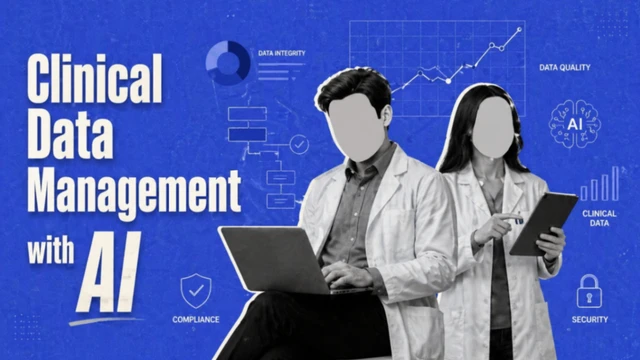
- Clinical Data Management with AI: Covers clinical data workflows, AI-assisted data review, and modern analytics skills.
- Clinical Data Management EDC Certification: Focuses on electronic data capture systems and hands-on data handling.
Learners work with industry-grade simulation toolkits, including Argus Safety ICSR case processing, Medidata Rave EDC, Veeva Vault eTMF, and FDA 21 CFR submissions. This creates an audit-ready portfolio and closes qualification gaps.
The ROI is clear: professional certification proves you can perform, not just recall. It prepares you for high-paying industry roles in Hyderabad, Bangalore, Pune, and Mumbai.
Learn more about ZANE ProEd and its career-acceleration approach.
Ready to audit your industry readiness?
Use these consultative next steps:
- Explore Professional Certification Blueprints to match your background with the right clinical data role.
- Audit your industry readiness by comparing your current skills with employer interview criteria.
- Review the simulation curriculum to see how hands-on projects build verifiable portfolio proof.
Confidence in interviews comes from preparation you can demonstrate. Start with a readiness audit, then build the exact skills hiring managers are testing in the next cycle.
Build These Skills Now
Programs from ZANE ProEd Academy that directly address the skill gaps discussed above.
Follow Zane ProEd on Google
Preferred SourceAdd our publication as a preferred source to get the latest clinical research guides, industry updates, and career intel directly in your Google Top Stories & AI Overviews.