Clinical Trial Assistant Entry Level Jobs UK and Europe: The Insider Playbook

Clinical Trial Assistant (CTA) — UK & Europe Entry-level clinical trial assistant jobs in the UK and Europe hire graduates with life-science, health data or bioinformatics degrees. Starting pay runs £26,000–£34,000 in the UK and €35,000–€48,000 across Ireland, Germany and Switzerland. CROs screen for TMF, EDC and CTMS workflow skills — not just a degree.
Behind the Hiring Curtain: Why CTA Roles Go to the Prepared
You have a health data or bioinformatics degree. You can query datasets, read a protocol, and understand medical terminology. Yet you are sitting on an NHS Band 5 or 6 salary cap of £28,000–£35,000, watching recruiters fill clinical trial assistant entry level jobs UK and Europe with candidates who look, frankly, ordinary.
Here is what nobody tells you from the outside. CRO hiring managers in London, Dublin, Basel and Frankfurt do not shortlist on academic brilliance. They shortlist on workflow fluency. Can you build a TMF structure? Do you know what sits inside a site activation pack? Can you resolve a data query in Medidata Rave without hand-holding?
Build These Skills Now
Programs from ZANE ProEd Academy that directly address the skill gaps discussed above.
The gap between an NHS data role and a private-industry CTA seat is not intelligence. It is process knowledge — and it is learnable in weeks, not years. This playbook breaks down the exact workflows CROs test for.
What does a Clinical Trial Administrator do in the UK and EU?
A Clinical Trial Administrator (also advertised as Clinical Trial Assistant or Study Coordinator Support) keeps a clinical study running to ICH-GCP E6 standards. See the official framework at ich.org. The role is document-heavy, system-heavy and deadline-driven.
Typical daily and weekly tasks include:
- TMF management: filing, chasing and quality-checking documents in a Veeva Vault eTMF or sponsor-built eTMF, against the DIA TMF Reference Model.
- Site communication: chasing site staff for signatures, CVs, GCP certificates, delegation logs and protocol deviations.
- System updates: keeping the CTMS (often Veeva or Oracle) accurate on enrolment, visit dates and milestones.
- Meeting support: agendas, minutes and action trackers for investigator and vendor calls.
- Site activation support: assembling regulatory submission packs for MHRA, EMA–linked national competent authorities and ethics committees.
- Document control: version control on protocols, ICFs and pharmacy manuals.
- CRA support: preparing monitoring visit packs and following up on outstanding site actions.
In the EU, the role also supports CTR (Clinical Trials Regulation 536/2014) submissions through the CTIS portal — a skill that instantly makes you more valuable than a general admin hire.
What is the starting salary for a CTA in London, Dublin, and Frankfurt?
Entry-level CTA pay in private industry comfortably beats NHS Band 5 and Band 6 ceilings, and it climbs faster. Typical 2025 ranges:
- London / UK: £26,000–£34,000 starting, rising to £38,000–£46,000 with two years of experience. CTA salary UK figures at major CROs often include a 5–10% bonus.
- Dublin / Ireland: €34,000–€45,000 starting, with strong pharma sponsor demand along the Dublin–Cork corridor.
- Frankfurt / Germany: €38,000–€48,000 starting, higher in Basel, Switzerland at CHF 65,000–CHF 80,000.
- Cambridge, UK (cluster): £28,000–£36,000, often with hybrid working and faster promotion cycles.
For clinical trial administrator jobs London and Dublin, the differentiator is not the degree — it is demonstrated system experience. Candidates who can show an audit-ready eTMF portfolio routinely negotiate at the top of the band.
What degrees do European CROs look for when hiring entry-level CTAs?
CROs accept a wide degree net, but some convert to interviews far faster:
- Life sciences: biomedical science, pharmacology, pharmacy, biology, biochemistry.
- Health data and informatics: bioinformatics, health data science, clinical data management — directly relevant to EDC and query resolution.
- Nursing and allied health: NHS nurses and clinical staff transition well because they understand site workflows and patient pathways.
- Public health and epidemiology: strong for outcomes-heavy and registry studies.
But here is the honest insider view: the degree gets you past the filter, and workflow evidence gets you the offer. Recruiters want to see familiarity with ICH-GCP, eTMF structure, EDC query logic, site activation documentation, and basic medical coding (MedDRA).
If you want the full structural breakdown, read our CTA entry-level roadmap for the UK and Europe.
How can a CTA gain trial monitoring experience to become a CRA?
The CTA to CRA fast track is real — but it is not automatic. Most people make the jump in 12–24 months by deliberately engineering monitoring exposure.
- Volunteer for site-facing tasks. Ask to prepare site packs, follow up on monitoring actions, and shadow a CRA on a remote visit.
- Master source data review. Learn how SDV works against the CRF and how findings are logged.
- Learn the visit types. SSV (site selection), SIV (initiation), IMV (interim monitoring) and COV (close-out). Know what documents each produces.
- Own query resolution. Demonstrate you can close EDC queries within timelines — this is the single most transferable CRA skill.
- Ask for a sponsor-side move. Internal transfers from CTA to CRA I are common and cheaper for CROs than external hiring.
For the complete pathway, including CV positioning and interview structure, see our guide on how to become a Clinical Research Associate in Europe and the UK.
Are remote Clinical Trial Assistant roles common across European timezones?
Yes — but with nuance. Most CTA roles are hybrid rather than fully remote.
Fully remote CTAs are common at sponsors and global CROs where the team spans multiple countries and works on CET/GMT schedules. Expect two to three office days per week in Dublin, Frankfurt or London hubs, and near-total remote working for TMF-heavy or centralised monitoring functions.
Two practical conditions:
- Language: German or French fluency opens far more remote EU roles, especially in Frankfurt and Basel.
- Time zone overlap: EU-based CTAs supporting US sponsors often accept a later finish time — this is a real interview question.
Why do health data graduates still get rejected by CROs?
Because universities teach science, and CROs hire process.
- What your degree taught you: statistics, biology, Python or R, data interpretation, literature review.
- What the CRO actually screens for: can you file to the TMF Reference Model, structure a site activation pack, resolve EDC queries, and speak ICH-GCP fluently under pressure?
That mismatch is why strong bioinformatics graduates lose offers to weaker academics who simply understood the operational map. The fix is not another degree. It is simulated, system-level experience you can articulate in an interview.
How do you get hired as a CTA in European biopharma in 3–6 months?
Use this sequence. It is built around the next hiring cycle, not next year.
- Weeks 1–3: Learn the regulatory map. Get comfortable with ICH-GCP E6, CTIS under EU CTR 536/2014, and MHRA submission basics.
- Weeks 3–6: Build system fluency. Practise TMF filing, EDC data entry and query resolution, and CTMS milestone tracking.
- Weeks 6–8: Create proof. Assemble an audit-ready eTMF sample and a site activation pack you can walk a hiring manager through.
- Weeks 8–10: Position your CV. Replace academic language with operational verbs: filed, tracked, resolved, reconciled, submitted.
- Weeks 10–16: Apply in waves. Target CROs, sponsors and site management organisations across London, Dublin, Frankfurt, Basel and Cambridge.
- Months 4–6: Interview and negotiate. Answer workflow questions with real process detail, then negotiate above the opening band.
What actually proves you are job-ready to a CRO recruiter?
Two things: simulation-based practice and verifiable portfolio proof. Recruiters cannot verify what you read. They can verify what you built.
That means demonstrating hands-on familiarity with the tools the industry runs on: Argus Safety ICSR case processing, Medidata Rave EDC, Veeva Vault eTMF, and FDA 21 CFR / EU CTR submission documentation. When you can describe a study workflow end-to-end — from feasibility to close-out — you stop sounding like a graduate and start sounding like a colleague.
Build These Skills Now
Programs from ZANE ProEd Academy that directly address the skill gaps discussed above.
Which ZANE ProEd programs prepare you for CTA and site activation roles?
ZANE ProEd Academy is a professional career-certification platform built for exactly this transition — from NHS bands or academic research into private-industry clinical operations.
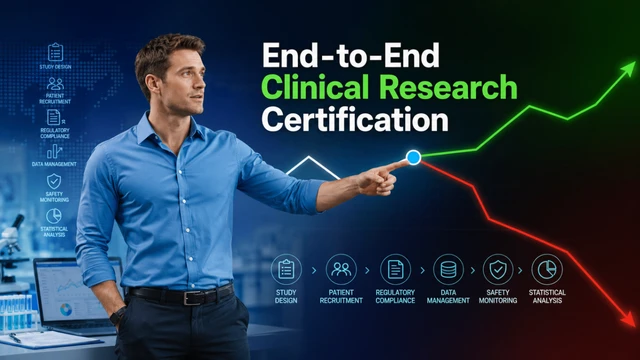
The End-to-End Clinical Research Certification walks you through the full trial lifecycle: feasibility, site selection, activation, monitoring, data management, safety reporting and close-out. You finish with a structured, audit-ready portfolio rather than a certificate alone.
The Clinical Trial Site Activation Fast Track focuses on the highest-demand CTA tasks — regulatory packs, essential document collection, ethics and competent authority submissions, and eTMF build. It is the fastest route to a CTA job description you can genuinely match.
Both programs use industry-grade simulation toolkits mirroring Argus Safety, Medidata Rave and Veeva Vault, so your interview answers come from practice, not theory.
If you want context on how ZANE ProEd builds these pathways, review our background at zaneproed.com/about.
Your Next Move
- Explore professional certification blueprints mapped to CTA and site activation roles.
- Audit your industry readiness against real CRO job descriptions before the next hiring cycle.
- Review the simulation curriculum and start building portfolio evidence this month.
The salary cap is optional. The workflow knowledge is not.
Build These Skills Now
Programs from ZANE ProEd Academy that directly address the skill gaps discussed above.
Follow Zane ProEd on Google
Preferred SourceAdd our publication as a preferred source to get the latest clinical research guides, industry updates, and career intel directly in your Google Top Stories & AI Overviews.