Clinical Trial Coordinator Jobs in India for Freshers: Complete Step-by-Step Guide

Clinical Trial Coordinator Jobs India Freshers: Clinical Trial Coordinators (CTCs) manage daily clinical trial operations at hospitals or research sites. For freshers with a BSc/MSc in Chemistry, entry is possible by learning Good Clinical Practice (GCP), site coordination, and patient data handling. Salaries start at ₹2.5–4 LPA and grow quickly with experience.
If you feel stuck after your BSc or MSc in Chemistry and are confused between multiple career options, you’re not alone. Many chemical sciences graduates don’t realize that clinical trial coordinator jobs in India for freshers are an exciting and well-paying path. Let’s clear the confusion and show you a step-by-step roadmap.
This guide is for you if you’re seeing pharma jobs everywhere but don’t know which one fits. Or if you’ve applied to roles and faced rejection due to skill gaps. We’ll break down exactly what a Clinical Trial Coordinator does, the salary, qualifications, and how to land your first job in 3–6 months.
Build These Skills Now
Programs from ZANE ProEd Academy that directly address the skill gaps discussed above.
What does a Clinical Trial Coordinator do?
A Clinical Trial Coordinator (CTC) – also called a Site Coordinator – is the backbone of any clinical trial at a hospital or research site. They ensure the study runs smoothly, follows protocols, and keeps patients safe. Your day-to-day would include:
- Screening and recruiting patients for clinical trials.
- Collecting patient data and maintaining accurate records.
- Coordinating with doctors, nurses, and the sponsor’s clinical research associate (CRA).
- Preparing for monitoring visits and audits.
- Managing investigational products and ensuring compliance with Good Clinical Practice (GCP) guidelines.
You become the bridge between science and real patient care. It’s a role that combines scientific knowledge with administrative skills.
What is the salary of a Clinical Trial Coordinator in India?
The clinical trial coordinator salary in India varies by city and experience. For freshers, starting salaries range from ₹2.5 to ₹4 lakhs per annum. With 2–4 years of experience, you can earn ₹5–8 LPA. Senior coordinators with niche therapeutic expertise can make over ₹10 LPA.
Metro cities like Mumbai, Bengaluru, Hyderabad, and Delhi pay higher due to more trial sites. Contract research organizations (CROs) often pay slightly more than hospital-based sites.
How to become a Clinical Trial Coordinator?
The clinical trial coordinator qualification path is straightforward. You typically need a bachelor’s degree in life sciences, pharmacy, or chemistry. Then, you must build specific skills not taught in college.
- Get your degree: A BSc or MSc in Chemistry or related field is the foundation.
- Learn GCP principles: An ICH-GCP certification is non-negotiable. You can find free or paid online courses.
- Understand site coordination: Learn about trial start-up, patient recruitment, data entry, and safety reporting.
- Gain practical exposure: Look for internships, volunteer at trial sites, or use simulation-based training.
- Apply to entry-level roles: Target hospitals, CROs, and site management organizations (SMOs).
What is the difference between CTC and CRA?
Many freshers confuse the CTC vs CRA career paths. Here’s a simple breakdown:
- Clinical Trial Coordinator (CTC): Works at the clinical site (hospital/clinic). Manages daily trial activities, patient interaction, and data collection. It’s operationally focused.
- Clinical Research Associate (CRA): Works for the sponsor or CRO. Travels to different sites to monitor the trial, verify data, and ensure protocol compliance. It requires more experience and is often the next step after CTC.
Starting as a CTC gives you hands-on site experience, which makes you a stronger CRA later. It’s a natural career progression – read more about how to become a CRA.
What skills are needed for a clinical trial coordinator role?
Recruiters look for a mix of technical and soft skills. Here’s what you need:
- Good Clinical Practice (GCP): You must know the ethical and scientific quality standards for clinical trials.
- Data Management: Basic Excel, electronic Case Report Forms (eCRF), and attention to detail.
- Regulatory Knowledge: Familiarity with CDSCO and FDA guidelines is a plus.
- Communication: You’ll interact with patients, doctors, and sponsors. Clarity is key.
- Organization: You’ll juggle multiple tasks, from scheduling visits to storing investigational drugs.
Soft skills matter as much as technical knowledge. Show empathy, stay calm under pressure, and be a quick learner.
What colleges teach vs What employers actually expect
Your BSc/MSc in Chemistry gave you a strong theoretical foundation. But when you enter a clinical trial site, the reality is different. Employers expect you to already know:
- How to prepare for a site initiation visit (SIV).
- How to handle informed consent forms properly.
- How to report adverse events within 24 hours.
- How to use an Electronic Data Capture (EDC) system.
These are not taught in most college curricula. That’s why fresh graduates face rejections. The skill gap is real, but it’s bridgeable.
Your step-by-step roadmap to land a CTC job in 3–6 months
Here’s a practical plan that works in India:
- Month 1: Build your foundation. Complete a recognized ICH-GCP certification. Read the ICH E6 guidelines. Understand the clinical trial phases.
- Month 2: Learn site coordination specifics. Focus on trial start-up, patient recruitment techniques, and essential document management. Use online resources or simulation platforms.
- Month 3: Get hands-on practice. Apply your knowledge through simulated case studies. Practice filling eCRFs, preparing for monitor visits, and tracking patient visits.
- Month 4: Polish your resume and LinkedIn. Highlight GCP certification, any project work, and relevant scientific skills. Use keywords like “site coordinator clinical research” and “ICH-GCP.”
- Month 5: Apply strategically. Target entry-level CTC and “Clinical Trial Assistant” roles. Look at hospitals with active clinical trials, CROs like IQVIA, and SMOs.
- Month 6: Ace the interview. Be ready to answer scenario-based questions about patient recruitment or protocol deviations. Show you understand GCP and can handle real-world challenges.
Understanding the broader clinical operations career path can also help you plan long-term growth.
Why simulation-based learning makes the difference
Reading theory isn’t enough when you need to perform on day one. That’s where simulation-based learning comes in. You work through real-world scenarios—like a virtual trial site—so you build muscle memory for coordinator tasks. It bridges the gap between your chemistry degree and industry expectations.
Instead of just memorizing GCP, you practice it. This system prepares you for the job, not just the interview.
Build These Skills Now
Programs from ZANE ProEd Academy that directly address the skill gaps discussed above.
How ZANE ProEd’s system fast-tracks your career
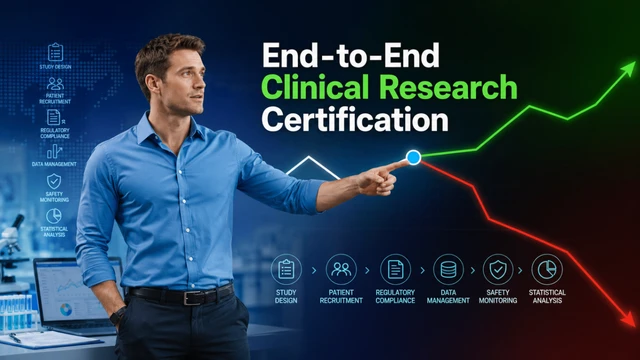
At ZANE ProEd, we’ve built a learning system that mirrors this simulation approach. Our programs, like the Clinical Trial Site Activation Fast Track and the End-to-End Clinical Research Certification, are designed by industry experts. They walk you through every step a CTC takes—from site selection to close-out—using simulated trial scenarios.
These aren’t just theory courses. You’ll actually prepare documents, manage patient data, and coordinate virtual visits. When you face a real trial site, you’ll already know what to do.
Ready to start your clinical research career?
Don’t let the confusion hold you back. Check your job readiness by mapping what you know against employer expectations. Or see how your current skills compare to what top CROs demand. Take the first step, and you’ll be surprised how quickly you can land a clinical trial coordinator job.
Build These Skills Now
Programs from ZANE ProEd Academy that directly address the skill gaps discussed above.
Follow Zane ProEd on Google
Preferred SourceAdd our publication as a preferred source to get the latest clinical research guides, industry updates, and career intel directly in your Google Top Stories & AI Overviews.