Clinical Trial Manager Career Path and Salary UK Europe: From NHS Band 6 to CRO Pay

Clinical Trial Manager The clinical trial manager career path and salary UK Europe runs Study Coordinator to CRA to Clinical Study Manager to CTM. UK salaries span £40,000–£75,000, while European CRO pay sits at €48,000–€85,000. Entry requires ICH-GCP training, CTIS familiarity and audit-ready site management experience.
If you feel stuck, you are not imagining it. You finished a life sciences PhD, published papers, and worked under pressure for years — and you are still on an NHS Band 5 or 6 contract capped between £28,000 and £35,000.
Meanwhile, the clinical trial manager career path and salary UK Europe pays £40,000–£75,000 in the UK and €48,000–€85,000 across European biopharma. Same science, same diligence, very different system.
Build These Skills Now
Programs from ZANE ProEd Academy that directly address the skill gaps discussed above.
Global trial volumes are climbing. Sponsors are expanding into Cambridge, Dublin, Basel and Frankfurt. Demand for operational talent is outstripping supply — because degrees alone are not enough anymore. The bottleneck is not your intellect. It is your missing operational proof.
What are the core responsibilities of a European Clinical Trial Manager?
A European CTM owns operational delivery of a trial from startup to close-out. You are the person sponsors trust to keep sites, budgets, timelines and documentation aligned.
- Site activation and management — feasibility, site selection, contracts and ongoing ICH GCP site management Europe oversight.
- Regulatory submissions — including CTIS portal submission management under Regulation (EU) 536/2014.
- Budget and vendor oversight — CROs, central labs, imaging partners and investigator payments.
- Risk and quality — CAPA ownership, deviation tracking and permanent audit readiness.
- Data and safety interface — query resolution, monitoring follow-up and protocol deviation escalation.
- Cross-functional leadership — medical affairs, regulatory, data management, pharmacovigilance and supply chain.
Notice something? Almost none of this is taught in a doctoral programme. It is procedural, documented and inspection-facing work.
What is the average salary of a Clinical Trial Manager in the UK and EU?
Compensation depends on three variables: country, level, and whether you sit with a sponsor, a CRO or the NHS. Here is the realistic picture.
UK private-sector benchmarks:
- Clinical Trial Assistant / Study Coordinator: £28,000–£38,000
- Clinical Research Associate (CRA): £38,000–£52,000
- Senior CRA: £50,000–£62,000
- Clinical Study Manager: £55,000–£70,000
- Clinical Trial Manager: £60,000–£80,000
- Senior CTM / Programme Lead: £80,000–£105,000
European benchmarks (clinical study manager salary Europe):
- Dublin: €52,000–€78,000
- Basel / Zurich: CHF 105,000–CHF 150,000 (roughly €108,000–€155,000)
- Frankfurt / Munich: €60,000–€90,000
- Copenhagen / Amsterdam: €55,000–€82,000
Compare that with NHS Band 6 research practitioner pay of roughly £35,000–£43,000. The day-to-day work overlaps significantly. The pay structure does not.
Contract type matters too. CRO staff often earn 10–20% more than sponsor-side equivalents at the same grade, though sponsors usually offer stronger bonuses and stock. If you are also weighing data roles, our breakdown of the clinical data manager salary and career path UK Europe is a useful comparison.
How do study managers navigate the Clinical Trials Information System (CTIS)?
The Clinical Trials Information System (CTIS) is the single EU entry point for clinical trial applications, operated by the European Medicines Agency under Regulation (EU) 536/2014.
As a study manager, you will usually assemble the submission even if regulatory affairs signs it off. Here is how the process actually runs:
- Part I assessment — scientific and ethical elements, assessed once by a Reporting Member State with input from others. The clock runs for 26 days and can be extended once.
- Part II assessment — national-level elements, assessed by each concerned Member State within 12 days.
- One submission, many countries — a single dossier covers all EU/EEA sites, replacing the old national portals.
- Public transparency — trial information is published in CTIS by default, so documentation quality is visible to competitors and inspectors alike.
Practical CTIS competence means building a compliant dossier, answering a Member State query without blowing the clock, and keeping the trial record accurate after authorisation. That is now a genuine hiring filter across EU sponsors.
For the UK, applications run through the MHRA combined review route, which sits outside CTIS. Professionals fluent in both systems are unusually valuable.
What is the career progression from CRA to Clinical Study Manager?
The clinical trial operations career ladder UK and EU follows a fairly consistent shape:
- Clinical Trial Assistant / Study Coordinator (0–2 years) — site documentation, ethics submissions, visit scheduling, TMF maintenance.
- CRA (2–5 years) — monitoring visits, source data verification, site training, trip reports.
- Senior CRA (4–7 years) — complex sites, mentoring, lead CRA duties on larger studies.
- Clinical Study Manager / CTM (6–10 years) — country or study-level operational ownership.
- Senior CTM / Programme Lead (10+ years) — multi-study or global programme leadership.
The move from NHS research practitioner to study coordinator or CRA is the most common entry point for UK clinicians, nurses and PhDs. The fastest route is not another degree. It is demonstrable operational experience plus certified ICH-GCP knowledge.
If you prefer the regulatory track instead, our guide to starting a career in regulatory affairs in Europe and the UK covers that pathway in detail.
What certifications are preferred by European biopharma sponsors?
Sponsors look for evidence you can operate inside a regulated system. The most frequently requested items are:
- ICH-GCP E6(R2/R3) certification — the baseline reference standard from the ICH.
- Applied CTIS / EU CTR knowledge — dossier building, not just theory.
- ISO 14155 familiarity for medical device trials.
- Pharmacovigilance fundamentals — safety reporting timelines aligned with WHO and EU expectations.
- Project management basics — PRINCE2, Agile or vendor-side equivalents.
A certificate alone rarely gets you hired. What gets you hired is a certificate plus a portfolio proving you have executed the workflows end to end.
What Do Employers Actually Expect That Your PhD Did Not Teach You?
Doctoral training rewards hypothesis, depth and independence. Clinical operations rewards traceability, timelines and documentation discipline.
- Academia taught: experimental design, statistics, literature synthesis, publication writing.
- Employers expect: protocol deviation handling, informed consent version control, TMF completeness, CAPA writing and inspection-ready records.
European sponsors also expect you to understand the regulatory environment around your trial — CTIS for EU authorisations, MHRA combined review for UK sites, and how reporting deadlines work across Member States.
That is the real gap. It is not intellectual. It is procedural — and it is learnable in weeks, not years.
What Is the Step-by-Step Roadmap from NHS Band 6 to Clinical Trial Manager?
- Audit your transferable skills. Write down every protocol you touched, ethics submission you prepared, patient-facing activity you ran and dataset you cleaned.
- Certify in ICH-GCP. Choose a programme that includes trial simulation, not just slides and a multiple-choice test.
- Build a portfolio. Document a mock CTIS Part I submission, a monitoring visit report, a deviation log and a CAPA record.
- Target the bridge role. Apply for Clinical Trial Assistant, Study Coordinator or entry CRA positions inside CROs and sponsors.
- Stack operational ownership. Within 18–24 months, take on site oversight, vendor communication and budget tracking.
- Step into Clinical Study Manager. Once you own a study, the jump to CTM and £60k+ becomes a negotiation rather than a hope.
Each step compounds. Skip the portfolio step and you will keep losing interviews to candidates with identical degrees and stronger evidence.
Why Is Simulation-Based Learning Better Than Another Generic Certificate?
Because employers hire evidence, not attendance. Simulation-based training forces you to build the documents, run the meetings and defend the decisions a real trial demands.
A verifiable portfolio — TMF structure, monitoring reports, deviation logs, CTIS dossier drafts — changes the entire interview dynamic. You stop describing what you studied and start showing what you delivered.
You can explore the wider training philosophy on our about page.
Build These Skills Now
Programs from ZANE ProEd Academy that directly address the skill gaps discussed above.
How Does ZANE ProEd Build Audit-Ready Clinical Operations Professionals?
ZANE ProEd is built as a training system, not a video library. Two programmes map directly onto this career path.
The Clinical Operations Certification focuses on daily mechanics: site management, ICH-GCP compliance, monitoring, TMF quality and inspection readiness.
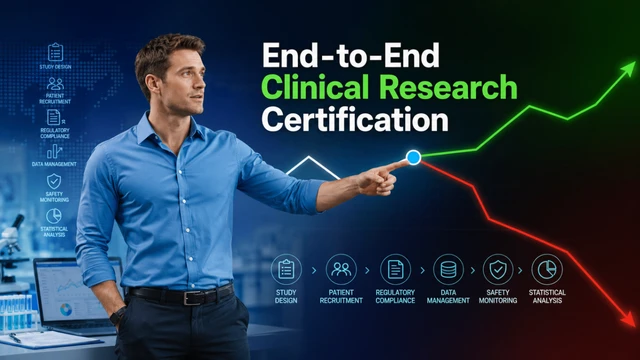
The End-to-End Clinical Research Certification goes wider — regulatory submissions, CTIS workflows, data management interfaces and the full trial lifecycle across EU and UK frameworks.
Every module is built around ICH-GCP international compliance, audit readiness and practical trial simulation. You finish with artefacts you can present in an interview, not just a completion badge.
Ready to Move Past the Band 6 Ceiling?
Audit your industry readiness today. List the operational workflows you cannot yet demonstrate, then close them one by one.
Explore simulation workflows, build your portfolio, and apply for the roles that pay what your science is genuinely worth.
Build These Skills Now
Programs from ZANE ProEd Academy that directly address the skill gaps discussed above.
Follow Zane ProEd on Google
Preferred SourceAdd our publication as a preferred source to get the latest clinical research guides, industry updates, and career intel directly in your Google Top Stories & AI Overviews.