Clinical Trial Manager Career Path and Salary UK Europe: Complete 2025 Guide

Clinical Trial Manager (CTM) / Study Coordinator The clinical trial manager career path and salary UK Europe typically starts as CTA or CRA, progresses to CTM/Clinical Study Manager, and pays £40,000–£75,000 or €48,000–€85,000. CTIS, ICH GCP, and sponsor certifications accelerate promotion.
If you are a Life Sciences PhD or postdoc transitioning from academia into European biopharma, you already know the science. But you may feel stuck as a CTA in London, Dublin, or Berlin, struggling to break through to CRA I. The clinical trial manager career path and salary UK Europe is not a mystery—it is a structured ladder.
The problem is that degrees alone are not enough anymore. Sponsors and CROs want proof you can manage CTIS submissions, ICH GCP site management Europe, and complex trial budgets. This guide gives you the insider timeline.
Build These Skills Now
Programs from ZANE ProEd Academy that directly address the skill gaps discussed above.
What is the clinical trial manager career path and salary UK Europe?
The path usually runs from CTA to CRA I/II, then Clinical Study Manager or CTM, and finally Senior CTM or Clinical Operations Lead. In the UK, CTM salaries range from £40,000 to £75,000. In Europe, expect €48,000 to €85,000 depending on hub, sponsor, and experience.
Hubs like Cambridge, Dublin, Basel, and Frankfurt pay at the top of these bands. NHS roles often start lower, but private CROs and biopharma sponsors offer faster progression and bonuses.
What are the core responsibilities of a European Clinical Trial Manager?
A European CTM owns the operational delivery of a trial from start-up to close-out. You are the central point between sponsor, sites, vendors, and regulators.
- Site management: Oversee ICH GCP site management Europe, including feasibility, activation, monitoring oversight, and close-out.
- Budget and contracts: Manage investigator payments, vendor contracts, and trial budgets.
- Regulatory submissions: Handle CTIS portal submission management and local ethics submissions.
- Risk and quality: Maintain eTMF, resolve queries, and prepare for audits and inspections.
- Timeline and data: Drive recruitment, data cleaning, and database lock.
Daily tools include Medidata Rave EDC, Veeva Vault eTMF, and CTMS platforms. You will also use Argus Safety for pharmacovigilance case processing.
What is the average salary of a Clinical Trial Manager in the UK and EU?
Salaries vary by country, sponsor type, and therapeutic area. Here are realistic 2025 benchmarks:
- UK Clinical Trial Manager: £40,000–£75,000. Senior CTM: £65,000–£90,000.
- Germany (Frankfurt/Berlin): €55,000–€85,000. Senior: €80,000–€100,000.
- Ireland (Dublin): €50,000–€80,000. Senior: €75,000–€95,000.
- Switzerland (Basel): CHF 90,000–CHF 130,000, often the highest in Europe.
- NHS research practitioner to study coordinator: NHS Band 6–7 (£35,000–£50,000), but private CROs pay 20–40% more.
The term clinical study manager salary Europe often returns similar ranges. However, CRO CTMs may earn less base but receive higher bonuses and share options.
How do study managers navigate the Clinical Trials Information System (CTIS)?
CTIS is the single entry point for clinical trial applications in the EU under the Clinical Trials Regulation. Since 2025, all new EU trials must use CTIS.
- Register as a sponsor: Obtain an EU login and organisation ID.
- Prepare Part I: Scientific and regulatory documents, including IMPD and protocol.
- Prepare Part II: Country-specific ethics and site documents.
- Submit and track: Use the CTIS portal submission management workflow.
- Manage modifications: Handle substantial modifications and annual safety reports.
Mastering CTIS is now a core CTM skill. For official guidance, see the EMA and ICH. UK trials still use MHRA and HRA systems.
What is the career progression from CRA to Clinical Study Manager?
The clinical trial operations career ladder UK and Europe usually follows this timeline:
- CTA (0–2 years): Support site payments, eTMF, and CTMS. Salary: £25,000–£35,000 / €30,000–€45,000.
- CRA I (1–3 years): Monitor sites, perform SDV, write reports. Salary: £30,000–£45,000 / €40,000–€55,000.
- CRA II / Senior CRA (3–6 years): Lead monitoring, mentor juniors. Salary: £45,000–£60,000 / €55,000–€70,000.
- Clinical Study Manager / CTM (5–8 years): Own trial delivery. Salary: £40,000–£75,000 / €48,000–€85,000.
- Senior CTM / Clinical Operations Lead (8+ years): Manage programs and teams. Salary: £75,000–£100,000+ / €85,000–€110,000+.
To move from CTA to CRA I, you need monitoring experience. To move from CRA to CTM, you need budget, vendor, and CTIS experience. Read our guide on how to become a Clinical Research Associate in Europe and UK.
What certifications are preferred by European biopharma sponsors?
European sponsors value practical, verifiable skills over additional academic degrees. Preferred certifications and toolkits include:
- ICH GCP certification: Essential for all clinical roles.
- CTIS and EU CTR training: Proves you can manage EU submissions.
- Medidata Rave EDC: The most common EDC system in Europe.
- Veeva Vault eTMF: Standard for trial master file management.
- Argus Safety ICSR: Pharmacovigilance case processing.
- Project management (PMP or PRINCE2): Helps for CTM roles.
Official bodies like WHO and ICH provide guidelines, but employers want simulation-based proof. A certificate alone is not enough; you need a portfolio.
What is the skill gap between academia and European biopharma?
Conventional education teaches you how to design experiments, write papers, and analyse data. Modern employers expect something different.
- Academia: Hypothesis testing, grant writing, lab management.
- Industry: CTIS submissions, ICH GCP site management, vendor oversight, budget forecasting, audit readiness.
- Academia: Solo deep work.
- Industry: Cross-functional communication with monitors, data managers, and regulatory affairs.
As a PhD or postdoc, you already have critical thinking. But you likely lack hands-on experience with Medidata Rave, Veeva Vault, and CTIS portal submission management. That is the gap that keeps you stuck as a CTA.
What is the step-by-step pathway from CTA to Clinical Trial Manager?
Use this 5-step roadmap to break through to CRA I and beyond.
- Audit your current skills: List your experience with eTMF, CTMS, site payments, and ICH GCP. Identify missing tools.
- Build simulation proof: Complete hands-on projects in Medidata Rave, Veeva Vault, and Argus Safety. Document them in a portfolio.
- Target CRA I roles: Apply to CROs in London, Dublin, Berlin, Basel, and Frankfurt. Use your portfolio to show monitoring readiness.
- Master CTIS and EU CTR: Take specialised training on CTIS portal submission management. This is a rare and high-value skill.
- Transition to CTM: After 2–3 years as a CRA, seek internal promotions or move to sponsor-side CTM roles. Highlight budget and vendor experience.
If you are starting from scratch, review our clinical trial assistant entry-level jobs UK Europe handbook.
How can simulation-based learning close the gap?
Reading about clinical trials is not enough. Employers want to see that you have used the actual systems. Simulation-based learning gives you that proof without needing a real trial.
At ZANE ProEd Academy, our professional certification blueprints use industry-grade simulation toolkits. You will practise Argus Safety ICSR case processing, Medidata Rave EDC, Veeva Vault eTMF, and FDA 21 CFR submissions. This creates an audit-ready portfolio you can show in interviews.
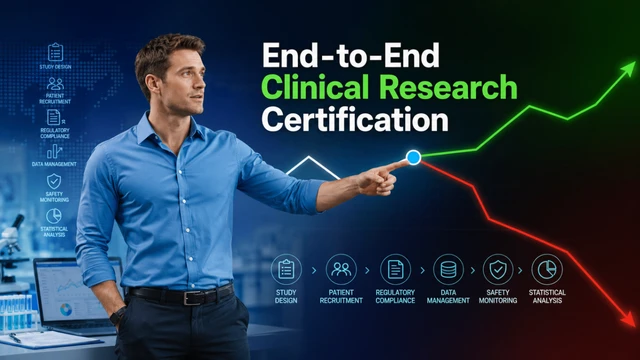
Our Clinical Operations Certification and End-to-End Clinical Research Certification are designed for life sciences graduates, NHS research practitioners, and European pharmacy professionals. They focus on the exact skills sponsors want: CTIS, ICH GCP, site management, and trial budgeting.
Build These Skills Now
Programs from ZANE ProEd Academy that directly address the skill gaps discussed above.
This is not about theory. It is about proving you can deliver a trial from start-up to close-out. That is how you move from CTA to CRA I and eventually CTM.
Why is the clinical trial manager career path and salary UK Europe accelerating now?
Global trials are increasing, especially in oncology, rare disease, and advanced therapies. Europe is a major hub for decentralised trials and CTIS submissions. Sponsors need CTMs who understand both regulation and operations.
The demand is high, but competition is also high. A PhD alone will not differentiate you. A verified portfolio with CTIS portal submission management, ICH GCP site management Europe, and clinical study manager salary Europe benchmarks will.
If you feel stuck as a CTA, use this timeline as your map. Build the skills, document the proof, and target the right roles.
How can ZANE ProEd help you become a Clinical Trial Manager?
ZANE ProEd is a premier professional career-certification platform for clinical operations. We offer structured professional preparation that mirrors real biopharma and CRO environments.
Our Academy programs help you close qualification gaps, create an audit-ready portfolio, and prepare for high-paying industry roles. You can explore the Clinical Operations Certification and End-to-End Clinical Research Certification to see the full curriculum.
Whether you are in London, Dublin, Berlin, or Basel, the pathway is the same: skills, proof, and positioning. To learn more about our mission, visit About ZANE ProEd.
What should you do next in your clinical trial manager career path and salary UK Europe journey?
Start by auditing your industry readiness. Identify the tools you have used and the ones you have not. Then choose a structured certification that includes simulation and portfolio proof.
Explore Professional Certification Blueprints, review the simulation curriculum, and build your audit-ready portfolio. The CTM role is within reach if you treat your career like a trial: plan, execute, monitor, and close out.
Build These Skills Now
Programs from ZANE ProEd Academy that directly address the skill gaps discussed above.
Follow Zane ProEd on Google
Preferred SourceAdd our publication as a preferred source to get the latest clinical research guides, industry updates, and career intel directly in your Google Top Stories & AI Overviews.