Your Complete Guide to a Drug Regulatory Strategy Career in India

Drug Regulatory Strategist: A professional in India who designs the fastest, most cost-effective pathway for drug approval. They analyze complex regulations from bodies like CDSCO, FDA, and EMA to create a strategic plan, ensuring new medical products meet all legal requirements for a successful market launch.
As a BPharm or MPharm graduate, you have a solid foundation in pharmaceutical sciences. But you've likely realized there's a huge gap between your college syllabus and what companies demand. A drug regulatory strategy career in India is a high-growth, high-impact path for those who can think beyond the textbooks.
This is not just about filling forms. It's about playing chess with global health regulations. It’s about creating the master plan that gets a life-saving drug to patients faster and more efficiently. This guide will show you how to move from theoretical knowledge to becoming a job-ready regulatory strategist.
Build These Skills Now
Programs from ZANE ProEd Academy that directly address the skill gaps discussed above.
This role is for problem-solvers who want to be at the center of drug development, making decisions that impact a company's success and public health.
What does a Drug Regulatory Strategist do?
A Drug Regulatory Strategist is the brain behind a drug's journey to the market. While a Regulatory Affairs specialist executes tasks based on rules, a strategist designs the entire regulatory roadmap. Think of them as an architect, while the RA team is the construction crew.
The regulatory strategy job description focuses on 'how' and 'why', not just 'what'. Their daily work involves:
- Early-Stage Planning: Working with R&D teams even before clinical trials begin to map out the best regulatory pathway. They decide which countries to target first and what data will be needed.
- Risk Assessment: Identifying potential regulatory hurdles or delays early on and creating plans to overcome them. This saves companies millions of dollars.
- Competitive Analysis: Studying how competitors got their drugs approved and finding smarter, faster ways to navigate the system.
- Agency Interaction Strategy: Planning the communication and negotiation approach with health authorities like the CDSCO in India, the FDA in the US, or the EMA in Europe.
- Lifecycle Management: Creating strategies for post-approval changes, new indications, or expanding into new global markets.
They are proactive planners, not reactive administrators. They use their deep knowledge of the CDSCO FDA EMA regulatory pathway to give their company a competitive edge.
What is the salary of a Regulatory Strategist in India?
The regulatory strategist salary in India is significantly higher than many traditional pharma roles because it requires a unique blend of scientific knowledge, business sense, and strategic thinking. It is a high-value position.
Here is a typical salary progression based on experience:
- Entry-Level / Associate Strategist (0-3 years): ₹5,00,000 to ₹8,00,000 per annum. At this stage, you are likely supporting senior strategists, conducting research, and learning the ropes.
- Mid-Level Strategist (4-8 years): ₹9,00,000 to ₹16,00,000 per annum. You will be responsible for developing strategies for specific products or regions and interacting with health agencies.
- Senior Strategist / Manager (8+ years): ₹18,00,000 to ₹35,00,000+ per annum. At this level, you lead global regulatory strategy for entire product portfolios, manage teams, and influence key business decisions.
Your salary depends on the company size (MNCs pay more), location (Mumbai, Bengaluru, Hyderabad are top hubs), and your ability to demonstrate tangible results, like shortening approval timelines.
How to build a career in regulatory strategy?
Building a drug regulatory strategy career in India is a deliberate process. You cannot jump into it directly after BPharm without the right skills. Here is a clear path:
- Build a Strong Foundation in Regulatory Affairs: You must first master the fundamentals. Understand the 'rules of the game' before you can strategize. Learn about dossier submissions (like the CTD/eCTD format), GMP, and local regulations. A good starting point is understanding the career path in regulatory affairs.
- Develop Global Regulatory Intelligence: Strategy is global. You must understand the similarities and differences between major health authorities like the CDSCO, FDA, and EMA. Knowing how to leverage an approval in one region to speed up approval in another is a key strategic skill.
- Master ICH Guidelines: The International Council for Harmonisation (ICH) guidelines are the global language of drug development. Deep knowledge of these guidelines is non-negotiable.
- Gain Practical, Hands-On Experience: Theoretical knowledge is not enough. You need to work on mock dossiers, analyze real-world case studies, and understand how to prepare submission-ready documents.
- Cultivate Soft Skills: Strategy involves influencing people. Excellent communication, negotiation, and problem-solving skills are just as important as technical knowledge.
What is the drug registration process in India (CDSCO)?
Understanding the drug registration process in India is the first step for any aspiring strategist. The Central Drugs Standard Control Organisation (CDSCO) is the main regulatory body. While the process is detailed, here is a simplified overview for a new drug:
- Step 1: Application for Clinical Trials (IND): The company submits an Investigational New Drug (IND) application with pre-clinical (animal) data to get permission to conduct human clinical trials in India.
- Step 2: Clinical Trials: The drug is tested on human volunteers in Phase I, II, and III trials to establish its safety and efficacy. This process must follow Good Clinical Practice (GCP) guidelines.
- Step 3: New Drug Application (NDA): After successful trials, the company compiles all the data into a comprehensive dossier (Form 44) and submits it to the CDSCO for marketing approval.
- Step 4: Review and Approval: The CDSCO reviews the application. If they are satisfied that the drug is safe and effective for the Indian population, they grant marketing authorization.
- Step 5: Post-Marketing Surveillance: Even after approval, the company must continue to monitor the drug's safety and report any adverse events (Pharmacovigilance).
A strategist's job is to plan this entire journey to be as smooth and fast as possible, anticipating CDSCO queries and preparing for them in advance.
What is the difference between regulatory affairs and regulatory strategy?
Many freshers confuse these two roles. Understanding the difference is key to planning your career. The core difference is about being reactive versus proactive.
Here’s a simple comparison of regulatory strategy vs regulatory affairs:
Regulatory Affairs (The 'What')
- Focus: Compliance and execution.
- Main Goal: To ensure all submissions and documents follow current regulations perfectly.
- Activities: Preparing, compiling, and submitting dossiers. Answering queries from health authorities. Maintaining licenses.
- Mindset: "Are we following the rules correctly?"
Regulatory Strategy (The 'Why' and 'How')
- Focus: Planning and optimization.
- Main Goal: To design the smartest, fastest, and most cost-effective path to get a drug approved and keep it on the market.
- Activities: Analyzing global regulations to find opportunities. Planning clinical trial designs for multiple markets. Advising R&D on development pathways.
- Mindset: "How can we use the rules to achieve our business goals faster?"
In short, Regulatory Affairs ensures the car is built according to safety standards. Regulatory Strategy designs the entire racetrack and plans the best racing line to win the race. To get into strategy, you must first master the skills required for quality and regulatory operations.
The Skill Gap: What Your BPharm Degree Didn't Teach You
Your college education gave you a great theoretical base. You know the definition of Schedule Y, the phases of clinical trials, and the structure of a drug molecule. But employers need more.
Companies expect you to know:
- How to prepare a CTD dossier? Not just what it is, but how to actually write Module 3.
- How to interpret an FDA 483 observation? And how to draft a response.
- How to choose the right regulatory pathway for a biologic vs. a small molecule?
- How to use regulatory intelligence tools to predict agency questions?
This is the gap between knowing 'about' a topic and knowing 'how to do' a job. This practical, application-focused skill set is what separates a regular applicant from a high-value, job-ready candidate.
Your 4-Step Roadmap from Fresher to Strategist
- Master the Operational Base (Year 0-1): Focus on learning the core functions of Regulatory Affairs. Get certified in RA and Pharmacovigilance to build a rock-solid foundation. Understand the documentation inside-out.
- Develop Cross-Functional Understanding (Year 1-2): Learn how RA interacts with Quality Assurance, Clinical Research, and Manufacturing. A strategist must understand the entire drug development lifecycle.
- Gain Global Exposure (Year 2-3): Start learning about US FDA, EMA, and other major market regulations. Focus on ICH guidelines. Look for projects that involve submissions to these agencies.
- Practice Strategic Thinking (Ongoing): Start asking 'why'. For every regulatory task, ask: Why are we doing it this way? Is there a faster way? What are the risks? This mindset shift is crucial.
Bridging the Gap with Simulation-Based Learning
How can you gain years of practical experience in just a few months? The answer is not more theory. It's by doing the work in a controlled, simulated environment.
Imagine preparing a mock eCTD dossier for submission to the EMA, responding to simulated queries from the CDSCO, or developing a regulatory strategy for a fictional new drug based on a real-world case study. This is how you build the practical skills and confidence that employers are desperately looking for.
This 'work experience without the job' is the most effective way to cross the bridge from being a pharmacy graduate to becoming a professional.
Build These Skills Now
Programs from ZANE ProEd Academy that directly address the skill gaps discussed above.
The ZANE ProEd System: Building Job-Ready Talent
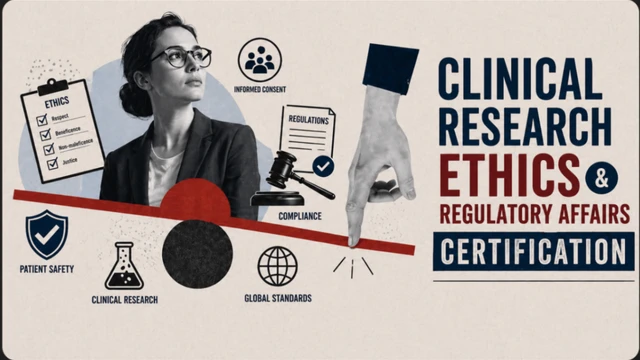
At ZANE ProEd, we don't just teach you theory. Our system is built around practical application. For aspiring strategists, our Clinical Research, Ethics & Regulatory Affairs Certification is designed to immerse you in real-world scenarios.
You won't just learn about regulations; you will apply them. You will work on projects that mirror the tasks performed by regulatory professionals in top pharma companies. Our goal is to build your skills, your confidence, and your portfolio of work so you can demonstrate your value to employers from day one.
We focus on building a deep understanding of the system of drug development, making you not just an employee, but a strategic asset.
Are You Ready for a Career in Strategy?
A career in regulatory strategy is challenging but incredibly rewarding. It puts you at the intersection of science, business, and law.
If you are ready to move beyond textbook knowledge and build a career based on real-world skills, it's time to evaluate your job readiness. See how your current skills compare to what the industry's top strategists possess.
Build These Skills Now
Programs from ZANE ProEd Academy that directly address the skill gaps discussed above.
Follow Zane ProEd on Google
Preferred SourceAdd our publication as a preferred source to get the latest clinical research guides, industry updates, and career intel directly in your Google Top Stories & AI Overviews.