Drug Regulatory Strategy Career in India: A Guide for Medical Graduates

Drug Regulatory Strategist: A career in drug regulatory strategy in India involves planning the fastest, most effective pathway for getting new drugs approved by agencies like CDSCO. It focuses on strategic guidance, risk assessment, and ensuring a product meets all legal requirements for market launch and lifecycle management.
Stop sending out the same resume and wondering why you're not getting hired. If you're a BDS, BAMS, BHMS, or Nursing graduate facing repeated placement rejections, the problem isn't your degree. The problem is you're competing in an overcrowded market. It's time to consider a high-value, strategic field like a drug regulatory strategy career India.
This isn't just about filling out forms. It's about becoming the brain that guides a multi-crore drug product from the lab to the pharmacy shelf. Companies are desperately looking for professionals who can think ahead, not just follow instructions. Your medical background gives you a huge advantage, but only if you know how to use it.
Build These Skills Now
Programs from ZANE ProEd Academy that directly address the skill gaps discussed above.
This guide will show you the mistakes to avoid and the exact steps to build a successful career in this niche but rewarding field. Let's break down what it really takes to stand out.
What does a Drug Regulatory Strategist do?
A Drug Regulatory Strategist is like a master chess player for a pharmaceutical company. They don't just move pieces; they plan the entire game, several moves ahead. Their main job is to create the smartest and fastest plan to get a new drug approved by health authorities.
The regulatory strategy job description is more about planning than paperwork. While a Regulatory Affairs professional executes the plan (compiles documents, submits them), the Strategist designs it. Their daily tasks include:
- Regulatory Pathway Planning: They decide which type of application to file and when, based on the drug and the target market. They analyze the rules of different agencies like the CDSCO in India, the FDA in the US, or the EMA in Europe. This is key for the CDSCO FDA EMA regulatory pathway.
- Risk Assessment: They identify potential problems that could delay or block a drug's approval and create plans to solve them before they happen.
- Advising Teams: They work with clinical research, manufacturing, and marketing teams to ensure everyone's work aligns with the regulatory plan.
- Regulatory Intelligence: They stay updated on changing laws and guidelines from bodies like the ICH to keep the company's strategy current.
In simple terms, they save companies millions of rupees by preventing costly delays and rejections.
What is the salary of a Regulatory Strategist in India?
The regulatory strategist salary in India is very competitive because it's a skill-based role. Your degree gets you in the door, but your strategic knowledge determines your pay.
Here is a realistic breakdown for freshers and experienced professionals:
- Entry-Level (0-2 years): As a fresher with the right certification and practical skills, you can expect a starting salary between ₹3.5 Lakhs to ₹5.5 Lakhs per annum. This is often higher than generic entry-level roles.
- Mid-Level (3-7 years): With a few years of experience, your salary can jump to ₹8 Lakhs to ₹15 Lakhs per annum. At this stage, you are leading projects and making key strategic decisions.
- Senior-Level (8+ years): Senior strategists and heads of regulatory departments can earn ₹20 Lakhs to ₹40 Lakhs+ per annum. They manage global regulatory plans for entire product portfolios.
Your salary depends on the company (MNCs pay more than smaller domestic firms), your location (Mumbai, Bengaluru, Hyderabad are top hubs), and your specific expertise.
How to build a career in regulatory strategy?
Building a career in regulatory strategy requires more than just your medical degree. You need to add specific, industry-relevant skills that companies are willing to pay a premium for.
Here's how to start:
- Master the Fundamentals: You must understand the core laws and guidelines. Start with India's Drugs and Cosmetics Act, 1940, and the New Drugs and Clinical Trials Rules, 2019. Then, learn about global standards like ICH-GCP.
- Learn Dossier Preparation: Understand how a submission file, like the Common Technical Document (CTD/eCTD), is structured. This is the main document submitted to health authorities.
- Develop Strategic Thinking: This is the most important part. You need to learn how to analyze regulations and apply them to a specific product to create a successful plan. This is a skill you develop through practice, not just by reading books.
- Gain Practical Experience: Since companies won't hire you without experience, you need to find a way to get it. This is where simulation-based training becomes critical.
If you're interested in the operational side, you can also explore a career in regulatory affairs, which works very closely with strategy.
What is the drug registration process in India (CDSCO)?
The drug registration process India is managed by the Central Drugs Standard Control Organisation (CDSCO). Getting a new drug approved is a multi-step journey. While complex, here's a simplified overview:
- Application Submission: The company submits an application (Form 44) to the DCG(I) to conduct clinical trials in India. This includes data about the drug's chemistry, manufacturing, and animal studies.
- Clinical Trial Permission: If the CDSCO is satisfied, it grants permission to conduct clinical trials (Phase I, II, III) in India to test the drug's safety and effectiveness on the Indian population.
- New Drug Application (NDA): After successful trials, the company submits an NDA with all the clinical data. This is a massive dossier that proves the drug is safe and works.
- Review and Approval: The CDSCO's expert committees review the entire dossier. They may ask questions or request more data. If everything is satisfactory, they grant 'marketing authorization'.
- Manufacturing License: Finally, the company gets a license to manufacture and sell the drug in India.
A regulatory strategist oversees this entire process, ensuring each step is completed correctly and on time.
What is the difference between regulatory affairs and regulatory strategy?
Many people use these terms interchangeably, but they are very different. Understanding this is key to choosing your career path. The relationship between regulatory strategy vs regulatory affairs is like that of an architect and an engineer.
- Regulatory Strategy (The Architect): This role is about planning and designing the regulatory journey. The strategist decides the 'what', 'why', and 'when'. They look at the big picture, assess risks, and create the master plan for drug approval. Their work happens *before* the submissions are compiled.
- Regulatory Affairs (The Engineer): This role is about executing the plan. The RA professional builds the house according to the architect's blueprint. They compile the dossiers, ensure every document is perfect, submit them to the health authorities, and handle communication. Their work is highly operational and compliance-focused.
While both are crucial, Regulatory Strategy is a higher-value function that requires a deep understanding of both the science and the business of pharmaceuticals. It's a natural next step for those who start in operational roles like pharmacovigilance or regulatory affairs.
The Skill Gap: What Your Degree Didn't Teach You
Your BDS, BAMS, or BHMS degree gave you a strong foundation in medical science. But it didn't prepare you for the realities of the pharmaceutical industry. Recruiters see this gap instantly.
- What Your College Taught You: Anatomy, Physiology, Pathology, Clinical Diagnosis, Patient Care.
- What Employers Expect: Knowledge of ICH-GCP, Schedule Y, CTD/eCTD structure, Regulatory Intelligence, Risk Management Plans, Global Submission Pathways (e.g. CDSCO, FDA, EMA).
This gap is why so many qualified graduates fail to get jobs. You know the 'what' (the science), but you don't know the 'how' (the process and strategy) of the industry.
Your 4-Step Pathway to Becoming a Regulatory Strategist
Don't get discouraged. You can bridge this gap with a clear, actionable plan.
- Step 1: Build Your Regulatory Foundation. Dedicate time to learning the core regulations. Read the Drugs & Cosmetics Act and the New Drugs & Clinical Trials Rules (2019) from the CDSCO website.
- Step 2: Learn the Language of Submissions. Understand the structure of a Common Technical Document (CTD). This is the universal format for regulatory dossiers. Know what goes into each module.
- Step 3: Gain Practical, Project-Based Skills. Theory is not enough. You must apply your knowledge. Work on case studies or simulated projects where you create a mock regulatory strategy for a new drug.
- Step 4: Showcase Your Skills. Update your resume and LinkedIn profile to highlight these new, specific skills. Instead of saying 'Quick Learner', say 'Trained in CTD Module 3 Preparation and Regulatory Pathway Analysis for CDSCO'.
The Bridge from Theory to a High-Paying Job
Reading about regulatory strategy is like reading about how to swim. You will never learn until you get in the water. The biggest mistake freshers make is collecting theoretical certificates without any real-world application skills.
This is why simulation-based learning is the most effective way to prepare. It allows you to work on projects that are exactly like what you would do on Day 1 of your job as a Drug Regulatory Strategist. You make mistakes, learn, and build confidence in a controlled environment.
Build These Skills Now
Programs from ZANE ProEd Academy that directly address the skill gaps discussed above.
A System for Building Your Career
At ZANE ProEd, we don't just give you video lectures. We provide a system built on practical application. Our programs, like the Certification in Clinical Research, Ethics & Regulatory Affairs, are designed to immerse you in real-world scenarios.
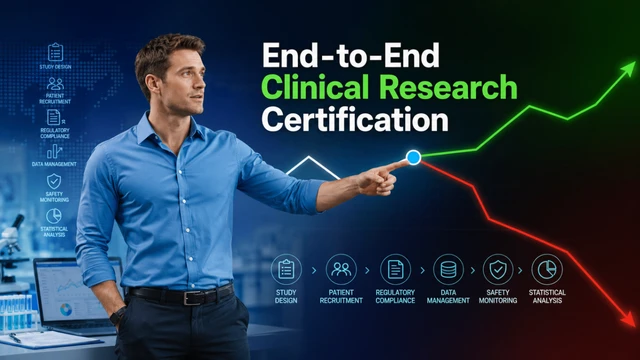
You won't just learn *about* the drug registration process; you will work on a simulated project to create a regulatory submission plan. The End-to-End Clinical Research Certification further helps you understand the entire drug development lifecycle, which is crucial context for any strategist.
This approach builds the job-ready skills that make recruiters notice your resume among hundreds of others. It’s about proving you can do the work, not just that you passed an exam.
How Job-Ready Are You?
Your medical degree is valuable, but in the highly competitive Indian market, it's just the starting point. The candidates who get hired are the ones who have invested in building specific, practical skills that companies need right now.
Before you apply for another job, take a moment to assess your skills honestly. Do you understand the difference between an IND and an NDA? Can you explain the basic structure of a CTD? If not, it's time to build those skills.
See how your skills compare to what top pharmaceutical companies are looking for. Your next career move should be a strategic one.
Build These Skills Now
Programs from ZANE ProEd Academy that directly address the skill gaps discussed above.
Follow Zane ProEd on Google
Preferred SourceAdd our publication as a preferred source to get the latest clinical research guides, industry updates, and career intel directly in your Google Top Stories & AI Overviews.