Drug Safety Scientist Salary and Qualifications US: Complete Career Roadmap

Drug Safety Scientist In the US, a Drug Safety Scientist typically earns $85,000–$145,000 annually. Qualifications include a PharmD, MD, or PhD, plus pharmacovigilance training, signal detection experience, and knowledge of ICH guidelines. Entry-level roles start near $75,000; senior scientists in biotech hubs can top $160,000.
If you're an RN or BSN nurse eyeing a corporate biopharma career, understanding drug safety scientist salary and qualifications in the US could be your smartest move. Many nurses transition from bedside care to pharmacovigilance because the demand for safety surveillance specialists is surging. This shift offers better pay, predictable hours, and a chance to impact patient safety on a global scale.
\nThe opportunity is real: recruiters often reject strong clinical candidates because they lack demonstrated skills in aggregate reporting, signal detection, and FDA compliance. That skill gap is your window to stand out — and this guide breaks down exactly how to close it.
Build These Skills Now
Programs from ZANE ProEd Academy that directly address the skill gaps discussed above.
What qualifications do you need to be a Drug Safety Scientist?
\nTo land a drug safety scientist role in the US, you need a combination of clinical or scientific education and specialized pharmacovigilance training. The exact drug safety scientist salary and qualifications threshold varies by employer, but most entry-level scientists hold a doctorate-level degree or a nursing degree with additional certification.
\n- \n
- Degree: PharmD, MD, PhD in life sciences, or BSN/RN with pharmacovigilance experience. A master's in public health (MPH) or regulatory science can also suffice. \n
- Certifications: ICH-GCP training, RAC (Regulatory Affairs Certification), or specialized PV certificates from programs like ZANE ProEd's PSUR/DSUR reporting or signal detection courses. \n
- Core skills: Authoring aggregate safety reports (PBRER, DSUR), performing signal detection using statistical tools, and managing safety databases like Argus or ArisG. \n
- Experience: At least 1-2 years in clinical safety surveillance or drug safety associate (DSA) roles. Many scientists start as safety associates or pharmacovigilance specialists. \n
Employers also expect familiarity with FDA regulations and ICH E2E guidelines. In US biopharma hubs like Boston, RTP, and San Diego, hands-on simulation experience often outweighs academic pedigree.
\nWhat is the salary difference between a Safety Associate and a Safety Scientist?
\nThe salary gap between a Safety Associate and a Safety Scientist reflects the jump from case processing to strategic safety assessment. In the US, Safety Associates typically earn $55,000–$85,000, while Safety Scientists earn $85,000–$145,000, with senior scientists reaching $160,000+.
\n- \n
- Safety Associate: Focuses on adverse event intake, case narrative writing, and MedDRA coding. Often a stepping stone for RNs and pre-med graduates. \n
- Safety Scientist: Owns aggregate reports, leads signal detection, and interfaces with regulatory agencies. Requires deeper understanding of pharmacovigilance science and data analysis. \n
Location matters: a Safety Scientist in Boston or San Francisco can command 10-15% more than the national median. For nurses transitioning, starting as a Safety Associate then upskilling to Scientist within 2-3 years is a proven path.
\nWhat are aggregate safety reports like PBRER and DSUR?
\nPBRER (Periodic Benefit-Risk Evaluation Report) and DSUR (Development Safety Update Report) are the core aggregate safety documents in pharmacovigilance. A drug safety scientist authors these reports to summarize the safety profile of a drug over a defined period.
\n- \n
- PBRER: Required post-marketing; evaluates benefit-risk balance using cumulative data. Submitted to the FDA and other regulators per ICH E2C(R2). \n
- DSUR: Annual report during clinical development; includes safety findings from ongoing trials, per ICH E2F. Links to ClinicalTrials.gov data. \n
- Role of the Safety Scientist: Medical review of line listings, signal assessment, and narrative writing. Proficiency in pharmacovigilance aggregate reports FDA expectations is non-negotiable. \n
Mastery of PBRER and DSUR writing is one of the fastest ways to differentiate yourself from other clinical candidates.
\nHow do PharmD graduates enter drug safety and signal detection?
\nPharmD graduates have a direct path into drug safety scientist roles because their training aligns with pharmacovigilance science. The PharmD to drug safety scientist career route typically involves a fellowship, industry rotation, or a focused certification program.
\n- \n
- Complete a pharmacovigilance fellowship (e.g., at Rutgers, MCPHS, or through biopharma companies). These paid programs often lead to full-time offers. \n
- Get hands-on with signal detection tools like Oracle Argus, IBM Watson, or AI-based platforms. Employers seek candidates who have actually queried safety databases. \n
- Earn a specialized certificate in signal detection pharmacovigilance jobs — clinical surveillance and AI-assisted analytics are hot skills. Explore a signal detection career roadmap. \n
- Build a portfolio of sample PSURs, DSURs, and signal evaluations. Even simulated projects count if they demonstrate methodology. \n
For PharmDs, salary progression is steep: entry-level drug safety scientist roles start at $90,000 and rise quickly with aggregate reporting expertise.
\nWhat does an FDA safety audit evaluate in pharmacovigilance?
\nAn FDA safety audit evaluates whether a company's pharmacovigilance system meets regulatory standards for clinical safety surveillance US. Auditors inspect documentation, timelines, and data integrity across the entire safety lifecycle.
\n- \n
- SOPs and training records: Are staff trained on ICH-GCP and internal procedures? Missing training logs are a common finding. \n
- Case processing: Timely triage, MedDRA coding, and narrative quality for individual case safety reports (ICSRs). \n
- Aggregate report compliance: Submission of PBRER, DSUR, and PSUR within regulatory deadlines. Delays trigger warning letters. \n
- Signal detection process: Use of statistical tools to identify safety signals, documentation of signal management meetings. \n
- Database validation: Ensuring the safety database (e.g., Argus) is validated and audit-trailed. \n
Being audit-ready is a skill you can practice through simulation. Employers value candidates who understand what inspectors look for.
\nWhat skills do employers expect that nursing school didn't teach?
\nConventional nursing education excels at patient assessment and acute care, but it rarely covers pharmacovigilance aggregate reports FDA frameworks or signal detection methodologies. As an RN transitioning into clinical research, you already understand adverse events and patient safety — but employers need proof you can translate that clinical intuition into regulatory deliverables.
\nThe modern drug safety scientist job description demands hands-on experience with safety databases, statistical analysis for signal detection, and authoring PBRER/DSUR documents. These skills are not taught in BSN programs, and even many pre-med tracks skip them. That's why a targeted upskilling path is essential.
\nWhat is the step-by-step pathway to become a Drug Safety Scientist?
\nYou can transition into a drug safety scientist role in 3–6 months if you follow a focused, skill-based plan. Here's the exact path our career strategists recommend for nurses and pre-med graduates:
\n- \n
- Learn the pharmacovigilance landscape: Understand ICH guidelines, FDA reporting requirements, and the difference between ICSRs and aggregate reports. Start with free resources from ICH and FDA. \n
- Master aggregate report writing: Enroll in a specialized program that simulates PBRER and DSUR authoring. Practice with real-world templates and get feedback from industry experts. \n
- Develop signal detection skills: Learn to query safety databases, apply disproportionality analysis, and use AI-assisted tools. Many signal detection pharmacovigilance jobs now require basic data literacy. \n
- Build a verifiable portfolio: Complete at least two simulated aggregate reports and one signal detection project. Host them on LinkedIn or a personal site. \n
- Apply strategically: Target entry-level drug safety associate roles as a bridge, then aim for Safety Scientist titles. Network with professionals in Boston, RTP, or San Diego. \n
How can simulation-based learning and verifiable portfolios get you hired?
\nRecruiters reject candidates who only have theoretical knowledge. They want proof you can do the job on day one. Simulation-based training bridges this gap by placing you in realistic pharmacovigilance scenarios — authoring a PBRER from a mock safety database, running signal detection on a simulated adverse event dataset, and presenting findings to a mock regulatory authority.
\nThis approach builds a verifiable portfolio that you can show to hiring managers. Instead of saying 'I know PBRER', you demonstrate with a completed report and a summary of your methodology. That's the difference between being overlooked and getting an interview.
\nBuild These Skills Now
Programs from ZANE ProEd Academy that directly address the skill gaps discussed above.
How does ZANE ProEd's PSUR/DSUR and Signal Detection training close the gap?
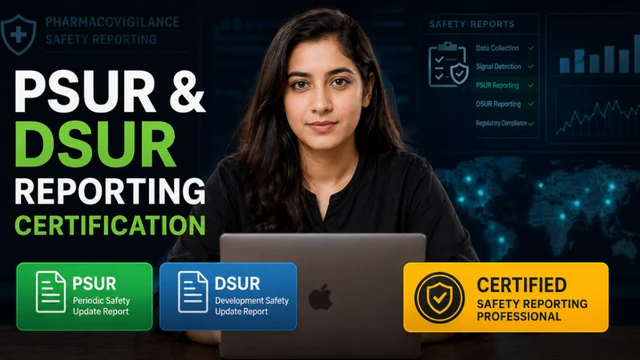
\nZANE ProEd's PSUR/DSUR Reporting Certification and Pharmacovigilance Signal Detection with AI programs are built for career switchers like you. These are not passive video courses — they are simulation-driven training systems that mirror real biopharma workflows.
\nThe PSUR/DSUR program immerses you in authoring aggregate reports under ICH-GCP audit conditions. The Signal Detection program teaches you to use modern analytics, including AI-assisted tools, to identify safety signals from clinical trial data. Both programs culminate in a portfolio project that you can present to employers.
\nZANE ProEd's approach emphasizes ICH-GCP international compliance, audit readiness, and practical trial simulation. Graduates have used these credentials to land roles at CROs and biopharma companies within months. Learn more about the methodology at ZANE ProEd.
\nReady to move beyond bedside nursing and into a high-growth pharmacovigilance career? Audit your industry readiness by comparing your current skills against the qualifications listed above. Then explore simulation workflows that let you practice PBRER writing and signal detection before your first interview.
Build These Skills Now
Programs from ZANE ProEd Academy that directly address the skill gaps discussed above.
Follow Zane ProEd on Google
Preferred SourceAdd our publication as a preferred source to get the latest clinical research guides, industry updates, and career intel directly in your Google Top Stories & AI Overviews.