Drug Safety Scientist Salary and Qualifications US: Complete 2025 Career Guide

Drug Safety Scientist In the US, a Drug Safety Scientist earns $95,000 to $135,000 per year, with senior roles exceeding $150,000. Qualifications include a PharmD, PhD, MD, or MPH plus 2-5 years in pharmacovigilance, expertise in PBRER, DSUR, signal detection, and FDA/ICH guidelines.
If you're stuck in academic lab research making under $48k with no advancement, you're likely wondering whether drug safety scientist salary and qualifications us are realistic for someone with your background. You are not imagining the ceiling. The bench-to-bedside dream often stalls at the lab bench, while industry roles reward the same biology/biochemistry foundation with twice the pay and a clear promotion ladder.
Pre-med and post-bacc graduates have stronger transferable skills than they think. You already understand pathophysiology, data integrity, and clinical terminology. What you lack is not intelligence; it is industry workflow fluency. Employers do not expect you to arrive knowing everything, but they do expect you to demonstrate audit-ready awareness of safety reporting, aggregate documents, and signal detection.
Build These Skills Now
Programs from ZANE ProEd Academy that directly address the skill gaps discussed above.
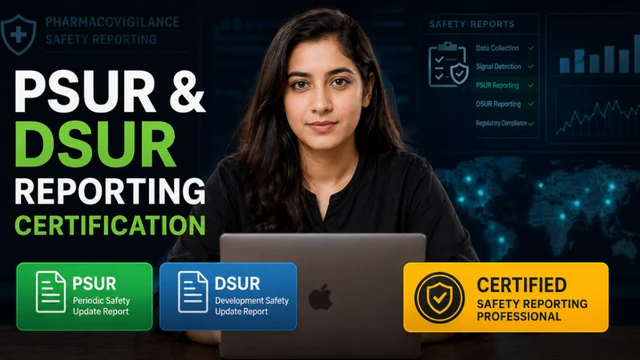
This Q&A breaks down exact qualifications, real salary tiers, and the fastest route into drug safety science without another degree.
What qualifications do you need to be a Drug Safety Scientist? (Drug Safety Scientist Salary and Qualifications US)
Most US employers list a PharmD, PhD in life sciences, MD, MPH, or BSN with clinical experience as the preferred baseline. However, a strong candidate without a doctoral degree can still enter through an associate role and upskill internally.
- Education: Bachelor's degree in biology, biochemistry, nursing, or pharmacy at minimum; advanced degree strongly preferred for scientist-level roles.
- Experience: 2-5 years in pharmacovigilance, clinical safety, or regulatory affairs. Entry-level safety associate roles can bridge this gap.
- Technical skills: Working knowledge of MedDRA coding, safety databases like Argus, ArisG, or Veeva Vault, and aggregate report authoring.
- Regulatory knowledge: Familiarity with ICH E2E (pharmacovigilance planning), ICH E2C(R2) for PBRER, and FDA postmarketing safety reporting rules from FDA.
- Soft skills: Medical writing, cross-functional communication, and attention to regulatory timelines.
In the PBRER DSUR safety scientist role, you will often own the authoring and quality control of periodic safety documents. This is why hands-on aggregate report training can make a non-traditional candidate stand out faster than a generic certificate.
What is the salary difference between a Safety Associate and a Safety Scientist?
Salary is the biggest validation point for career switchers. The gap between associate and scientist is not just a title change; it reflects a shift from case processing to strategic safety analysis.
- Drug Safety Associate / PV Associate: $65,000 - $85,000 per year. Focuses on individual case safety report (ICSR) intake, data entry, triage, and follow-up.
- Drug Safety Scientist / PV Scientist: $95,000 - $135,000 per year. Focuses on aggregate reports, signal detection, risk management, and regulatory submissions.
- Senior / Principal Scientist: $140,000 - $165,000+. Leads safety surveillance strategy, FDA interactions, and cross-functional teams.
Biopharma hubs like Boston, RTP (Research Triangle Park), and San Diego often pay at the higher end due to cost of living and competition. For a detailed entry-level roadmap, read our complete guide to Drug Safety Associate jobs.
What are aggregate safety reports like PBRER and DSUR?
Aggregate reports are the backbone of pharmacovigilance aggregate reports FDA compliance. They summarize safety data across a product's lifecycle rather than one case at a time.
- PBRER (Periodic Benefit-Risk Evaluation Report): A comprehensive postmarketing report required by FDA and EMA. It evaluates whether a drug's benefits continue to outweigh its risks using cumulative safety data.
- DSUR (Development Safety Update Report): An annual report for investigational products, covering ongoing clinical trials. DSURs align with ICH E2F and include clinicaltrials.gov data references.
- PSUR (Periodic Safety Update Report): A legacy EU-focused report, now largely replaced by PBRER in most regions.
- RMP (Risk Management Plan) and REMS: Additional safety documents that often feed into aggregate reporting.
In a typical PBRER DSUR safety scientist role, you will coordinate data cuts, perform medical review of line listings, draft sections, and manage review cycles. This is exactly the kind of workflow simulation that builds confidence before interviews.
How do PharmD graduates enter drug safety and signal detection?
The PharmD to drug safety scientist career path is well established, but many PharmDs overlook it because pharmacy school emphasizes dispensing over regulatory science. The fastest entry points are:
- Industry fellowship (1-2 years): Programs in pharmacovigilance or regulatory affairs provide structured rotations and mentorship.
- Drug Safety Associate role: Start in case processing, then volunteer for aggregate report and signal detection projects.
- Certification in PV and signal detection: Formal training in signal detection pharmacovigilance jobs helps you bypass the 'no experience' filter.
- Networking through ACRP or NIH events: Many hiring managers value demonstrated knowledge of MedDRA and safety databases.
Signal detection involves statistical and clinical review of safety data to identify new risks. Tools include Empirica Signal, Oracle Argus, and open-source R/Python for disproportionality analysis. You do not need to be a coder, but you must understand thresholds like PRR, ROR, and EBGM.
What does an FDA safety audit evaluate in pharmacovigilance?
FDA audits evaluate whether your company's clinical safety surveillance US systems meet legal and scientific standards. Auditors look for evidence, not promises.
- Standard operating procedures (SOPs): Are case processing, follow-up, and reporting timelines documented and followed?
- Aggregate report compliance: Are PBRERs, DSURs, and expedited ICSRs submitted on time with proper content?
- Signal detection and risk management: Is there a systematic process for screening, validating, and escalating safety signals?
- Training records: Can staff demonstrate current GVP/ICH knowledge and role-specific competency?
- CAPA (Corrective and Preventive Actions): Are previous audit findings addressed with documented evidence?
Employers now expect even entry-level candidates to speak this audit language. Simulation-based training is the only way to build that vocabulary without waiting years on the job.
Why a Biology Degree Alone Won't Get You a Drug Safety Scientist Job
Conventional academic training teaches you to pipette, run gels, and analyze lab data. Modern employers in pharmacovigilance expect you to navigate safety databases, write regulatory documents, and interpret adverse event data. The gap is not theoretical; it is deliverable-based.
- What academia gives you: Experimental design, critical thinking, cell biology, and wet lab techniques.
- What employers actually need: Aggregate report writing (PBRER/DSUR), MedDRA coding, signal detection workflows, FDA/ICH compliance, and cross-functional communication.
This is why experience simulation is now expected. Hiring managers want proof you can open a safety case, code an event, and draft a section of a PBRER without hand-holding.
Your Step-by-Step Roadmap into Drug Safety Science
- Audit your transferable skills: Write down every clinical, data, and writing task from your academic work. Reframe them using pharmacovigilance language.
- Learn the regulatory backbone: Study ICH E2C(R2), E2E, and FDA postmarketing safety reporting guidance from FDA and ICH.
- Complete a hands-on PV certification: Focus on aggregate reports, signal detection, and safety databases rather than theory-only courses.
- Build a verifiable portfolio: Create sample PBRER sections, a DSUR summary, a signal detection memo, and a mock audit response.
- Target entry roles: Apply to Drug Safety Associate, PV Scientist I, or Regulatory Safety Analyst positions in Boston, RTP, or remote US roles.
- Interview with audit-ready narratives: Be prepared to walk through a mock adverse event case and explain your aggregate report approach.
Why Experience Simulation Is Your Shortcut
You cannot wait for an employer to give you experience. You must simulate it. The modern hiring market in today's AI-driven healthcare industry rewards candidates who arrive with a portfolio of verifiable deliverables, not just course certificates.
The right training system should let you work on realistic PBRER and DSUR templates, use mock safety databases, and respond to simulated FDA audit findings. That is exactly what separates a job-ready applicant from a 'knowledgeable' one.
Build These Skills Now
Programs from ZANE ProEd Academy that directly address the skill gaps discussed above.
How ZANE ProEd Bridges the Gap Without Wasting Your Time
ZANE ProEd's PSUR/DSUR Reporting Certification is built around real aggregate report workflows. You will author PBRER sections, reconcile line listings, and manage version control under ICH-GCP and FDA expectations.
The Pharmacovigilance Signal Detection with AI program teaches you how to use modern tools and statistical thresholds to detect safety signals from large datasets. These are not passive video libraries; they are structured simulations that produce audit-ready artifacts.
Both programs align with international compliance standards, including ICH-GCP and GVP modules, so you can speak auditor language from day one. Explore our ZANE ProEd methodology to see how simulation-based learning works.
Audit your industry readiness. Review the qualifications and salary benchmarks above. If you can explain PBRER, DSUR, and signal detection in a 30-minute conversation, you are ready. If not, start with a simulated aggregate report workflow.
Explore simulation workflows that let you practice safety case processing, aggregate report authoring, and FDA audit responses before your first interview.
Build These Skills Now
Programs from ZANE ProEd Academy that directly address the skill gaps discussed above.
Follow Zane ProEd on Google
Preferred SourceAdd our publication as a preferred source to get the latest clinical research guides, industry updates, and career intel directly in your Google Top Stories & AI Overviews.