Hospital Quality Assurance Jobs India: Step-by-Step Guide for BPharm/MPharm Freshers

QA/QC Executive (Hospital / NABH) Hospital quality assurance jobs India focus on NABH accreditation, patient safety, and quality improvement. BPharm/MPharm freshers can become quality officers or accreditation coordinators. Salaries range from ₹3.5 LPA to ₹8.5 LPA in accredited hospitals. Key skills include NABH standards, audits, and healthcare quality management.
If you feel stuck after internships and still can't land a job, you're not alone. Many BPharm and MPharm graduates search for hospital quality assurance jobs India but get lost in the maze of NABH standards and hospital workflows. Your internships gave you exposure, but not the real, workflow-level skills employers want.
\nHospitals don't hire on potential—they hire on proof. They need QA/QC executives who can handle NABH documentation, patient safety audits, and quality improvement projects from day one. That's the gap between your internship and your first job.
Build These Skills Now
Programs from ZANE ProEd Academy that directly address the skill gaps discussed above.
This guide is your insider roadmap. We'll walk you through exactly what NABH is, how to become a quality officer, what salary you can expect, and the step-by-step path to get hired in the next 3–6 months.
\nWhat is NABH accreditation and why does it matter for hospital quality assurance jobs India?
\nNABH (National Accreditation Board for Hospitals & Healthcare Providers) is the apex body that sets quality standards for Indian hospitals. It is a constituent board of the Quality Council of India. NABH accreditation means a hospital meets rigorous benchmarks for patient safety, clinical care, and governance.
\nFor your career, NABH accreditation career opens doors to QA roles in top hospitals. Accredited hospitals must maintain continuous compliance, creating demand for quality officers who can manage documentation, audits, and training. The principles align with global healthcare quality frameworks from WHO.
\nWhy does it matter for freshers? Because hospitals seeking NABH accreditation or maintaining it need trained manpower. They hire QA/QC executives to handle the workload. If you understand NABH standards, you become immediately valuable.
\n- \n
- Patient safety: NABH emphasises error prevention and incident reporting. \n
- Quality improvement: Hospitals use NABH to drive continuous improvement. \n
- Career growth: NABH experience is a stepping stone to senior quality roles. \n
How to become a Quality Officer in a hospital?
\nBecoming a quality officer requires a mix of education, certification, and practical exposure. Here is the quality officer hospital job description in brief: you will conduct audits, maintain documentation, train staff, and manage incident reporting. To get there, follow these steps:
\n- \n
- Understand the role: A quality officer ensures the hospital complies with NABH standards. Daily tasks include rounding, checklist audits, and data collection. \n
- Get certified: A specialized certification in hospital quality management signals your commitment and equips you with practical tools. \n
- Build a portfolio: Create sample audit reports, incident investigation documents, and quality improvement plans. This proves your skills. \n
- Apply strategically: Target NABH-accredited hospitals, corporate hospitals, and healthcare chains in metros like Mumbai, Bangalore, Hyderabad, and Pune. \n
- Prepare for interviews: Expect questions on NABH standards, quality tools, and real-life scenarios. For broader interview tips, see our QA/QC pharma jobs for freshers interview guide. \n
What is the salary of a hospital QA executive in India?
\nThe hospital QA executive salary varies by experience, city, and hospital type. Entry-level freshers can expect ₹3.5 LPA to ₹5.5 LPA. With 2–4 years of experience, salaries rise to ₹6 LPA–₹10 LPA. Senior quality managers earn ₹12 LPA–₹18 LPA or more in large corporate hospitals.
\n- \n
- Mumbai: ₹4–6 LPA (entry), ₹7–12 LPA (mid) \n
- Bangalore: ₹3.5–5.5 LPA (entry), ₹6–10 LPA (mid) \n
- Hyderabad: ₹3.5–5 LPA (entry), ₹6–9 LPA (mid) \n
- Pune: ₹3.5–5 LPA (entry), ₹6–9 LPA (mid) \n
Certifications and NABH experience can accelerate your salary growth. Hospitals pay a premium for candidates who can independently handle accreditation audits.
\nWhat are the key NABH standards a fresher should know?
\nNABH standards are comprehensive, but freshers should focus on the core areas that affect daily QA work. Here are the NABH standards for freshers to master first:
\n- \n
- Patient Rights and Education: How hospitals inform and involve patients in care decisions. \n
- Infection Control: Hand hygiene, sterilisation, and healthcare-associated infection prevention. \n
- Medication Management: Safe prescribing, dispensing, and administration processes—crucial for pharmacy graduates. \n
- Quality Improvement: Using PDSA cycles, root cause analysis, and clinical audits. \n
- Facility Management: Safety, security, fire preparedness, and hazardous material handling. \n
- Human Resource: Credentialing, training, and staff qualification records. \n
Regulatory oversight from CDSCO also influences hospital pharmacy quality, so familiarity with drug schedules and safety alerts helps.
\nWhat skills are needed for hospital quality assurance?
\nHealthcare quality management requires both technical and soft skills. Employers look for candidates who can hit the ground running. Key technical skills include:
\n- \n
- NABH standards: Deep understanding of the accreditation framework. \n
- Quality tools: PDSA, RCA, FMEA, and statistical process control. \n
- Audit techniques: Planning, conducting, and reporting internal audits. \n
- Data analysis: Using Excel and hospital information systems to track quality indicators. \n
- Documentation: Writing policies, SOPs, and incident reports. \n
Soft skills like communication, attention to detail, and problem-solving are equally important. Quality risk management principles from ICH are increasingly adapted for hospital settings. For a deeper dive into audit careers, explore our GCP auditor career path and interview mistakes guide.
\nWhat is the skill gap between BPharm/MPharm education and hospital QA jobs?
\nYour pharmacy education teaches you pharmacology, formulation, and drug analysis. But hospitals expect workflow-level competence in quality systems. Here is the gap:
\n- \n
- Education: Focus on theoretical quality control and pharmacopoeial standards. Employers expect: Practical NABH documentation, incident investigation, and audit management. \n
- Education: Limited exposure to hospital workflows. Employers expect: Understanding of patient safety, infection control, and medication management processes. \n
- Education: Group projects and lab reports. Employers expect: An audit-ready portfolio with sample reports, root cause analyses, and quality improvement projects. \n
This gap is why many freshers with internships still struggle. Internships show you the environment, but they rarely let you own quality documentation or lead audits. To bridge this, you need structured, hands-on training.
\nWhat is the step-by-step pathway to get a hospital QA job in 3–6 months?
\nFollow this actionable roadmap to land your first hospital QA role:
\n- \n
- Master NABH standards (Month 1): Download the NABH 5th edition standards and study the core chapters. Make notes on patient rights, infection control, and medication management. \n
- Enroll in a specialized certification (Month 1–2): A professional certification in hospital quality management gives you structured learning and credibility. \n
- Build a portfolio (Month 2–3): Create sample audit reports, incident investigation documents, and a quality improvement project. Use real hospital scenarios or simulation-based exercises. \n
- Gain practical exposure (Month 3–4): Use simulation toolkits to practice NABH audits, incident management, and documentation. This builds confidence for interviews. \n
- Network and apply (Month 4–5): Connect with quality managers on LinkedIn. Apply to NABH-accredited hospitals, corporate chains, and healthcare consultancies. \n
- Prepare for interviews (Month 5–6): Practice answering scenario-based questions. Be ready to discuss how you would handle a medication error or improve hand hygiene compliance. \n
How does simulation-based learning close the gap?
\nTraditional courses are passive. Simulation-based learning puts you in real hospital QA scenarios. You practice audits, incident investigations, and documentation using industry-grade toolkits. The result is a verifiable portfolio that proves your skills to employers.
\nInstead of saying you 'know' NABH, you show a completed audit report you created. That is the proof hiring managers trust.
\nBuild These Skills Now
Programs from ZANE ProEd Academy that directly address the skill gaps discussed above.
How can ZANE ProEd Academy prepare you for hospital QA roles?
\nZANE ProEd Academy is a premier professional career-certification platform. We offer industry-grade simulation toolkits that mirror real hospital workflows. While our toolkits include platforms like Argus Safety for pharmacovigilance, Medidata Rave for clinical data, Veeva Vault for document management, and FDA 21 CFR compliance modules, our hospital quality programs are built for Indian healthcare settings.
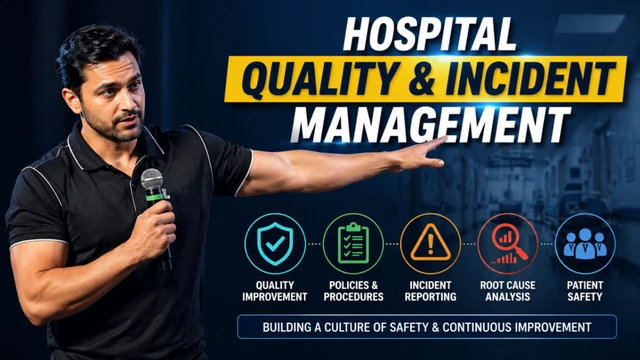
\nTwo flagship programs are designed for your success: the hospital-quality-management-certification and the hospital-quality-incident-management certification. These programs close your qualification gaps by providing structured, workflow-level training. You will build an audit-ready portfolio and prepare for high-paying roles in NABH-accredited hospitals.
\nThe ROI is clear: certified candidates stand out, interview better, and command higher starting salaries. This is not about watching videos—it is about structured professional preparation that mirrors what employers expect.
\nReady to audit your industry readiness?
\nTake the next step with confidence. Explore our professional certification blueprints, review the simulation curriculum, or audit your industry readiness. Visit ZANE ProEd to learn more about our career acceleration system.
Build These Skills Now
Programs from ZANE ProEd Academy that directly address the skill gaps discussed above.
Follow Zane ProEd on Google
Preferred SourceAdd our publication as a preferred source to get the latest clinical research guides, industry updates, and career intel directly in your Google Top Stories & AI Overviews.