Hospital Quality Assurance Jobs India: A Step-by-Step Guide for Freshers

Hospital Quality Assurance Jobs India involve ensuring patient safety and care standards in hospitals, often guided by NABH accreditation. Freshers from pharmacy, nursing, or life sciences can start as QA executives, earning ₹2.5–5 LPA, with high demand in accredited hospitals.
If you feel stuck after your BSc/BPharm/Life Sciences degree, wondering if there’s a healthcare career beyond sales or lab work, know this: hospital quality assurance jobs India are opening up fast. You’re not alone. Many BDS, BHMS, BAMS, and Nursing graduates feel the same. But the good news is, hospitals now need QA officers—and your clinical background gives you an edge. The challenge? Most freshers don’t know the path. This step-by-step guide will show you exactly how to land a hospital QA role within 3–6 months.
What is NABH accreditation and why does it matter?
NABH (National Accreditation Board for Hospitals & Healthcare Providers) is India’s top healthcare quality standard, aligned with global bodies like the WHO. It ensures hospitals follow strict protocols for patient safety, medication management, infection control, and continuous improvement. For allied health graduates, an NABH accreditation career means working in structured, high-quality environments with better pay scales. Hospitals need accreditation to attract patients and insurance tie-ups, so QA professionals are in demand to maintain these standards.
Build These Skills Now
Programs from ZANE ProEd Academy that directly address the skill gaps discussed above.
How to become a Quality Officer in a hospital?
The quality officer hospital job description revolves around monitoring compliance, conducting audits, and improving processes. Here’s a typical roadmap:
- Qualifications: BPharm, BSc Nursing, Life Sciences, or any clinical degree. A certification in healthcare quality management adds weight.
- Gain foundational knowledge: Study NABH chapters, especially Chapter 5 (Quality Improvement) and Chapter 10 (Infection Control).
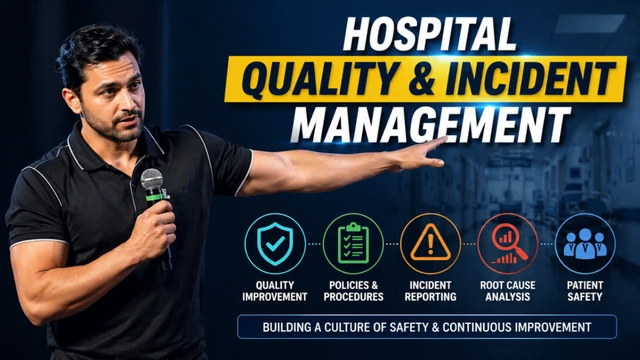
- Build practical skills: Learn incident reporting, root cause analysis, and mock auditing through simulation-based programs.
- Apply smartly: Target NABH-accredited hospitals like Apollo, Fortis, or Manipal. Tailor your resume with keywords like ‘NABH awareness’ and ‘patient safety.’
Daily tasks include reviewing incident forms, updating standard operating procedures, and preparing for accreditation surveys. This role is about being the hospital’s quality guardian.
What is the salary of a hospital QA executive in India?
The hospital QA executive salary varies by city and hospital size. Freshers typically earn ₹2.5–4 LPA. With 2–3 years of experience, it jumps to ₹4–7 LPA. Metro cities like Mumbai, Delhi, and Bengaluru offer higher starting ranges (₹3–5 LPA) compared to tier-2 cities. NABH-accredited hospitals usually pay 20–30% more because they value certified QA staff. As you move into senior roles like Quality Manager, salaries can exceed ₹10 LPA.
What are the key NABH standards a fresher should know?
NABH standards for freshers don’t require mastery, but awareness of these core chapters helps you stand out:
- Access, Assessment and Continuity of Care (AAC): Ensures patients receive timely and continuous care.
- Patient Rights and Education (PRE): Protects patient dignity and informed consent.
- Medication Management (MM): Safe prescribing, storage, and administration of drugs.
- Infection Control (IC): Protocols to prevent hospital-acquired infections.
- Quality Improvement (QI): Ongoing monitoring of key indicators like mortality rates or patient satisfaction.
Familiarize yourself with the latest NABH 5th Edition, and you’ll have a head start.
What skills are needed for hospital quality assurance?
Colleges teach theory—pharmacology, anatomy, nursing procedures. But employers in healthcare quality management expect practical know-how:
- Documentation and attention to detail: Every incident must be recorded accurately per NABH formats.
- Analytical thinking: Use tools like Root Cause Analysis (RCA) or Failure Mode and Effects Analysis (FMEA).
- Communication: Train staff on quality protocols and coordinate with departments.
- Basic data skills: Track infection rates or patient falls using Excel or hospital software.
Most freshers lack hands-on practice with these tools, creating a skill gap that delays job offers.
The skill gap: what you learned vs. what hospitals expect
Your degree taught you the science, but not the system. For example, you may know about infection control from a textbook, but can you conduct a mock investigation of a surgical site infection? Hospitals need you to manage incidents, prepare for NABH audits, and write standard operating procedures. This gap is why many BDS, BHMS, or Nursing graduates struggle to get hired—they’re not 'job-ready' on day one.
A step-by-step pathway to your first QA job
- Learn the standards: Download free NABH resources from CDSCO or accredited agencies. Spend 2 weeks understanding basic quality concepts.
- Get simulation training: Enroll in a program that lets you practice incident management and mock audits in a safe, guided environment.
- Build a quality-focused resume: Highlight any projects, even college ones, related to safety or documentation. Use terms like 'NABH preparedness.'
- Apply to 20+ hospitals: Use LinkedIn, hospital career pages, and job portals. Look for 'Quality Executive' or 'Patient Safety Officer.'
- Prepare for interviews: Expect questions like 'What would you do if you found a medication error?' Practice answering with a quality mindset.
Bridge the gap with real-world systems
Reading about NABH isn’t enough. You need to work with the same tools hospitals use: incident reporting systems, quality dashboards, and policy managers. This is where simulation-based learning makes the difference. Instead of just memorizing standards, you’ll handle virtual case scenarios—like a medication error or a patient fall—and learn to document, analyze, and prevent them. It’s practice that employers recognize.
Build These Skills Now
Programs from ZANE ProEd Academy that directly address the skill gaps discussed above.
How ZANE ProEd’s system prepares you
At ZANE ProEd, we’ve built simulation-based programs that mirror real hospital quality departments. The hospital-quality-incident-management course teaches you to log and investigate incidents using NABH-compliant formats. The hospital-quality-management-certification covers the full quality cycle—from setting indicators to conducting internal audits. These aren’t just theory; you’ll interact with the same tools used in Apollo or Fortis. It’s about building confidence, so you walk into your first interview knowing the job.
If you’re serious about launching a career in hospital quality assurance, start by bridging your skill gap today. Check your job readiness and see how your current skills compare to what top hospitals demand.
Build These Skills Now
Programs from ZANE ProEd Academy that directly address the skill gaps discussed above.
Follow Zane ProEd on Google
Preferred SourceAdd our publication as a preferred source to get the latest clinical research guides, industry updates, and career intel directly in your Google Top Stories & AI Overviews.