Hospital Quality Assurance Jobs India: Step-by-Step Roadmap for Life Science Graduates
Hospital QA / NABH Executive Hospital quality assurance jobs India involve monitoring patient safety, NABH compliance, incident management, and internal audits. Freshers with BSc/MSc life sciences start at ₹2.5–4.5 LPA; NABH-certified officers earn ₹5–8.5 LPA in Hyderabad, Bengaluru, Pune, and Mumbai.
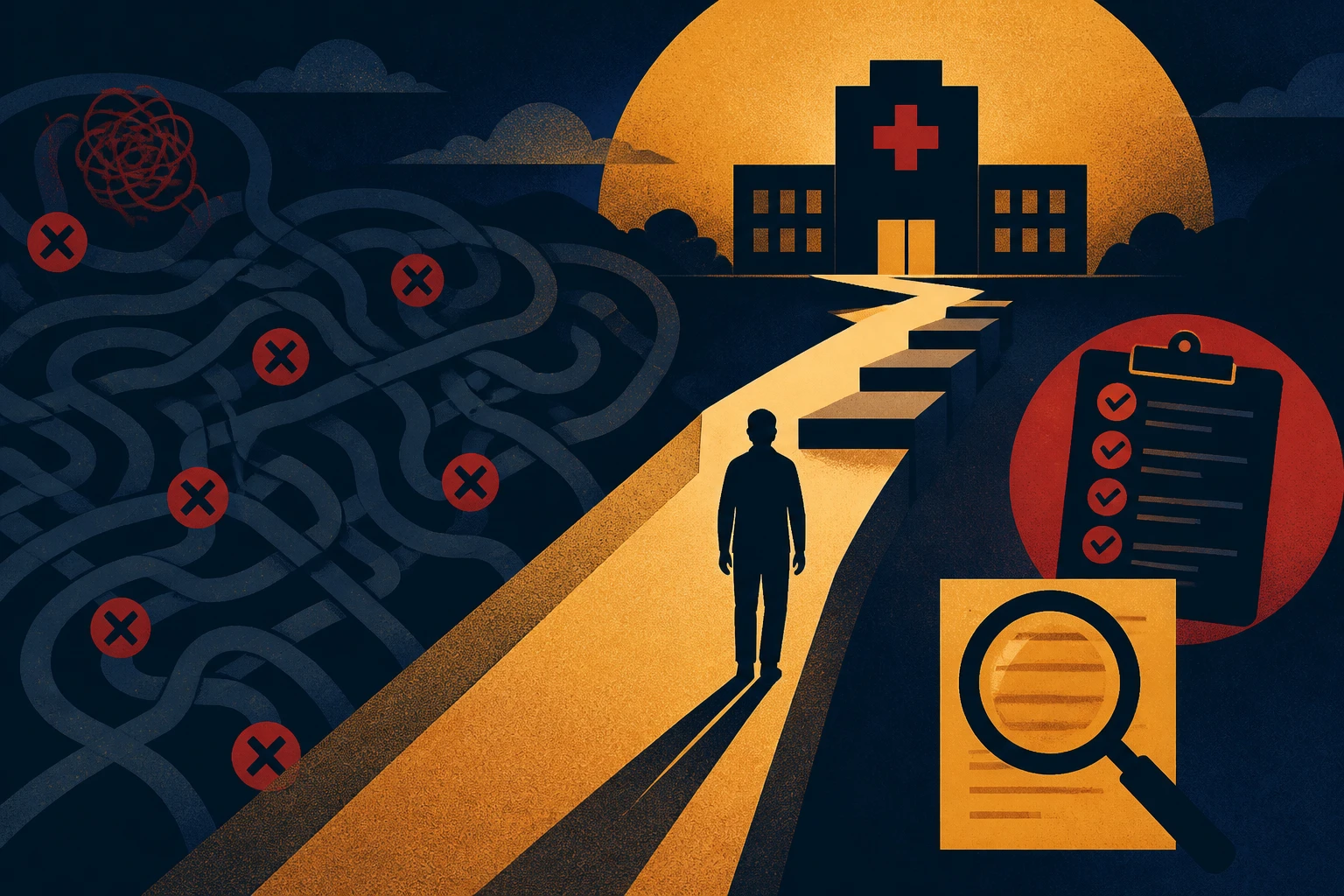
You have a BSc or MSc in Biotechnology, Microbiology, or Biochemistry—and you are stuck. Multiple career doors are open: pharma QC, clinical research, hospital quality, regulatory affairs. Which one actually pays? Which one won't trap you in a dead-end lab job? If hospital quality assurance jobs India keep appearing in your search, you are not alone. This guide cuts through the confusion and gives you a clear, step-by-step roadmap to a stable, respected career in healthcare quality management.
Hospitals in India are racing to get NABH accredited. That creates a massive demand for quality officers who can handle documentation, audits, and incident reporting. The problem? Your degree taught you great science, but not the operational language of hospitals.
Build These Skills Now
Programs from ZANE ProEd Academy that directly address the skill gaps discussed above.
What is NABH accreditation and why does it matter?
NABH (National Accreditation Board for Hospitals & Healthcare Providers) is India's official body that certifies hospitals meet international patient safety and quality standards. It operates under the Quality Council of India and aligns closely with global frameworks from the World Health Organization (WHO).
Why should you care? Because every serious hospital—from Apollo to Fortis to mid-sized regional chains—needs NABH accreditation to attract insured patients, qualify for government schemes like Ayushman Bharat, and build trust. NABH is not optional; it's a survival requirement. For freshers, NABH knowledge transforms you from a generic science graduate into a hospital-ready quality professional. A NABH accreditation career offers long-term stability, clear growth, and respect.
Hospitals with NABH status need constant internal audits, quality indicator tracking, and incident management. That is exactly where your entry point lies.
How to become a Quality Officer in a hospital?
The quality officer hospital job description is not just a desk job. You will be the bridge between clinical staff, management, and accreditation bodies. Here is the realistic path:
- Education: A BSc or MSc in life sciences, nursing, or pharmacy. Your background in microbiology, biochemistry, or biotechnology gives you a strong scientific base.
- Learn NABH standards: You must understand the 10 chapters of NABH. Start with Continuous Quality Improvement (CQI), Hospital Infection Control (HIC), and Patient Rights and Education (PRE).
- Get practical certification: A hands-on hospital quality management certification that includes audit simulations and documentation practice is far more valuable than a theory-only online course.
- Build a portfolio: Create sample audit checklists, a mock incident report, and a quality indicator dashboard. Show employers you can do the work, not just talk about it.
- Apply strategically: Target hospitals undergoing NABH renewal or initial accreditation. Entry titles include Quality Trainee, QA Executive, and Quality Coordinator.
In India, hospitals in Hyderabad, Bangalore, Pune, Mumbai, and Delhi NCR hire aggressively for these roles. A certification with audit-ready documentation skills will put you ahead of other freshers.
What is the salary of a hospital QA executive in India?
Hospital QA executive salary in India varies by city, hospital size, and NABH exposure. Here is the realistic range for freshers and early-career professionals:
- Fresher (0–1 years): ₹2.5 LPA – ₹4.5 LPA
- 1–3 years experience: ₹3.5 LPA – ₹6 LPA
- Senior Quality Officer / Assistant Manager (3–6 years): ₹6 LPA – ₹10 LPA
- Quality Manager / NABH Coordinator (6+ years): ₹10 LPA – ₹18 LPA
Metro cities pay the highest: Hyderabad, Bengaluru, Pune, and Mumbai often offer 20–30% more than tier-2 cities. NABH-certified professionals with incident management and internal audit experience command premium salaries because they reduce compliance risk for the hospital.
Do not accept a role that underpays you just because you are a fresher. With the right certification and portfolio, you can start at the ₹3.5 LPA+ mark even without work experience.
What are the key NABH standards a fresher should know?
NABH standards for freshers can feel overwhelming—there are 10 chapters and over 100 objective elements. But you do not need to memorize all of them. Focus on these four high-impact chapters:
- Continuous Quality Improvement (CQI): How hospitals measure and improve processes using quality indicators, PDSA cycles, and root cause analysis.
- Hospital Infection Control (HIC): Protocols for hand hygiene, biomedical waste management, and prevention of hospital-acquired infections.
- Patient Rights and Education (PRE): Ensuring informed consent, privacy, and patient feedback systems.
- Management of Medication (MOM): Safe storage, prescription, and administration of drugs—critical for quality and safety.
Also understand Facility Management and Safety (FMS) and Information Management System (IMS) because these appear in daily QA work. Use the official CDSCO website for regulatory updates on medication and devices, and refer to ICH guidelines if you later touch clinical quality.
What skills are needed for hospital quality assurance?
Healthcare quality management demands a blend of technical and human skills. Here is what modern hospitals expect from a QA executive:
Technical skills:
- Internal audit methodology and NABH checklist design
- Incident reporting and root cause analysis (RCA) using tools like Fishbone and 5 Whys
- Corrective and Preventive Action (CAPA) documentation
- Quality indicator calculation (infection rate, medication error rate)
- Basic data analysis with Excel or Google Sheets
- Understanding of ISO 9001 and ICH-GCP principles (especially if hospital has clinical research)
Soft skills:
- Clear written and spoken communication for audit reports
- Attention to detail for documentation accuracy
- Teamwork—you will coordinate with doctors, nurses, and administrators
- Ethical judgment, because patient safety is non-negotiable
Most freshers lack the technical side, especially internal audit and RCA. That is exactly why a simulation-based training program is a game changer.
Skill Gap: What Your Degree Missed
Your BSc/MSc in Biotechnology, Microbiology, or Biochemistry gave you excellent lab skills—sterile technique, microbial identification, biochemistry assays. But hospital quality assurance jobs India are not lab jobs. They are operational, documentation-heavy, and audit-focused.
Here is the reality check:
- Conventional education teaches: PCR, ELISA, microbial culture, enzyme kinetics, experimental design.
- Employers expect: NABH chapter mapping, audit trail creation, incident categorization, CAPA writing, quality indicator dashboards, mock drill participation.
The gap is not your intelligence; it's the context. You know how to think scientifically, but you have never been trained to apply that thinking to hospital operations. Without bridging this gap, you will face rejections even when you have a strong academic record. Check out this roadmap for QA/QC pharma jobs for freshers to see how similar skill gaps affect other quality careers.
Structured Pathway: From Confusion to Quality Officer in 5 Steps
- Build foundational healthcare quality awareness: Read free NABH resources, watch hospital accreditation videos, and understand the hospital ecosystem. No cost, just time.
- Complete a practical hospital quality management certification: Choose a program that includes audit simulations, incident case studies, and portfolio assignments—not just video lectures. This validates your knowledge to employers.
- Master incident management and RCA: Learn how to classify incidents (near miss, adverse event, sentinel event) and conduct root cause analysis. This is a daily skill in hospital QA.
- Create a verifiable portfolio: Build a folder with a mock NABH audit checklist, a sample CAPA report, and a quality indicator tracker. Upload it to LinkedIn or share during interviews.
- Apply with confidence to hospital QA roles: Target NABH-accredited hospitals and those in the process of accreditation. Use keywords like quality officer, QA executive, NABH coordinator in your job search.
This roadmap works because it replaces guesswork with demonstrable proof. You are not just saying 'I know NABH'; you are showing 'I have simulated an audit and produced the exact documents a hospital needs'.
System Bridge: Simulation-Based Learning and Portfolio Proof
Degrees alone are no longer enough in the competitive Indian hospital job market. Hospitals want candidates who can walk in and start contributing from day one. That is why ZANE ProEd built its hospital quality training as a simulation system, not a passive course.
You will work through real-world NABH audit scenarios, respond to simulated incident reports, and create documentation that mirrors what accredited hospitals use daily. The result is a verifiable digital portfolio—audit checklists, CAPA reports, quality indicator dashboards—that you can present to any hiring manager. This bridges the skill gap and proves your readiness. If you are still comparing options, read this free QA/QC course guide to understand how practical training differs from theory.
Build These Skills Now
Programs from ZANE ProEd Academy that directly address the skill gaps discussed above.
Academy Integration: ZANE ProEd's Hospital Quality Programs
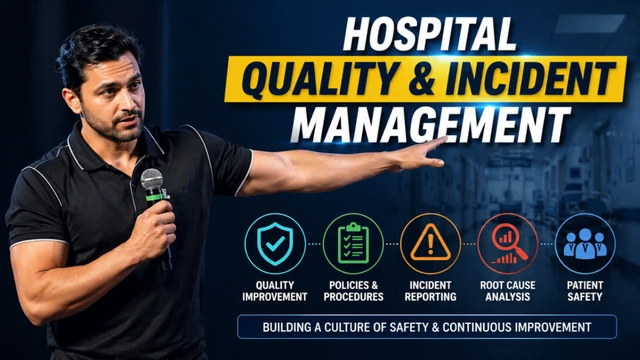
ZANE ProEd offers two focused programs that directly map to hospital quality assurance jobs India: the Hospital Quality Management Certification and the Hospital Quality Incident Management program.
These are not generic video courses. They are industry training systems built around ICH-GCP international compliance principles, audit readiness, and practical incident simulation. You learn by doing: conducting mock internal audits, preparing CAPA documents, and tracking quality indicators exactly as a hospital quality officer would. The training emphasizes international standards, which makes you valuable not just in India but in any healthcare system that follows global quality norms.
By the end, you will have a portfolio that demonstrates your ability to handle NABH documentation, incident analysis, and continuous quality improvement—no more vague claims on your resume.
Audit your industry readiness. If you are not sure whether you are truly prepared for a hospital QA role, ask yourself: Can I create an internal audit checklist for the CQI chapter? Can I write a CAPA report from a given incident? If the answer is no, your next step is clear.
Explore simulation workflows. See how real hospital quality teams monitor indicators, conduct root cause analysis, and close audit findings. ZANE ProEd's modules let you step into that workflow before you ever set foot in a hospital.
Build These Skills Now
Programs from ZANE ProEd Academy that directly address the skill gaps discussed above.
Follow Zane ProEd on Google
Preferred SourceAdd our publication as a preferred source to get the latest clinical research guides, industry updates, and career intel directly in your Google Top Stories & AI Overviews.