How to Become a Clinical Data Manager in the US: Fix the 150-Application Mistake

Clinical Data Manager To learn how to become a clinical data manager in the US, earn a life sciences degree, build hands-on EDC and eCRF skills, complete CDISC training, earn a recognized certificate, and target entry-level CDM or data coordinator roles in biopharma hubs.
You sent 150+ applications for CRA I and CRC roles on LinkedIn and Indeed. Zero callbacks. If you are a recent BS in Biology, Biochemistry, or Chemistry graduate, that silence is exactly why you are now researching how to become a clinical data manager in the US.
That silence is not a personality flaw. It is a resume-signal problem. You are competing for roles that ask for EDC, eCRF, and query workflow evidence, but your CV likely shows coursework, not clinical data capability.
Build These Skills Now
Programs from ZANE ProEd Academy that directly address the skill gaps discussed above.
This mistake audit shows you what US employers actually screen for, what to fix, and how to get shortlisted in the next hiring cycle. Sending application number 151 will not fix a signal problem.
What does a Clinical Data Manager do in a clinical trial? (And how to become a clinical data manager in the US)
A Clinical Data Manager owns the accuracy, completeness, and integrity of trial data from first-patient-in to database lock. This is not a back-office data entry job. It is a core clinical research function.
- Design eCRFs: Build electronic case report forms that match the protocol and site workflow.
- Run data reviews: Spot missing values, outliers, and inconsistencies before monitors do.
- Manage queries: Send, track, and close data clarification queries with clinical sites.
- Support CDISC SDTM: Prepare data for regulatory submission using SDTM and ADaM standards.
- Drive database lock: Coordinate clean data delivery with biostatistics, programming, and medical teams.
In US trials, this work is documented under ICH GCP and FDA expectations. You can view active studies on ClinicalTrials.gov to see how data-heavy modern trials have become.
What is the starting salary for Clinical Data Managers in the US?
Entry-level CDM pay depends on city, therapeutic area, and whether you enter through a data coordinator or clinical data associate role.
- Entry-level CDM / data coordinator: $65,000 - $85,000 per year.
- CDM with 2-4 years: $85,000 - $115,000 per year.
- Senior CDM / lead: $115,000 - $140,000+ per year.
The clinical data manager salary US market pays premiums in Boston, Research Triangle Park (RTP), San Diego, and South San Francisco. Cost of living matters, but biopharma hubs still offer the fastest entry-level CDM career path.
What software tools (EDC, Medidata Rave, Veeva EDC) are essential for CDMs?
US employers expect tool-level familiarity, not just theoretical knowledge. The strongest Medidata Rave EDC data manager jobs postings list specific platforms.
- Medidata Rave EDC: The most requested eClinical platform for US CDM roles.
- Veeva Vault EDC / eTMF: Common in sponsor and CRO environments.
- Oracle Clinical / Inform: Still used in legacy and large trials.
- SAS and CDISC SDTM: Needed to review data transfers and submission-ready datasets.
- Query management systems: Track site responses and clean data faster.
If your resume lists only 'Microsoft Excel' and 'lab techniques', you look untrained for CDISC SDTM clinical data management work. Build evidence in an EDC sandbox before you apply.
Is the CCDM certification required for US clinical data managers?
No, the CCDM certification Society for Clinical Data Management credential is not legally required for entry-level roles. But it signals professional commitment and can help you pass screens.
- Best time to pursue CCDM: After 1-2 years of paid CDM experience, or when targeting senior roles.
- Entry-level alternative: A practical clinical data management certificate with EDC and eCRF portfolio projects.
- Hiring reality: US employers value demonstrable query workflow and EDC design skills more than a badge alone.
Use ACRP and industry resources to understand professional standards. Then build the skill proof first.
How do health informatics and biology graduates enter Clinical Data Management?
You enter through adjacent roles and skill proof, not by waiting for a CRA I callback. The entry level CDM career path usually looks like this:
- Clinical Data Coordinator / Data Assistant: Learn query resolution and site communication.
- Clinical Data Associate: Own eCRF updates and data review tasks.
- Clinical Data Manager I: Manage study-level data cleaning and timelines.
- Senior CDM / Lead CDM: Own database lock and vendor oversight.
Biology and biochemistry graduates already understand human physiology, lab values, and protocol language. Health informatics graduates understand data structures and workflows. What both groups lack is tool-level evidence. Fix that with an EDC portfolio and a resume that mirrors US job descriptions.
Why is your biology degree not getting CDM callbacks?
Your degree taught you how to think about science. It did not teach you how to run a Medidata Rave study or resolve queries inside a live EDC.
Here is the gap that US employers see:
- What your degree shows: Lab reports, coursework, research posters, and maybe a clinical shadowing experience.
- What a CDM job description asks for: eCRF design, query management, EDC navigation, CDISC awareness, and timeline ownership.
- What your resume currently signals: 'I can learn.'
- What the shortlist needs: 'I have already done this work in a simulated trial environment.'
That is why 150 applications feel invisible. You are not underqualified for the future. You are under-evidenced for the screen. A full CDM playbook can help you reframe your background without overstating experience.
What is the step-by-step pathway to become a Clinical Data Manager in the US?
- Audit your resume against CDM job descriptions. Highlight EDC, eCRF, query, CDISC, and data review keywords. Remove lab-only language that does not map to clinical data work.
- Learn one EDC platform deeply. Start with Medidata Rave or Veeva Vault EDC concepts. Practice building forms, entering data, and raising queries.
- Build a mock study portfolio. Create an eCRF, a query log, a data review plan, and a database lock checklist for a fictional trial.
- Add CDISC SDTM literacy. Understand how raw clinical data becomes submission-ready datasets. You do not need to be a programmer, but you must speak the language.
- Target the right entry titles. Apply for Clinical Data Coordinator, Clinical Data Associate, Data Management Assistant, and entry-level CDM roles. Use the step-by-step CDM pathway to sequence your applications.
- Prepare for the screen. Be ready to explain how you would design an eCRF, resolve a query, and handle a database lock delay.
This pathway works because it replaces 'please give me a chance' with 'here is proof of the work I can do.'
How do you build a portfolio that proves CDM capability?
Simulation-based learning is the fastest bridge from a biology degree to a shortlist. Employers cannot verify what you only read about. They can verify what you have built.
- eCRF design sample: Show a form with edit checks, field logic, and query triggers.
- Query workflow sample: Show how you identify an issue, send a query, track the response, and close it.
- Data review sample: Show a mock listing with anomalies, missing visits, and protocol deviations.
- Database lock checklist: Show that you understand timelines, clean patient safety data, and sign-off steps.
This is the difference between a certificate that says you attended and a portfolio that says you can contribute in week one. US hiring managers in Boston, RTP, and San Diego are screening for evidence, not enthusiasm.
Build These Skills Now
Programs from ZANE ProEd Academy that directly address the skill gaps discussed above.
Which ZANE ProEd programs close the CDM skill gap?
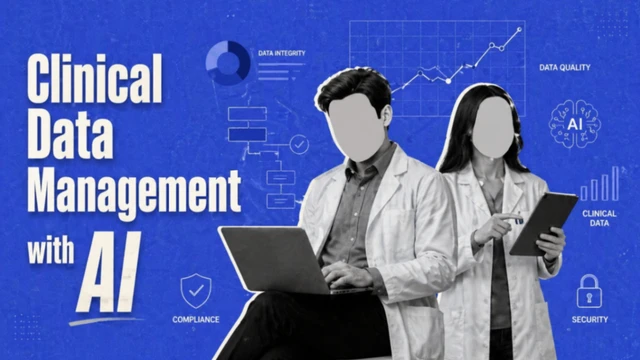
ZANE ProEd Academy is built for professionals who need industry-grade simulation, not another passive course. The Clinical Data Management with AI program and the EDC / eCRF Design Bootcamp are designed to close the exact qualification gap that blocks entry-level CDM candidates.
You work with simulation toolkits that mirror industry environments, including Medidata Rave EDC, Veeva Vault eTMF, and structured data review workflows. The goal is an audit-ready portfolio, not a participation badge.
- Clinical Data Management with AI: Learn query management, data review, CDISC SDTM awareness, and AI-assisted data cleaning.
- EDC / eCRF Design Bootcamp: Build electronic case report forms, edit checks, and query logic that hiring managers recognize.
- Professional certification ROI: Close qualification gaps, demonstrate tool fluency, and prepare for high-paying US clinical data roles.
If you want a broader view of the role, read the CDM career playbook and the US pathway guide. Then compare your current resume to the portfolio evidence employers expect.
Soft CTA: You can audit your industry readiness with a consultative review of your resume, target roles, and tool gaps. Explore the professional certification blueprints and simulation curriculum at ZANE ProEd. The next hiring cycle rewards candidates who can show the work, not just describe the degree.
Build These Skills Now
Programs from ZANE ProEd Academy that directly address the skill gaps discussed above.
Follow Zane ProEd on Google
Preferred SourceAdd our publication as a preferred source to get the latest clinical research guides, industry updates, and career intel directly in your Google Top Stories & AI Overviews.