How to Become a Clinical Research Coordinator as an RN: US Roadmap

Clinical Research Coordinator (CRC) To learn how to become a clinical research coordinator in the US, RNs need a clinical operations bridge: learn ICH-GCP, site workflows, EDC/eTMF systems, FDA audit readiness, and build a portfolio that proves you can run compliant studies.
If you are an RN or BSN who is tired of 12-hour bedside shifts, learning how to become a clinical research coordinator can feel like relief. You do not need to start over. You need to translate bedside skills into site-based study operations.
The common myth is that recruiters reject nurses because they lack a science degree or a magic certification. The reality is simpler: they reject candidates who cannot show GCP training, EDC/eTMF fluency, and audit-ready documentation habits.
Build These Skills Now
Programs from ZANE ProEd Academy that directly address the skill gaps discussed above.
This roadmap is built for the nurse to clinical research coordinator transition in the US. It shows what to learn, what to prove, and how to move into a CRC or CRA path within the next 6 months.
How to Become a Clinical Research Coordinator: The 6-Month Relief Roadmap for RNs
Use this as your first map. Every step later in this guide plugs into it. The goal is not another degree. The goal is industry proof.
- Month 1: Audit transferable RN skills and choose CRC vs CRA.
- Month 2: Complete ICH-GCP and FDA-focused clinical research training.
- Month 3: Build system fluency in EDC, eTMF, and safety workflows.
- Month 4: Create a portfolio with protocol, informed consent, and audit artifacts.
- Month 5: Target bridge roles and rewrite your resume around site workflows.
- Month 6: Interview with case examples and pursue CRC certification requirements.
What are the daily duties of a Clinical Research Coordinator?
The clinical research coordinator job description is part project manager, part compliance officer, and part patient advocate. At a US hospital site, you keep studies running on protocol and inspection-ready.
- Screen and enroll patients against inclusion/exclusion criteria.
- Manage informed consent discussions and document the process.
- Coordinate study visits with investigators, labs, and pharmacy.
- Enter data in EDC such as Medidata Rave and resolve queries.
- Maintain the eTMF using systems like Veeva Vault eTMF.
- Report adverse events and serious adverse events within protocol timelines.
- Handle site coordinator duties FDA audits require: source documents, delegation logs, training records, and deviation tracking.
You also prepare for monitor visits, support IRB submissions, and keep protocol deviations documented. These are the exact duties hiring managers test in interviews.
What is the average salary of a CRC at US hospital sites?
The CRC salary United States range depends on location, therapeutic area, and experience. Entry-level hospital CRCs commonly earn $60,000 to $80,000. Experienced CRCs often earn $75,000 to $95,000. Senior CRCs or leads in hubs can reach $95,000 to $115,000.
Biopharma hubs pay differently. Boston, Research Triangle Park, and San Diego tend to run higher than rural sites. Cost of living matters, but so does study complexity.
- Entry CRC: $60,000 to $78,000.
- Mid-level CRC: $70,000 to $95,000.
- Senior CRC / lead: $90,000 to $115,000.
- CRA comparison: $80,000 to $120,000, often with travel.
Remote CRC roles exist, but they are not the default entry point. Many remote or hybrid roles require proven EDC, eTMF, and monitoring support experience.
Can you become a CRC without clinical trial experience?
Yes, but not by claiming zero experience. You become credible by showing transferable clinical operations proof. As an RN, you already have patient safety, documentation, and protocol adherence experience.
What you likely lack is trial-specific evidence. Fix that with four portfolio pieces:
- A mock informed consent walkthrough with documentation notes.
- A source document map for a sample study visit.
- An EDC query resolution log using a training database.
- A CAPA and deviation example tied to FDA audit readiness.
This is why CRC certification requirements matter, but are not the whole story. ACRP and SOCRA credentials can help, yet employers still interview for site workflow judgment. Certification without proof feels hollow.
How do RNs transition into Clinical Research Coordinator roles?
The nurse to clinical research coordinator transition works best through bridge titles. Do not only apply for senior CRC posts. Target roles that let you enter the research site with your RN credibility intact.
- Clinical Research Assistant or study assistant.
- Research Nurse at a hospital or academic center.
- Site Coordinator in oncology, cardiology, or vaccine studies.
- Regulatory Coordinator if you enjoy documents and IRB work.
Rewrite your resume in trial language. Replace 'patient care' with 'protocol adherence and source documentation.' Replace 'charting' with 'ALCOA-C data quality.' Replace 'handoffs' with 'cross-functional study coordination.'
Then use ClinicalTrials.gov to find active studies at local sites. Contact research managers with a one-page portfolio summary. This is targeted, not cold applying.
What is the difference between a CRC and a CRA in the US?
A CRC works at the site and runs studies day to day. A CRA works for a sponsor or CRO and monitors sites. The CRC is the operational anchor; the CRA is the remote and on-site verification layer.
- CRC: site-based, patient-facing, EDC entry, eTMF upkeep, IRB support.
- CRA: monitoring visits, source verification, trip reports, site training.
- CRC travel: usually low. CRA travel: often 50% to 75%.
- CRC entry: more accessible from bedside nursing.
- CRA entry: often needs CRC, monitoring, or CRO experience.
If your goal is remote work, be strategic. A remote CRA role usually requires monitoring proof. A hybrid CRC or remote site role may be closer, but you still need system fluency.
What do RNs learn in bedside care that does not close the CRC skill gap?
Conventional education teaches you to care for patients. It rarely teaches you to run a clinical trial under ICH-GCP and FDA inspection pressure. That is the gap recruiters see.
Employers expect you to know how to document protocol deviations, manage informed consent, resolve EDC queries, maintain essential documents, and support audits. They want audit-ready habits, not just clinical knowledge.
- What school teaches: patient assessment, medication safety, charting.
- What sites expect: ICH-GCP, 21 CFR Part 11 awareness, source-to-EDC mapping, eTMF completeness.
- What recruiters reject: generic resumes with no trial systems or audit examples.
This is the myth-versus-reality moment. You do not need to be a scientist first. You need to prove you can operate a compliant site workflow.
What is a practical 6-step roadmap for RNs to become a CRC in the US?
Use this execution-level plan. Keep it visible for the next 6 months.
- Audit your transferable skills. Map RN experience to CRC duties: consent, documentation, patient scheduling, safety reporting, and investigator communication.
- Learn the regulations. Study ICH-GCP, FDA 21 CFR, informed consent, adverse event reporting, and IRB basics. Use FDA, ICH, and NIH as public authority sources.
- Build system fluency. Practice EDC data entry, eTMF filing, query resolution, and safety case workflows using simulation environments.
- Create an audit-ready portfolio. Include a mock protocol deviation log, source document map, consent checklist, and CAPA example.
- Target bridge roles. Apply to research nurse, clinical research assistant, and site coordinator roles at academic centers and community sites.
- Prepare for certification and interviews. Review CRC certification requirements from ACRP, then practice interviews with site scenario answers.
For a deeper US handbook, review this CRC handbook. For the RN and FMG decision path, compare this decision guide.
Why do simulation portfolios beat generic certificates for CRC hiring?
Recruiters cannot verify what you memorized. They can verify what you built. A simulation-based portfolio shows how you handle source documents, EDC queries, eTMF files, and audit trails.
That is the system bridge: practice the workflow, document the output, and present it as evidence. It closes the gap between 'I studied clinical research' and 'I can run a compliant study visit.'
ZANE ProEd Academy is built around this proof model. You work with industry-grade simulation toolkits such as Medidata Rave EDC, Veeva Vault eTMF, Argus Safety ICSR case processing, and FDA 21 CFR submissions. The output is an audit-ready portfolio, not a vague certificate.
Build These Skills Now
Programs from ZANE ProEd Academy that directly address the skill gaps discussed above.
Which ZANE ProEd programs prepare RNs for CRC and CRA roles?
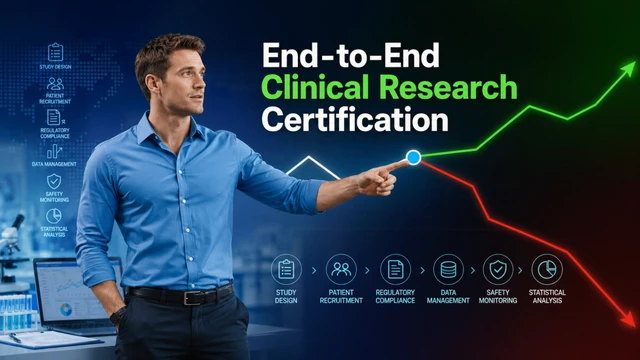
Two structured tracks fit this transition. The End-to-End Clinical Research Certification builds the full site operations foundation: GCP, consent, EDC, eTMF, safety reporting, and audit readiness. The Clinical Trial Site Activation Fast Track focuses on startup, regulatory documents, and site activation workflows.
These are professional certification programs, not casual overviews. They are designed to close qualification gaps, create verifiable portfolio artifacts, and prepare you for high-paying industry roles. You can review the professional certification blueprints and compare them to your current skill audit.
If you want context on the training philosophy, see ZANE ProEd. The goal is simple: enter interviews with proof, not promises.
How can you audit your CRC readiness in the next 6 months?
Start with a gap audit. Score yourself from 1 to 5 on GCP, informed consent, EDC, eTMF, adverse event reporting, and FDA audit readiness. Anything below 4 becomes a 30-day learning sprint.
Then build one portfolio artifact every two weeks. By month six, you should have six proof pieces and a resume written in site coordinator language. That is how you answer how to become a clinical research coordinator with evidence.
Explore professional certification blueprints, audit your industry readiness, and review the simulation curriculum. The relief comes from knowing exactly what to prove next.
Build These Skills Now
Programs from ZANE ProEd Academy that directly address the skill gaps discussed above.
Follow Zane ProEd on Google
Preferred SourceAdd our publication as a preferred source to get the latest clinical research guides, industry updates, and career intel directly in your Google Top Stories & AI Overviews.