How to Break Into Regulatory Affairs Pharma US: The Insider FDA Workflow Roadmap

Regulatory Affairs Associate (FDA): To break into regulatory affairs pharma in the US, learn the real submission workflow — IND/NDA structure, eCTD modules, and document control — then prove it with a portfolio. A life-sciences degree plus hands-on publishing training qualifies you for entry-level roles; a PhD is not required.
Behind the hiring scenes at US pharma companies, regulatory resumes are sorted by one brutal filter: can this person touch a live submission without breaking it? If you are an academic lab technician or bench scientist trying to figure out how to break into regulatory affairs pharma US, that filter — not your degree title — decides your outcome.
Many applicants are foreign medical graduates looking for a US clinical research entry point without repeating residency. Regulatory affairs is one of the few doors that opens on documentation skill and regulatory literacy rather than a clinical license.
Build These Skills Now
Programs from ZANE ProEd Academy that directly address the skill gaps discussed above.
This is the workflow-level breakdown recruiters quietly assume you already know. Read it before the next hiring cycle, because timing matters more than most people realize.
How to Break Into Regulatory Affairs Pharma US: The Workflow Map
Regulatory affairs is not a theory job. It is a documentation, timeline, and submission job. Employers want to see that you understand what happens between a study concept and an FDA approval letter.
Below is the map: daily tasks, salary benchmarks, degree realities, certification value, and the IND versus NDA distinction that trips up almost every entry-level candidate.
What does a Regulatory Affairs Associate do daily in US pharma?
A Regulatory Affairs Associate keeps submissions accurate, on schedule, and inspection-ready. The work is structured, deadline-driven, and heavily cross-functional.
- Compile and publish submissions in eCTD format using tools like Veeva Vault RIM or Lorenz docuBridge.
- Maintain regulatory trackers for health authority correspondence, commitments, and due dates.
- Review labeling, CMC sections, and study reports for formatting and content compliance.
- Run change control — assessing whether a manufacturing or clinical change needs a variation or amendment.
- Coordinate with CMC, clinical, pharmacovigilance, and quality teams to chase missing documents.
- Support agency interactions — information requests, annual reports, and meeting packages.
Entry-level associates spend most of their first year on document control, submission readiness checks, and eCTD publishing support. That is normal and expected.
What is the salary for an entry-level Regulatory Affairs Specialist in the US?
The regulatory affairs specialist salary US market is stable and consistently above general life-sciences admin roles. These are 2025 ballpark base ranges, not bonuses or equity.
- Regulatory Affairs Associate (0-2 years): $65,000 – $82,000
- Regulatory Affairs Specialist (2-4 years): $85,000 – $105,000
- Senior Specialist / Regulatory Project Lead: $108,000 – $140,000
- Manager, Regulatory Affairs: $140,000 – $175,000+
Location shifts these numbers meaningfully. Boston, Raleigh-Durham (RTP), San Diego, and the New Jersey–Philadelphia corridor sit at the top of the band. Cost of living adjusts the rest.
eCTD publishing specialists are especially well paid early because the skill is tactile and in short supply. That is why eCTD publishing entry level roles often pay $5,000–$10,000 above a general associate seat.
Do you need a PhD or PharmD to work in FDA Regulatory Affairs?
No. A regulatory affairs career without PhD or PharmD is completely standard in US pharma. Most working associates hold a BS or MS in biology, biochemistry, chemistry, pharmacy, or a related field.
What actually gets screened:
- Evidence you understand the regulatory lifecycle — preclinical through post-marketing.
- Familiarity with FDA guidance structure and ICH harmonized formats.
- Hands-on tool exposure — RIM systems, publishing software, eTMF platforms.
- Documentation discipline — version control, audit trails, traceability.
For foreign medical graduates, the clinical vocabulary is a genuine advantage. You already read safety narratives and protocol deviations faster than a typical biology grad. Frame it that way on your resume.
Start with the official agency resources at FDA.gov and the harmonized guidelines at ICH.org to build that vocabulary in regulatory language.
Is the RAPS RAC certification required for entry-level roles?
The RAPS RAC certification is not a legal requirement, but the RAPS RAC certification value is real — it filters candidates who took the profession seriously before being hired.
Here is the honest split:
- What RAC does well: proves regulatory breadth — strategy, submissions, compliance, global frameworks.
- What RAC does not do: teach you to actually publish an eCTD sequence or operate a RIM system.
So RAC signals knowledge. Employers hire on demonstrated workflow. The strongest entry-level profile combines regulatory body-of-knowledge training with a portfolio showing real submission artifacts you built yourself.
What is the difference between an IND and NDA submission to the FDA?
The FDA IND NDA submission process is the single most misunderstood topic in entry-level interviews. Learn it cold.
- IND (Investigational New Drug): the request to begin human clinical trials. It must be in effect before a single subject is dosed, and it carries a 30-day review window.
- NDA (New Drug Application): the request to market a drug after clinical evidence is complete. Biologics use a BLA instead.
Both follow the same eCTD structure with five modules: administrative information, summaries, quality (CMC), nonclinical, and clinical. This is why publishing skill transfers across the entire lifecycle.
You can observe real trials and endpoints at ClinicalTrials.gov and review federal research context at NIH.gov. For clinical research professional standards, see ACRP.
What do US pharma employers expect that a biology degree never taught you?
This is the gap that keeps qualified bench scientists stuck at the lab bench.
- Taught in academia: experimental design, assay execution, literature review, thesis writing.
- Expected in pharma: regulatory timelines, submission-ready documentation, 21 CFR Part 11 data integrity, audit trails, change control, and cross-functional escalation.
A hiring manager does not want to hear that you are a fast learner. They want to hear which module you would place a stability study in, and why.
If you are weighing entry points, review this breakdown of entry-level clinical trial assistant roles in the USA — the recruiter mistake audit is a useful reality check.
What is the step-by-step pathway into regulatory affairs without industry experience?
- Learn the lifecycle map. Preclinical → IND → Phases I-III → NDA/BLA → post-marketing. Be able to draw it from memory.
- Master eCTD structure. Understand the five modules and where common documents live. This is the core of entry-level credibility.
- Build tool fluency. Get hands-on with a regulatory information management system and document control workflows — even simulated ones.
- Create three portfolio artifacts. A sample submission cover letter, a module placement map, and a regulatory timeline with dependencies.
- Rewrite your resume in regulatory verbs. Replace bench language with compliance, submission, and timeline language.
- Target the right entry titles. Regulatory Affairs Associate, Regulatory Operations Assistant, Publishing Coordinator, and Regulatory Compliance Analyst.
For a deeper version of this roadmap, read how to break into regulatory affairs pharma in the US.
How do you prove FDA workflow skills before you have the job?
You cannot get experience without a job, and you cannot get a job without experience. The way out is not more coursework. It is simulation-based practice that produces evidence.
Employers respond to artifacts. A published mock eCTD sequence with a validated sequence number, a submission-ready document checklist, and a regulatory tracker you built yourself are concrete proof of workflow literacy.
That is the entire premise behind simulation toolkits modeled on real industry systems: Veeva Vault-style document control, Argus Safety-style case handling, and 21 CFR Part 11-aligned audit trails. You learn the workflow, then you show it.
Build These Skills Now
Programs from ZANE ProEd Academy that directly address the skill gaps discussed above.
Which professional certification programs close the gap fastest?
ZANE ProEd Academy is a professional career-certification platform built around industry-grade simulation, not passive lectures. Two programs map directly to this career target.
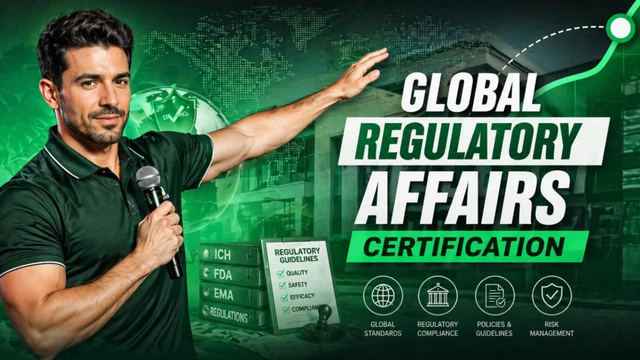
- Global Regulatory Affairs Certification — regulatory strategy, the full product lifecycle, FDA and ICH frameworks, submission planning, and compliance documentation.
- eCTD Submission Certification — hands-on publishing workflow, module structure, sequence validation, and document control inside a regulated environment.
The ROI logic is straightforward. Certification closes a specific qualification gap, produces an audit-ready portfolio, and moves your resume into the shortlist pile where experience requirements are negotiable.
You are not buying a certificate. You are building a defensible record of professional preparation before your first interview.
Ready to audit your regulatory readiness?
Before the next hiring cycle, do three things: map your existing skills against entry-level job descriptions, identify which workflow you cannot yet demonstrate, and close that gap with structured practice.
Explore the professional certification blueprints, review the simulation curriculum, and check the ZANE ProEd approach to industry-aligned training.
Regulatory affairs rewards people who prepared before they were asked. Start preparing now.
Build These Skills Now
Programs from ZANE ProEd Academy that directly address the skill gaps discussed above.
Follow Zane ProEd on Google
Preferred SourceAdd our publication as a preferred source to get the latest clinical research guides, industry updates, and career intel directly in your Google Top Stories & AI Overviews.