Medical Coding Jobs for Freshers in India: Complete Career Guide

Medical Coder Medical coding jobs for freshers in India offer a starting salary of ₹2.5–4 LPA for life science graduates. You need CPC or equivalent certification, ICD-10 knowledge, and clean medical record skills. Freshers can get hired within 6 months if they train on real-world scenarios.
If you have a BSc or MSc in Biotechnology, Microbiology, or Biochemistry from a Tier-2 or Tier-3 college, you are probably tired of hearing that there are no good jobs. You may have applied to 100+ roles and heard nothing back. You are not alone. But here is the shock: 90% of life science graduates fail to get medical coding jobs for freshers in India because they focus on the wrong skills.
\n\nColleges teach you theory: DNA replication, metabolic pathways, enzyme kinetics. Employers do not care about that for coding. They care about whether you can read a patient chart, assign the correct ICD-10 code, and follow compliance rules. The gap is huge. But you can close it in 3–6 months with the right approach.
Build These Skills Now
Programs from ZANE ProEd Academy that directly address the skill gaps discussed above.
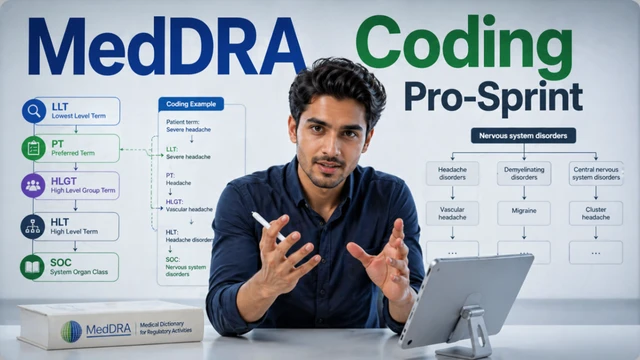
What is medical coding and how does it work?
\n\nMedical coding is the process of turning patient diagnoses, treatments, and procedures into standardized alphanumeric codes. These codes are used for insurance billing, medical records, and public health statistics. It is a behind-the-scenes job in healthcare, not a patient-facing role.
\n\nFor freshers in India, medical coding jobs for freshers in India typically involve working for hospitals, insurance companies, or outsourcing firms. You will read clinical documents like discharge summaries, lab reports, and doctor notes. Then you assign codes using systems like ICD-10-CM for diagnoses and CPT for procedures. Accuracy is critical because wrong codes lead to claim denials.
\n\nDaily tasks of a medical coder:
\n- \n
- Review patient records and extract key medical information. \n
- Assign ICD-10 and CPT codes based on documentation. \n
- Ensure compliance with coding guidelines and insurance rules. \n
- Communicate with doctors or nurses to clarify missing details. \n
- Maintain patient confidentiality and data accuracy. \n
You do not need to be a doctor. But you need a strong understanding of anatomy, medical terminology, and coding rules. That is where life science graduates have an edge.
\n\nWhat is the salary of a medical coder in India?
\n\nThe medical coder salary in India varies based on experience, certification, and location. For freshers, the range is ₹2.5–4 LPA. In metro cities like Bangalore, Hyderabad, and Chennai, you may get slightly higher. With 2–3 years of experience, salaries jump to ₹5–8 LPA. Senior coders or auditors can earn ₹10 LPA or more.
\n\nFactors that affect salary:
\n- \n
- Certification: CPC, CCS, or COC from AAPC or AHIMA. \n
- Specialty: Cardiology, oncology, and emergency coding pay higher. \n
- Company type: US healthcare outsourcing firms pay more than Indian hospitals. \n
- Shift: Night shifts for US clients often come with extra allowances. \n
Here is a quick salary breakdown for India:
\n- \n
- Fresher (0–1 year): ₹2.5–4 LPA \n
- Junior coder (2–3 years): ₹4–6 LPA \n
- Senior coder (4–6 years): ₹6–9 LPA \n
- Team lead or auditor: ₹9–15 LPA \n
How to start a career in medical coding as a fresher?
\n\nStarting a career in medical coding does not require a medical degree. But you need a systematic plan. Here is a step-by-step path that works for BSc and MSc life science graduates from Tier-2 and Tier-3 colleges.
\n\n- \n
- Learn the basics of medical terminology and anatomy. If you studied biotechnology or microbiology, you already know many terms. Refresh your knowledge of human body systems, diseases, and drugs. \n
- Take a structured medical coding course. Look for a course that covers ICD-10 coding career fundamentals, CPT, and compliance. Many courses also prepare you for certification exams. Some are specifically designed for medical coding course for BPharm graduates, but life science grads can join too. \n
- Get certified. The CPC certification India from AAPC is the most recognized. You can also consider CCS from AHIMA. Certification is not always mandatory for entry-level jobs, but it dramatically increases your chances. \n
- Practice on real-world charts. Reading theory is not enough. You must practice coding on actual patient records. Use online case studies or simulation tools. \n
- Apply for fresher roles. Target companies like Cognizant, Accenture, Omega Healthcare, and smaller medical billing firms. Tailor your resume to highlight coding knowledge, certification, and any hands-on practice. \n
What certifications are needed for medical coding?
\n\nCertifications prove that you know the job. The two main bodies are AAPC (American Academy of Professional Coders) and AHIMA (American Health Information Management Association). Both are recognized globally, including in India.
\n\nTop certifications for medical coding:
\n- \n
- CPC (Certified Professional Coder) – The most common. Focuses on outpatient coding. Good for freshers. \n
- CCS (Certified Coding Specialist) – Inpatient hospital coding. Slightly harder but higher salary potential. \n
- COC (Certified Outpatient Coder) – For hospital outpatient departments. \n
- CIC (Certified Inpatient Coder) – For hospital inpatient settings. \n
For India, CPC certification India is the most popular because it is accepted by many outsourcing companies. The exam has 100 multiple-choice questions and costs around ₹20,000–₹30,000 including training. You can take it online or at designated centers.
\n\nRemember: certification alone does not guarantee a job. You also need practical coding experience. Many freshers fail interviews because they cannot code a simple chart even after passing the exam.
\n\nIs medical coding a good career for life science graduates?
\n\nYes, but with some caveats. Medical coding is a good fit for life science graduates because you already understand biology and medical terms. But it is not a research or lab job. You sit at a desk, work on a computer, and meet productivity targets.
\n\nMedical coding vs clinical research: Clinical research involves collecting and analyzing data from clinical trials. It requires more regulatory knowledge and often a higher entry barrier. Medical coding is more about billing and documentation. Both are good careers for life science graduates, but medical coding usually has faster hiring for freshers.
\n\nPros of medical coding for life science graduates:
\n- \n
- Low entry barrier – you do not need a PhD or even a master's degree. \n
- Remote work options – many coding jobs are work-from-home after training. \n
- Clear salary growth – with certifications and specialization, you can double your salary in 3–4 years. \n
- Global demand – US and European healthcare systems need coders, and India is a major outsourcing hub. \n
Cons to consider:
\n- \n
- Monotonous work – coding the same types of cases daily can get boring. \n
- Strict accuracy targets – your error rate affects your appraisal. \n
- Automation risk – basic coding tasks may get automated, so you need to move into complex coding or auditing. \n
Skill Gap Exposure: What Colleges Teach vs What Employers Expect
\n\nHere is the harsh truth: your BSc or MSc curriculum does not prepare you for medical coding jobs. Colleges focus on academic concepts, not industry skills.
\n\nWhat colleges teach:
\n- \n
- Molecular biology, genetics, immunology – all interesting, but not used in coding. \n
- Lab techniques like PCR, electrophoresis – not relevant for a desk job. \n
- Theory-heavy exams that test memory, not application. \n
What employers actually expect:
\n- \n
- Ability to read and interpret medical records accurately. \n
- Strong command of ICD-10-CM and CPT code sets. \n
- Knowledge of medical billing and insurance guidelines. \n
- Speed and accuracy – coding 20–30 charts per day with minimal errors. \n
- Familiarity with coding software like EPIC, Cerner, or 3M. \n
The gap is clear. That is why 90% of freshers fail. They assume a life science degree is enough. It is not.
\n\nStructured Pathway: Your 6-Month Roadmap to a Medical Coding Job
\n\nYou can get a job in 3–6 months if you follow this exact plan. Do not skip steps.
\n\n- \n
- Month 1: Build foundation. Study anatomy, medical terminology, and basic pharmacology. Use free resources or a refresher course. \n
- Month 2: Learn coding systems. Master ICD-10-CM and CPT. Understand guidelines, modifiers, and sequencing. \n
- Month 3: Get certified. Enroll in a CPC preparation course and schedule your exam. Many students take the exam at the end of month 3. \n
- Month 4: Practice on real charts. Use simulation platforms that give you realistic patient cases. Code at least 100 charts and review your errors. \n
- Month 5: Build your resume and apply. Highlight your certification, coding practice, and any relevant projects. Apply to 20–30 companies. \n
- Month 6: Interview and land the job. Prepare for coding tests in interviews. Show your practice portfolio. Many freshers get offers within this timeframe. \n
System Bridge: Simulation-Based Learning Is the Missing Piece
\n\nThe reason most freshers fail is not lack of intelligence. It is lack of practice. Textbooks and YouTube videos cannot simulate the pressure of coding a real chart under a deadline. That is where simulation-based learning changes the game.
\n\nImagine practicing on 200+ real-world medical records before you even apply for a job. You see the exact type of charts you will work on. You learn to spot errors, assign codes correctly, and improve your speed. This is what employers want to see. It turns you from a fresher into a job-ready candidate.
\n\nBuild These Skills Now
Programs from ZANE ProEd Academy that directly address the skill gaps discussed above.
Academy Integration: Learn Through Real-World Scenarios
\n\nAt ZANE ProEd, we do not just teach theory. We have built a system that mimics the actual work environment. Our MedDRA Medical Coding Certification program includes hundreds of simulated patient cases. You will code real charts, get instant feedback, and track your accuracy. It is not a lecture series. It is a training ground.
\n\nYou will also learn how medical coding connects to other career paths. For example, if you are interested in drug safety, check our guide on pharmacovigilance jobs for freshers. And if you prefer data management, read about clinical data management careers. Both use similar skills and are good alternatives.
\n\nSoft CTA: Check Your Job Readiness
\n\nDo you know the difference between ICD-10-CM and CPT? Can you code a simple hypertension case? If you are unsure, it is time to assess your skills. Check your job readiness with our free self-assessment. See how your skills compare to what employers expect. Then take action before basic coding roles get automated.
\n\nWe have also linked some official resources for your reference: WHO for ICD-10 guidelines, AAPC for CPC certification details, and CMS for US healthcare regulations. Note these are external sites, but they are the gold standard for coding rules.
Build These Skills Now
Programs from ZANE ProEd Academy that directly address the skill gaps discussed above.
Follow Zane ProEd on Google
Preferred SourceAdd our publication as a preferred source to get the latest clinical research guides, industry updates, and career intel directly in your Google Top Stories & AI Overviews.