Medical Coding Jobs for Freshers in India: Your Complete Interview Guide

Medical Coder Medical coding jobs for freshers in India are entry-level roles where you convert patient diagnoses, treatments, and procedures into standardized codes like ICD-10 and CPT. Hospitals, insurance companies, and healthcare outsourcing firms hire freshers with BPharm or life science degrees. After a certification course, you can start earning Rs 2.5–4 LPA.
Many BPharm and MPharm graduates feel nervous before interviews. But medical coding jobs for freshers in India are growing fast. Recruiters see hundreds of resumes. The ones who get hired are not the smartest. They are the ones who show they can do the job on day one.
If you are a pharmacy graduate with low confidence in interviews, this guide is for you. We will look at medical coding from a recruiter's point of view. You will learn exactly what employers want and how to prepare without panicking.
Build These Skills Now
Programs from ZANE ProEd Academy that directly address the skill gaps discussed above.
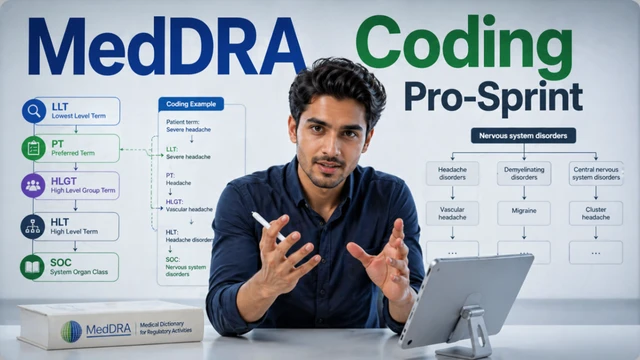
What is medical coding and how does it work? (Medical coding jobs for freshers in India)
Medical coding is the process of reading a patient's medical record and assigning standard codes to each diagnosis, treatment, and procedure. These codes follow global systems like ICD-10, CPT, and HCPCS. For example, a diagnosis of 'type 2 diabetes' becomes a code like E11.9. This makes billing and insurance claims consistent worldwide.
As a medical coder, your daily tasks include:
- Reading doctor's notes and lab reports.
- Choosing the correct ICD-10 code for each condition.
- Assigning CPT codes for procedures.
- Checking that codes follow insurance and government rules.
- Working with billing teams to fix claim errors.
The World Health Organization (WHO) maintains the ICD coding system. Understanding how codes map to diseases is the core skill in this job.
What is the salary of a medical coder in India?
The medical coder salary in India depends on your certification, location, and employer. Here is a realistic breakdown for freshers:
- Fresher (no certification): Rs 2.0–2.8 LPA
- Fresher with CPC or MedDRA certification: Rs 2.5–4.0 LPA
- After 2–4 years: Rs 4.5–7.0 LPA
- Senior coder or team lead: Rs 8–12 LPA
Metro cities like Hyderabad, Chennai, Bengaluru, and Pune pay 20–30% more than tier-2 cities. Outsourcing companies and large hospitals offer steady hikes. Check the detailed salary trends in our medical coding jobs reality roadmap.
How to start a career in medical coding as a fresher?
You don't need a clinical job to enter medical coding. But you do need the right training and practice. Follow these steps:
- Choose a certification path. CPC (Certified Professional Coder) and MedDRA coding are the most respected in India.
- Complete a structured medical coding course for BPharm. Many courses cover ICD-10, CPT, and medical terminology.
- Practice with real-world case studies. Simulated patient charts help you code faster and avoid common mistakes.
- Build a portfolio. Even freshers can show sample coded charts during interviews.
- Apply to healthcare outsourcing companies. They hire in bulk for coding roles.
If you compare medical coding vs clinical research, coding has a lower entry barrier and faster job placement. Clinical research often requires more regulatory knowledge and higher-level degrees.
What certifications are needed for medical coding?
In India, two certifications stand out for freshers:
- CPC certification India (AAPC): The most recognized coding credential. It proves you can code for physician services.
- MedDRA coding certification: Used mainly in pharmacovigilance and drug safety. This is valuable for pharmacy graduates because it bridges clinical knowledge and coding.
Employers also expect you to know ICD-10 coding career basics. The CDSCO and international regulators like EMA set guidelines that coders must follow. A good course will include these standards.
Is medical coding a good career for life science graduates?
Yes, especially for BPharm and MPharm graduates. Here’s why:
- High demand: India is a global hub for medical coding outsourcing.
- Low patient interaction: If you prefer desk work over hospital wards, this fits.
- Clear career ladder: Coder → Senior Coder → Auditor → Team Lead → Trainer.
- Remote work options: Many companies allow work-from-home after 6–12 months.
Compared to clinical research, medical coding has more entry-level openings. However, both fields share the need for accuracy and attention to detail.
Why freshers fail medical coding interviews: The skill gap
Colleges teach pharmacology, pharmaceutics, and anatomy. But they rarely teach:
- How to read an operative report and pick the right CPT code.
- How to use ICD-10 guidelines for combination codes.
- How to avoid upcoding or undercoding, which cause claim denials.
- How to manage coding productivity targets (e.g., 15–20 charts per day).
Recruiters tell us the same thing: candidates know theory but freeze when given a sample chart. This is why low confidence in interviews is common. The fix is simple—practice with real scenarios before you face the interviewer.
Your 6-step roadmap to a medical coding job
- Learn the basics. Enroll in a medical coding course for BPharm that covers ICD-10 and CPT.
- Get certified. Aim for CPC or MedDRA within 3–4 months.
- Practice daily. Solve at least 10 coding cases every week.
- Simulate interviews. Record yourself answering common questions like 'What is ICD-10?'
- Apply to 20–30 companies. Use job portals and referrals.
- Follow up. Send a polite email after every interview.
How simulation-based learning builds interview confidence
Most freshers fail because they have never done the job, not because they can’t learn. Simulation-based training fixes this. You work on real patient charts in a safe environment. You see exactly where you make mistakes. You repeat until the process becomes second nature.
This is why ZANE ProEd focuses on practice, not just theory. Instead of memorizing codes, you apply them. By the time you sit for an interview, you can talk about coding like someone with experience.
Build These Skills Now
Programs from ZANE ProEd Academy that directly address the skill gaps discussed above.
ZANE ProEd’s MedDRA medical coding certification as a learning system
The ZANE ProEd approach is different. The course on meddra-medical-coding-certification is built around case-based simulations. You don’t just watch videos. You code actual anonymized patient records. You get instant feedback. You build a portfolio of coded charts you can show in interviews.
Pharmacy graduates often ask 'Do I need clinical experience?' No. Your pharmacy background already gives you an edge in understanding drug names and diseases. The missing piece is coding practice—and that’s exactly what this system provides.
If you are also exploring related fields, check our guide on pharmacovigilance jobs for freshers.
Check your job readiness now
Before you apply to your next medical coding job, ask yourself:
- Can I explain the difference between ICD-10 and CPT in one minute?
- Have I coded at least 20 patient charts from scratch?
- Do I know the common coding errors that cause claim denials?
- Can I pass a basic coding test without internet help?
If you answered 'no' to any of these, you need more practice. That’s normal. But don’t wait until the interview to find out. Start building your skills today. Compare your readiness with what recruiters expect. See how your skills stack up against the job market.
Build These Skills Now
Programs from ZANE ProEd Academy that directly address the skill gaps discussed above.
Follow Zane ProEd on Google
Preferred SourceAdd our publication as a preferred source to get the latest clinical research guides, industry updates, and career intel directly in your Google Top Stories & AI Overviews.