Medical Coding Jobs for Freshers in India: Step-by-Step Guide for Pharmacy Graduates

Medical Coder Medical coding jobs for freshers in India are entry-level roles where you translate patient records into standard codes like ICD-10 and CPT. Pharmacy graduates with basic certification can start earning ₹2.5–4 LPA. No prior healthcare experience is needed if you complete a focused training program and pass a certification exam.
If you are a pharmacy graduate stuck in IT or BPO, your degree is worth more than you think. Your knowledge of anatomy, pharmacology, and disease terms is exactly what the healthcare industry needs. Medical coding jobs for freshers in India are growing fast because every hospital, clinic, and insurance company depends on accurate patient data. The best part? You can switch careers without going back to college.
Many BPharm and MPharm graduates feel their degree alone is not enough. That is true for many roles. But medical coding is different. It rewards your existing healthcare knowledge. You do not need 5 years of experience. You need a specific skill set that you can learn in 3–4 months.
Build These Skills Now
Programs from ZANE ProEd Academy that directly address the skill gaps discussed above.
What is medical coding and how does it work?
Medical coding is the process of reading a patient's medical record and assigning standardized codes to diagnoses and procedures. These codes are used for billing, insurance claims, and healthcare analytics. The two main coding systems are ICD-10 for diagnoses and CPT for medical procedures. For freshers, medical coding jobs in India usually start with learning ICD-10 coding and basic CPT. The work is desk-based, often remote, and requires high attention to detail.
Here is a simple breakdown of what a medical coder does daily:
- Read patient charts, doctor notes, and lab reports.
- Assign accurate ICD-10 codes for each diagnosis.
- Assign CPT codes for procedures and services.
- Ensure codes follow insurance and government rules.
- Work with billing teams to fix claim denials.
You will use coding software and reference books. The World Health Organization maintains the ICD-10 classification. In India, the CDSCO regulates many healthcare data standards. A solid medical coding course for BPharm will teach you both theory and practical coding scenarios.
What is the salary of a medical coder in India?
The salary of a medical coder in India depends on certification, experience, and employer type. Here are realistic ranges for freshers:
- Fresher (0–1 year): ₹2.5 LPA to ₹4 LPA
- 1–3 years: ₹3.5 LPA to ₹6 LPA
- Senior coder (5+ years): ₹6 LPA to ₹12 LPA
Having a CPC certification India (Certified Professional Coder) can increase your starting salary by 20–30%. Many healthcare BPOs in cities like Chennai, Bengaluru, Hyderabad, and Pune actively hire freshers from pharmacy backgrounds. If you want a deeper comparison, read this guide on medical coding jobs for freshers in India.
How to start a career in medical coding as a fresher?
Starting a career in medical coding as a fresher is straightforward if you follow a clear roadmap. You do not need a nursing degree or hospital experience. Your pharmacy background gives you a head start. Here is what to do first:
- Refresh your medical terminology and human anatomy basics.
- Enroll in a structured medical coding course for BPharm that covers ICD-10, CPT, and HCPCS.
- Prepare for the CPC certification exam from AAPC.
- Practice with real-world coding scenarios and mock tests.
- Create a resume that highlights your healthcare knowledge and coding certification.
- Apply to entry-level medical coding jobs in hospitals, insurance firms, and healthcare BPOs.
Many companies now hire remotely, so location is less of a barrier. Your IT or BPO experience actually helps because you are already comfortable with software tools and data entry.
What certifications are needed for medical coding?
The most recognized certification for medical coding in India is the CPC (Certified Professional Coder) from AAPC. It proves you can code outpatient services correctly. Another option is the CCS (Certified Coding Specialist) from AHIMA, which is more hospital-focused. For freshers, CPC is the best starting point. A good medical coding course for BPharm will prepare you for the CPC exam. Some employers also value a certification in ICD-10 coding career specifically. You do not need a license to work as a medical coder, but certification dramatically improves your job prospects. In India, many freshers begin with the CPC and later pursue specialty certifications in cardiology, oncology, or emergency department coding.
Is medical coding a good career for life science graduates?
Yes, medical coding is an excellent career for life science and pharmacy graduates. You already understand drug names, disease processes, and medical abbreviations. That reduces your learning curve by half. Compare medical coding vs clinical research: clinical research involves more patient interaction, stricter timelines, and often requires a master's degree. Medical coding is more data-centric, has lower entry barriers, and can be done remotely. For a pharmacy graduate who wants a stable desk job with good growth, medical coding is a smart choice. If you are curious about other data-focused roles, check this article on clinical data management career for freshers in India.
Skill Gap: What Colleges Teach vs What Employers Expect
Your pharmacy degree gave you a strong foundation in pharmacology and anatomy. But it likely did not teach you medical coding systems or billing software. Here is the gap:
What colleges typically cover:
- Pharmacology, pharmaceutics, and medicinal chemistry.
- Basic anatomy and physiology.
- Hospital pharmacy and dispensing.
What employers actually expect:
- Hands-on knowledge of ICD-10-CM and CPT codes.
- Familiarity with coding software like 3M, Optum, or Epic.
- Understanding of insurance guidelines and claim processes.
- Attention to detail and speed with accuracy.
This skill gap is real but small. You can bridge it in 3–4 months with focused training that includes simulation-based practice. That is exactly what a modern medical coding course for BPharm should offer.
Your Step-by-Step Roadmap to Medical Coding Jobs for Freshers in India
Follow this 5-step plan to enter the industry without prior experience:
- Step 1: Audit Your Baseline Knowledge. Review human anatomy, medical terminology, and common diseases. Use free online resources or your old pharmacy textbooks.
- Step 2: Complete a Structured Training Program. Choose a medical coding course that covers ICD-10, CPT, and real coding exercises. Look for programs that simulate actual medical records.
- Step 3: Get CPC Certified. Prepare for the AAPC CPC exam. Aim to pass within 2–3 months of finishing your course. Certification is your ticket to better pay.
- Step 4: Build a Practice Portfolio. Code at least 50 sample outpatient cases. Keep a log of your accuracy rates. This shows employers you can do the job from day one.
- Step 5: Apply Strategically. Target healthcare BPOs, hospital coding departments, and insurance companies. Highlight your pharmacy degree, CPC certification, and simulation experience.
Why Theory Alone Is Not Enough: The Simulation Bridge
Reading about ICD-10 codes is easy. Applying them correctly to a messy patient chart is hard. That is where simulation-based learning makes a difference. Instead of just watching videos, you work on mock medical records, assign codes, and get instant feedback. This builds the speed and accuracy employers demand. In today's AI-driven healthcare industry, coders who can handle complex cases without supervision are the ones who get hired. Simulation training bridges the gap between your pharmacy knowledge and real coding tasks.
Build These Skills Now
Programs from ZANE ProEd Academy that directly address the skill gaps discussed above.
A Smarter Way to Build Job-Ready Skills
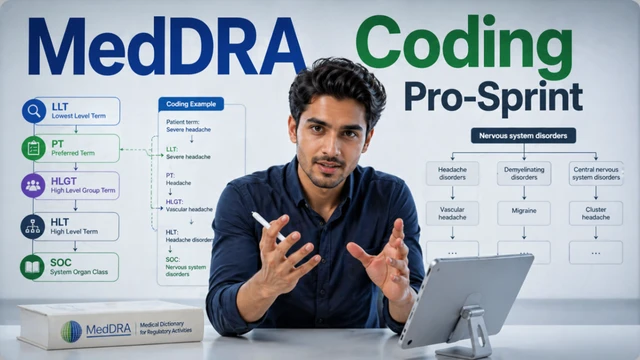
ZANE ProEd has designed a system that goes beyond traditional courses. The MedDRA Medical Coding Certification program uses simulated coding scenarios, interactive feedback, and industry-aligned curriculum. It is built specifically for pharmacy graduates who want to switch careers quickly. You do not just learn codes; you practice real coding workflows. This prepares you for the CPC exam and for day-one job performance. The program also connects you to a broader community of life science professionals transitioning into data and analytics roles.
Are You Ready to Make the Switch?
If you have been waiting for a sign, this is it. Your pharmacy degree is not useless. It is your launchpad. Take a quick self-check: make a list of 20 common diseases and see how many you can match with their basic ICD-10 categories. Not sure where to start? Check your job readiness with our free assessment tool. See how your skills compare to what employers expect from entry-level medical coders.
Build These Skills Now
Programs from ZANE ProEd Academy that directly address the skill gaps discussed above.
Follow Zane ProEd on Google
Preferred SourceAdd our publication as a preferred source to get the latest clinical research guides, industry updates, and career intel directly in your Google Top Stories & AI Overviews.