Medical Science Liaison Career in India: A Guide for BSc & BTech Graduates

Medical Science Liaison Career India: An MSL career in India is a high-growth path for science graduates. MSLs are scientific experts, not salespeople, who engage with top doctors (Key Opinion Leaders) to discuss clinical data and research. This role offers excellent salaries and is accessible with the right upskilling.
Stop sending your resume into a black hole. If you have a BSc, BCA, or BTech degree and feel stuck in IT or BPO roles, the constant rejection for scientific jobs can destroy your confidence. The truth is, a new opportunity in the medical science liaison career India is growing fast, but most freshers don't know how to get in.
You see high-paying job titles like 'Medical Science Liaison' and assume they are only for doctors or PhDs. You might think your degree isn't good enough. That's the old way of thinking.
Build These Skills Now
Programs from ZANE ProEd Academy that directly address the skill gaps discussed above.
This guide is different. It's a step-by-step roadmap designed specifically for graduates from non-medical or general science backgrounds. We will show you how to build the right skills to enter this exciting and respected field, even without a pharmacy or medical degree.
What does a Medical Science Liaison do?
A Medical Science Liaison (MSL) is a scientific expert for a pharmaceutical or biotech company. Their main job is to build relationships with top doctors and researchers, known as Key Opinion Leaders (KOLs). This is a core part of the medical science liaison job description.
Unlike a medical representative who sells products, an MSL discusses science. They provide deep, unbiased scientific information about diseases, clinical trials, and new treatments. They are the bridge between the company's research team and the medical community.
An MSL's daily tasks include:
- Identifying and building relationships with KOLs in a specific therapy area (like oncology or cardiology).
- Presenting complex clinical trial data to doctors and hospital committees.
- Answering difficult scientific questions from healthcare professionals.
- Gathering insights from KOLs to inform the company's future research strategy.
- Attending medical conferences to stay updated on the latest scientific advancements.
- Training the company's sales teams on the science behind their products.
Think of them as scientific peers to top doctors, not as a sales force. Their success is measured by the quality of their scientific discussions, not by sales numbers. This role requires strong communication skills and a deep understanding of clinical research principles, including guidelines from bodies like ICH (International Council for Harmonisation).
What is the salary of an MSL in India?
The MSL salary in India is one of the main attractions of this career path. It is significantly higher than most entry-level science or pharma sales jobs. The compensation reflects the high level of scientific expertise required.
Here’s a general breakdown of what you can expect:
- Entry-Level MSL / Associate MSL: For freshers with the right certification and skills, the starting salary can range from ₹6 Lakhs to ₹10 Lakhs per annum.
- Experienced MSL (2-5 years): With a few years of experience, an MSL can earn between ₹12 Lakhs to ₹20 Lakhs per annum.
- Senior MSL / MSL Manager (5+ years): Senior roles come with leadership responsibilities and salaries can go above ₹25 Lakhs per annum.
These figures can vary based on the company (MNCs generally pay more), your location (metro cities have higher salaries), and the therapy area (specialized fields like oncology can command higher pay). This makes the MSL role a very rewarding career choice financially.
How to become a Medical Science Liaison?
Many believe you need a PhD or an MD to become an MSL. While that helps, it is no longer a strict rule, especially for the growing Indian market. The key is to demonstrate specialized knowledge. Here is how to become an MSL, especially if you are a fresher or from a non-traditional background.
The MSL career path for freshers involves building a bridge of skills between your basic degree and the job's high demands. You must prove you understand the world of clinical research and medical affairs.
- Master the Fundamentals: Your BSc or BTech degree is the base. You need to add a strong layer of knowledge in clinical research, drug development, and pharmacology.
- Understand Regulations: You must be familiar with Good Clinical Practice (GCP) and Indian regulations governed by entities like the CDSCO.
- Develop Soft Skills: Communication, presentation, and relationship-building are non-negotiable. An MSL must be able to explain complex science simply.
- Gain Credibility with Certification: A targeted certification in clinical research or clinical operations proves you have the specific knowledge employers are looking for.
For more detailed career pathways in this field, you can explore our guide on the medical affairs career path in India.
What is the difference between MSL and medical rep?
This is a common point of confusion. The difference between an MSL and a Medical Representative (MR) is huge. Thinking they are similar is a major mistake many candidates make. The core difference is Science vs. Sales.
Here’s a simple comparison of MSL vs medical representative:
- Primary Goal: An MSL's goal is scientific exchange and education. An MR's goal is to meet sales targets.
- Audience: MSLs interact with a small group of top-tier medical experts (KOLs). MRs interact with a large number of doctors in their territory.
- Conversation Topic: MSLs have deep, data-driven scientific discussions. MRs discuss product features, benefits, and pricing.
- Performance Metrics: MSLs are measured on the quality of their relationships and scientific impact. MRs are measured on the number of prescriptions and sales volume.
- Background: MSLs require a strong scientific and clinical research background. MRs typically have a science or pharmacy degree with a focus on sales skills.
In short, an MSL is a scientific resource, while an MR is a sales professional. The roles, responsibilities, and salaries are completely different.
What qualifications are needed to become an MSL?
Traditionally, companies preferred candidates with advanced degrees like a PhD, PharmD, or MD. However, the industry is changing. There is a huge demand for MSLs, and companies are now open to candidates with other qualifications, provided they have the right skills.
For a BSc, BTech, or BCA graduate, here are the qualifications that matter:
- Your Basic Degree: A bachelor's degree in a life science, biotechnology, computer science, or related field is your foundation.
- Specialized Knowledge: This is the most critical part. You need proven knowledge of the pharmaceutical industry, clinical trial processes (Phase I-IV), drug development lifecycle, and pharmacovigilance. This is often what separates an academic resume from a job-ready one. For example, understanding clinical data is crucial, a topic we cover in our guide to clinical data management.
- Demonstrable Skills: You must be able to prove your ability to analyze scientific papers, present data clearly, and communicate professionally.
The Gap: What Your College Degree Didn't Teach You
Your BSc or BTech degree gave you a good theoretical foundation. But it likely did not prepare you for the practical demands of the pharmaceutical industry. Employers expect you to understand concepts like GCP, trial protocols, and regulatory submissions from day one.
Companies don't have time to teach you the basics. They need you to understand how a clinical trial is managed, how data is interpreted, and how to speak the language of doctors and researchers. This is the gap that holds back most freshers.
Your Step-by-Step Roadmap to Becoming an MSL
Here is a clear, actionable plan to bridge that gap and position yourself as a strong candidate for an MSL role.
Step 1: Build Your Core Clinical Knowledge.
Forget trying to memorize everything. Focus on the end-to-end clinical research process. Learn how a drug moves from the lab to the pharmacy. Understand the roles of different teams like clinical operations and data management.
Step 2: Learn to Speak the Language of Science.
This means learning how to read and critique a clinical research paper. You need to be able to find the key message, understand the statistics, and explain the results to someone else in simple terms.
Step 3: Develop Your Presentation and Communication Skills.
An MSL's job is to present. Practice creating simple, powerful presentations based on scientific data. Record yourself and get feedback. Your confidence in interviews will soar when you can clearly explain a complex topic.
Step 4: Get Hands-On with Realistic Scenarios.
Theory is not enough. You need to apply your knowledge. Work on case studies that mimic real-world challenges an MSL faces, like preparing for a meeting with a top cardiologist or analyzing a competitor's clinical trial data.
The Power of Learning by Doing
Reading textbooks or watching videos can only take you so far. To build real confidence, you need to practice in a safe environment. This is where simulation-based learning comes in. Imagine practicing a difficult conversation with a Key Opinion Leader or presenting a new clinical study to a mock hospital committee. This is how you build skills that impress hiring managers.
Build These Skills Now
Programs from ZANE ProEd Academy that directly address the skill gaps discussed above.
A System to Build Your MSL Career
At ZANE ProEd, we don't just offer courses; we provide a system designed to make you job-ready. Our programs are built on practical, simulation-based learning that fills the gap left by your college degree.
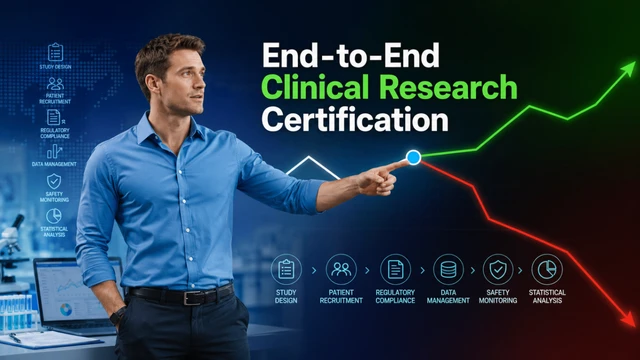
The End-to-End Clinical Research Certification gives you the comprehensive foundation of the entire drug development lifecycle. It's the perfect starting point to understand the world you're about to enter.
For those who want to specialize, the Clinical Operations Certification provides a deep dive into the management and execution of clinical trials, a core area of knowledge for any MSL. This system ensures you walk into an interview not just with a certificate, but with the confidence that comes from hands-on practice.
Are You Ready for a High-Growth Career?
The path to becoming an MSL is clear, even for someone without a medical or pharmacy degree. It requires focus, dedication, and the right kind of practical training. Stop doubting your degree and start building the skills that matter.
See how your current skills compare to what top pharmaceutical companies are looking for. Take the first step towards a career that respects your intelligence and rewards your hard work.
Build These Skills Now
Programs from ZANE ProEd Academy that directly address the skill gaps discussed above.
Follow Zane ProEd on Google
Preferred SourceAdd our publication as a preferred source to get the latest clinical research guides, industry updates, and career intel directly in your Google Top Stories & AI Overviews.