Medical Writing Career for Freshers India: The Reverse-Engineered Roadmap Nobody Gives You

Medical Writing Career for Freshers India: A medical writing career for freshers in India starts with a BPharm, BSc, BDS, BHMS, BAMS or Nursing degree, a paid industry certification in regulatory or scientific writing, and a portfolio of 3–5 sample documents. Entry roles pay ₹3.5–6 LPA in Hyderabad, Bengaluru, Pune and Mumbai.
What does nobody tell you about a medical writing career for freshers in India?
You spent four or five years memorising pharmacology, pathology and clinical subjects. Then you opened a job portal and hit a wall that nobody warned you about: degrees alone are not enough anymore.
That is the exact moment most BDS, BHMS, BAMS and Nursing graduates start searching for a medical writing career for freshers in India. And that is where the confusion begins.
Build These Skills Now
Programs from ZANE ProEd Academy that directly address the skill gaps discussed above.
Here is the insider truth. Medical writing is not a 'backup' for people who could not practise clinically. It is a specialised CRO function where you write the documents that decide whether a drug gets approved or rejected.
Recruiters in Hyderabad, Bengaluru, Pune and Mumbai do not ask 'what is your degree?' first. They ask 'show me your portfolio'. This blog reverse-engineers exactly how to build that portfolio before your first interview.
What does a medical writer do?
A medical writer converts complex clinical, scientific and regulatory data into clear, compliant documents for regulators, ethics committees, doctors and patients. In a CRO environment, you sit between clinical operations, biostatistics and regulatory affairs.
The typical scientific writing job description in an Indian CRO includes:
- Drafting and updating clinical study reports (CSRs) as per ICH E3 guidelines.
- Writing study protocols, investigator brochures and informed consent documents.
- Preparing regulatory modules for submission to CDSCO and global agencies.
- Summarising safety data and supporting pharmacovigilance narrative writing.
- Reviewing tables, listings and figures produced by biostatistics teams.
- Managing document timelines in eTMF and submission systems.
Your day is roughly 70% writing, 20% data interpretation and 10% cross-team coordination. It is deadline-driven, detail-obsessed work — and that is exactly why it pays.
What is the salary of a medical writer in India?
The medical writer salary in India depends on three things: your document portfolio, your therapeutic-area exposure and the type of employer (CRO, pharma company or medical communications agency).
- Fresher / Trainee Medical Writer: ₹3.5 LPA – ₹5.5 LPA
- Medical Writer (1–3 years): ₹5.5 LPA – ₹8.5 LPA
- Senior Medical Writer (4–6 years): ₹9 LPA – ₹15 LPA
- Lead / Principal Writer or Manager (7+ years): ₹16 LPA – ₹25 LPA+
City matters too. Hyderabad and Bengaluru have the densest CRO clusters. Pune and Mumbai lean towards pharma and medcomms agencies. Ahmedabad is growing fast on regulatory writing support.
One insider note: regulatory medical writing roles typically pay 10–20% more than promotional or medical communications writing at the same experience level.
How to become a medical writer without experience?
You do not need experience to get experience. You need to manufacture proof. Follow this sequence:
- Pick your niche. Choose regulatory or scientific writing. Vague 'content writing' portfolios get rejected instantly.
- Learn the document formats. Study ICH E3 (CSR structure) and ICH E6 (GCP) available at ICH.org.
- Build 3–5 sample documents. A mock CSR synopsis, a patient narrative, a protocol summary and a safety report.
- Learn the tools, not just the theory. Word templates, reference managers, Veeva Vault eTMF familiarity and submission-ready formatting.
- Do a structured professional certification. A medical writing course for BPharm or allied-health graduates should include simulated document builds, not just recorded lectures.
- Apply in clusters. Target 15 CROs and pharma companies, customising your CV to the exact job description each time.
Most freshers fail at step 3. They send a CV with a degree and no evidence. Recruiters cannot shortlist evidence they cannot see.
What qualifications are needed for medical writing?
There is no single mandatory degree. But Indian hiring teams do follow a predictable filter.
- Eligible degrees: BPharm, MPharm, BSc/MSc Life Sciences, BDS, BHMS, BAMS, BPT and Nursing.
- Core knowledge: pharmacology, human anatomy, clinical research methodology and medical terminology.
- Regulatory understanding: ICH-GCP principles and local CDSCO submission requirements.
- Writing ability: flawless grammar, AMA style consistency and the discipline to write to a template.
- Added advantage: a recognised certification in regulatory writing, pharmacovigilance or clinical research.
Clinical practitioners have a hidden advantage here. If you have seen a real patient consent conversation, you already understand the audience better than a pure science graduate.
What types of documents does a medical writer create?
This is where freshers usually go blank in interviews. Know the document families cold.
- Regulatory documents: clinical study reports, protocol amendments, investigator brochures, CTD modules, briefing documents.
- Safety documents: ICSR patient narratives, PSUR/PBRER summaries, signal evaluation reports.
- Clinical trial documents: informed consent forms, case report forms, monitoring reports.
- Scientific publications: manuscripts, abstracts, posters, congress presentations.
- Medical affairs content: standard response letters, slide decks, advisory board minutes.
Global safety reporting follows WHO and ICH frameworks, so demonstrating that awareness immediately separates you from generic content writers.
What skill gap do allied health graduates actually face in India?
Compare two lists honestly and the gap becomes obvious.
What your college taught you: anatomy, physiology, diagnosis, treatment protocols and clinical judgement.
What a CRO actually expects from day one: ICH-GCP fluency, document templates, eTMF navigation, revision discipline, comment resolution, audit trail hygiene and regulatory style guides.
That gap is not about intelligence. It is about exposure. BDS, BHMS, BAMS and Nursing graduates are trained to treat patients, not to write submission-ready documents.
This is why companies now demand job-ready talent — people who can open a CSR template and start drafting in week one. The industry stopped training from scratch. It expects you to arrive prepared.
What is the step-by-step roadmap to a medical writing job in India?
Treat this as a reverse-engineered timeline. Work backwards from the job description.
- Month 1 — Foundation. Complete structured study of ICH-GCP, CSR structure and regulatory submission basics. Start a document tracking sheet.
- Month 2 — Certification. Join a professional certification that includes simulated document builds and tool access. Certification is a paid professional investment, and it should produce artefacts you can show.
- Month 3 — Portfolio. Produce 3–5 polished samples: a CSR synopsis, a patient narrative, a protocol summary, an informed consent mock-up and a regulatory cover note.
- Month 4 — Positioning. Rewrite your CV around documents and tools, not subjects studied. Add a one-page portfolio link.
- Month 5 — Interview readiness. Prepare for document-critique rounds and 'which guideline applies here' questions. Review the regulatory affairs career path and interview guide for the exact question patterns recruiters reuse.
- Month 6 — Targeted applications. Apply to 15–25 CROs and pharma companies across Hyderabad, Bengaluru, Pune and Mumbai. Track every application and follow up in 10 days.
If medical affairs or advisory-board content interests you more, read the medical affairs recruiter playbook before finalising your niche.
How does simulation-based training close the experience gap?
Reading about a CSR does not make you a writer. Writing one inside a simulated CRO workflow does.
Simulation-based learning puts you inside the actual environment: document templates, review cycles, comment resolution and audit trails. You experience the pressure before a real deadline does.
The second unlock is verifiable portfolio proof. Instead of saying 'I know regulatory writing', you show a completed document set built under real constraints.
That is the difference between a candidate who is hopeful and a candidate who is hireable.
Build These Skills Now
Programs from ZANE ProEd Academy that directly address the skill gaps discussed above.
Which ZANE ProEd programs prepare you for medical writing roles?
ZANE ProEd Academy is built as a premier professional career-certification platform, not a lecture library. Every program is engineered around the tasks recruiters actually test.
The Regulatory Affairs Writing Certification trains you to draft submission-facing documents as per ICH and CDSCO expectations, with attention to FDA 21 CFR submission formatting conventions.
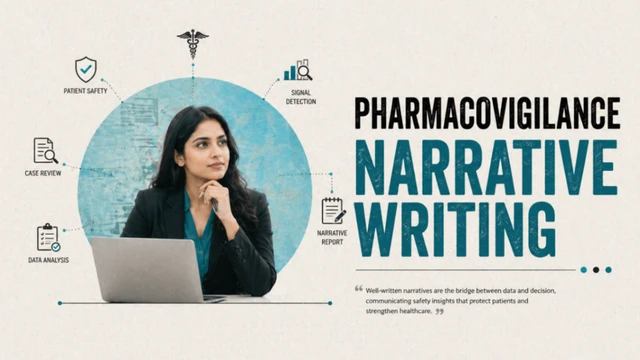
The Pharmacovigilance Narrative Writing program builds ICSR case-processing and patient narrative skills using industry-grade simulation toolkits, including Argus Safety workflows for case handling.
You also get exposure to environments recruiters name in job descriptions: Medidata Rave EDC for clinical data flow and Veeva Vault eTMF for trial master file discipline.
The return on investment is straightforward. A professional certification closes the qualification gap, creates an audit-ready portfolio, and positions you for roles that start at ₹5.5 LPA rather than ₹3.5 LPA.
Learn more about the academy's approach at about ZANE ProEd.
How do you audit your industry readiness before applying?
Run this five-question self-check tonight.
- Can you name the sections of a clinical study report without notes?
- Do you have three sample documents you could email a recruiter right now?
- Can you explain the difference between a PSUR and a patient narrative?
- Have you used any eTMF, EDC or safety database interface?
- Does your CV lead with skills and documents rather than subjects studied?
Three or more 'no' answers means your preparation needs structure, not more job applications. Explore the professional certification blueprints and review the simulation curriculum before your next application cycle.
Audit your industry readiness first. Then apply like someone who already has the job.
Build These Skills Now
Programs from ZANE ProEd Academy that directly address the skill gaps discussed above.
Follow Zane ProEd on Google
Preferred SourceAdd our publication as a preferred source to get the latest clinical research guides, industry updates, and career intel directly in your Google Top Stories & AI Overviews.