Medical Writing Career for Freshers India: Step-by-Step Roadmap 2025

Medical Writing Career for freshers in India is a desk-based scientific role where you create medical documents for pharmaceutical companies, regulatory agencies, and healthcare providers. Starting salaries range from ₹3-6 LPA. With a BDS, BHMS, BAMS, or Nursing degree, you can transition into this high-demand field through focused skill development and simulation-based practice, bypassing the need for prior experience.
You tried multiple courses but still feel stuck? You are not alone. Many BDS, BHMS, BAMS, and Nursing graduates face the same frustration after spending time and money on certifications that do not lead to jobs. The healthcare industry is moving fast. In today's AI-driven environment, companies want candidates who can do the work from day one—not just those with a certificate. A medical writing career for freshers India is a direct path to use your clinical knowledge in a stable, desk-based role. But if you do not build real, applied skills, you risk falling behind.
\nThe good news? You are already halfway there. Your medical background gives you a strong foundation. What you need now is a clear, step-by-step roadmap to bridge the gap between theory and recruiter expectations.
Build These Skills Now
Programs from ZANE ProEd Academy that directly address the skill gaps discussed above.
What does a medical writer do?
\nA medical writer translates complex scientific information into clear, accurate documents for various audiences. In a medical writing career for freshers India, your daily tasks might include:
\n- \n
- Writing clinical study reports that summarize trial results for regulatory submissions \n
- Creating patient education leaflets and informed consent forms in simple language \n
- Developing manuscripts for medical journals \n
- Preparing regulatory documents like Common Technical Documents (CTD) for drug approvals \n
- Working with doctors and statisticians to turn raw data into compelling narratives \n
You are the bridge between science and communication. This role requires attention to detail, strong writing skills, and the ability to understand medical concepts—exactly what your degree has prepared you for.
\n\nWhat is the salary of a medical writer in India?
\nMedical writer salary in India varies by experience, location, and company. Here is a realistic breakdown:
\n- \n
- Fresher (0–2 years): ₹3–6 LPA. Many start at ₹4 LPA in companies like TCS, Cognizant, or smaller CROs. \n
- Mid-level (3–5 years): ₹6–12 LPA. With specialization in regulatory or medical communications, salaries jump significantly. \n
- Senior (5+ years): ₹12–25 LPA. Senior medical writers often lead teams and handle complex submissions. \n
Pharma hubs like Mumbai, Bangalore, Hyderabad, and Pune offer higher pay. Also, freelance medical writers can earn ₹500–2000 per hour once established. Keep in mind: salaries are tied to job-ready skills, not just degrees. Companies pay for output, not for knowledge alone.
\n\nHow to become a medical writer without experience?
\nThis is the most common question. The answer: build a portfolio of sample documents. Here is a practical how to become a medical writer roadmap:
\n- \n
- Understand the industry: Learn the basics of drug development and regulatory processes. Free resources from ICH and FDA are a good start. \n
- Learn the key documents: Focus on clinical study reports, protocols, patient narratives, and regulatory writing. Pick one type and master it first. \n
- Get simulated practice: Use simulation-based platforms that let you write real documents with AI feedback. This is far more effective than just watching lectures. \n
- Create a portfolio: Compile 2–3 well-written samples. Even if they are practice documents, they prove your skill. \n
- Network online: Join LinkedIn groups and follow medical writing professionals. Comment on their posts to get noticed. \n
- Apply for entry-level roles: Look for titles like 'Associate Medical Writer' or 'Trainee Medical Writer'. Tailor your resume with keywords from the scientific writing job description. \n
Remember, many freshers get hired based on a strong writing test, not prior job experience. Your medical degree already gives you domain knowledge—now prove your writing.
\n\nWhat qualifications are needed for medical writing?
\nTechnically, any life science or medical degree works: BPharm, MPharm, BSc/MSc Life Sciences, BDS, BHMS, BAMS, Nursing, or even Botany/Zoology with a strong biology background. But for a medical writing career for freshers India, recruiters look for these specific qualifications:
\n- \n
- Degree in medical/allied field: Must have a solid understanding of anatomy, physiology, and pharmacology. Your BDS/BHMS/BAMS/Nursing degree is perfect. \n
- Writing proficiency: Ability to explain complex concepts in plain English. You do not need an English literature degree; you need clarity. \n
- Familiarity with guidelines: Knowledge of ICH-GCP, MedDRA, and local regulations. Many CDSCO and EMA guidelines are publicly available. \n
- Software skills: MS Word, reference managers (like EndNote or Zotero), and understanding of document management systems. AI tools are now a plus as well. \n
Formal medical writing course for BPharm is not mandatory, but it helps. However, most courses only give theory. Recruiters complain that certified freshers cannot write a simple safety narrative. This is where practice beats paper.
\n\nWhat types of documents does a medical writer create?
\nA scientific writing job description usually lists these major document categories. Knowing them early helps you choose your niche.
\n- \n
- Regulatory medical writing: Clinical study reports (CSRs), protocols, investigator brochures (IBs), and Common Technical Documents (CTD) for submission to the FDA or EMA. This is the highest-paying niche. \n
- Medical communication: Manuscripts, slide decks, poster presentations for conferences, and continuing medical education (CME) content. \n
- Patient education: Leaflets, website content, and informed consent documents in local languages. \n
- Pharmacovigilance writing: Safety narratives, periodic safety update reports (PSURs), and risk management plans. Many freshers start here because it's a high-demand area. \n
- Health journalism and marketing: Articles for public health portals, medical blogs, and pharma marketing materials. \n
To decide, look at job postings: regulatory medical writing roles often require niche expertise but pay better. Medical communications may be more creative. Start with what excites you, but stay flexible.
\n\nSkill gap: what colleges teach vs what employers expect
\nAs a BDS or Nursing graduate, your college taught you clinical diagnosis, patient care, or drug mechanisms. That is great—but it is not what a medical writer job needs on day one. Employers expect you to:
\n- \n
- Write a clinical protocol from scratch following ICH E6(R2) guidelines. \n
- Summarize a 50-page trial report into an abstract in one hour. \n
- Use AI tools to draft safety narratives while ensuring privacy and compliance. \n
- Collaborate with cross-functional teams across time zones. \n
The harsh truth: most fresher certificates do not cover these skills. You might have done a course on 'medical writing fundamentals', but if you have never written a real protocol or received feedback on a draft, you are not job-ready. Recruiters can tell in the first five minutes of a writing test. That is why many candidates remain 'stuck' despite multiple courses.
\n\nStep-by-step pathway to a medical writing job
\nHere is a structured, six-step roadmap to move from confusion to job offer:
\n- \n
- Assess your starting point: Know your strengths (medical knowledge) and weaknesses (writing structure, regulatory awareness). Make a list. \n
- Pick a high-demand niche: For freshers, pharmacovigilance narratives and clinical study reports offer more openings. Align with market demand. \n
- Learn by doing, not just watching: Use simulation-based training where you write actual documents under expert guidance. Look for programs that provide AI-driven feedback. \n
- Build a portfolio with 3 sample documents: Include a patient narrative, a short protocol synopsis, and a regulatory abstract. \n
- Polish your LinkedIn and resume: Use words from the scientific writing job description. Join groups like 'Medical Writers in India'. \n
- Apply smartly: Target 10 companies a day, but customize your cover letter for each. Mention your simulated experience. \n
For related careers, check out our detailed articles on how to become a clinical research associate in India and pharmacovigilance jobs for freshers — they share many foundational skills.
\nThis pathway takes 2–3 months of focused effort, not years. The key is practice with real-world documents, not just theory.
\n\nWhy simulation-based learning changes everything
\nMost courses give you information. But information without application is useless in today's AI-driven healthcare industry. Recruiters now test your ability to use tools, follow guidelines, and produce error-free documents quickly. This is where simulation-based platforms step in. They mimic the actual work environment: you receive a project brief, deadlines, and use templates. An AI mentor provides instant feedback on your drafts, showing you how to improve structure, grammar, and compliance with guidelines like ICH.
\nSuch systems build what employers truly want: a job-ready medical writer, not a certified one. You leave with a portfolio, confidence, and the ability to clear any writing test.
\nBuild These Skills Now
Programs from ZANE ProEd Academy that directly address the skill gaps discussed above.
Programs that prepare you for real work
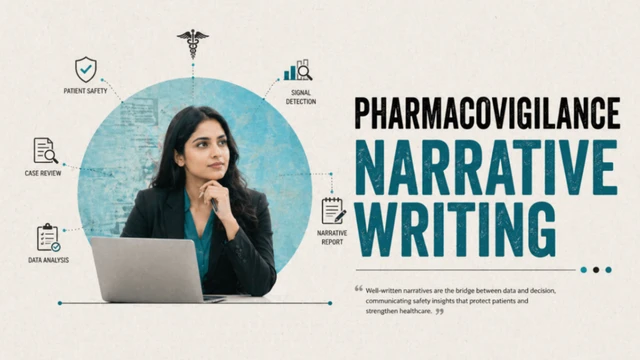
\nAt ZANE ProEd, we do not just teach medical writing—we simulate the job. Our flagship programs like Clinical Trial Protocol Writing with AI and Pharmacovigilance Narrative Writing immerse you in real-world tasks. In the protocol writing program, you will draft full protocols section by section, with AI feedback tuned to ICH guidelines and Indian regulatory requirements. The pharmacovigilance narrative program trains you to write safety reports that meet global standards, using actual case data. Both programs are built on a system, not just video lectures.
\nWe also integrate AI tools the way the industry currently uses them—not as a shortcut, but as a productivity layer. You learn to think critically while leveraging technology, which is exactly what top pharma companies and CROs expect in 2025.
\n\nIf you are serious about breaking into a medical writing career for freshers India, stop chasing certificates and start building skills. Our approach has already helped hundreds of allied health graduates land jobs in companies they thought were out of reach. Check your job readiness today. Compare your current skill level against what recruiters actually test. The gap might surprise you—but so will the solution.
Build These Skills Now
Programs from ZANE ProEd Academy that directly address the skill gaps discussed above.
Follow Zane ProEd on Google
Preferred SourceAdd our publication as a preferred source to get the latest clinical research guides, industry updates, and career intel directly in your Google Top Stories & AI Overviews.