Medical Writing Career for Freshers India: Step-by-Step Roadmap to Crack Interviews

Medical Writing Career for Freshers India is achievable for BDS, BHMS, BAMS, and Nursing graduates. Learn regulatory guidelines, build a document portfolio, and practice interview scenarios. Entry-level salaries range from ₹3.5 LPA to ₹8.5 LPA. Certification and simulation training boost confidence and job readiness.
You are a BDS, BHMS, BAMS, or Nursing graduate. You know medical science deeply. But when you sit for a medical writing interview, something goes wrong. You freeze. You doubt your communication skills. This blog will change that. A medical writing career for freshers India is not only possible—it is waiting for you.
Most candidates fail interviews for the same reasons: no portfolio, no regulatory language grip, and no structured preparation. You can avoid all three. This step-by-step roadmap will show you exactly how to build confidence and land your first role.
Build These Skills Now
Programs from ZANE ProEd Academy that directly address the skill gaps discussed above.
In a highly competitive Indian market, generic advice will not work. You need a focused, interview-first strategy. Let's build it together.
What does a medical writer do?
A medical writer transforms complex clinical data and scientific information into clear, accurate documents for regulatory submissions, publications, and patient education. Your day is never boring. The scientific writing job description includes creating content that meets strict industry standards.
- Write clinical study reports (CSRs) and protocols
- Prepare informed consent forms (ICFs)
- Develop safety narratives for adverse events
- Create manuscripts for medical journals
- Draft patient information leaflets
You bridge the gap between science and stakeholders—regulators, physicians, patients, and marketing teams. Understanding regulatory medical writing is key to success.
What is the salary of a medical writer in India?
Medical writer salary in India varies by experience, location, and employer type. For freshers, expect ₹3.5 LPA to ₹8.5 LPA in Mumbai, Bangalore, Hyderabad, and Pune. With 2-3 years, salaries jump to ₹8 LPA - ₹15 LPA. Regulatory medical writing often pays at the higher end.
Top pharma hubs like Hyderabad and Bangalore offer more opportunities. Contract research organizations (CROs) and global pharma companies pay 20-30% more than non-specialized roles. Your medical degree gives you an advantage over pure science graduates.
How to become a medical writer without experience?
Yes, you can start without prior experience. The secret is to build verifiable proof of your skills before the interview.
- Learn ICH-GCP and regulatory guidelines from ICH and CDSCO. These are non-negotiable.
- Take a focused medical writing course that includes practical assignments and portfolio building. Look for a medical writing course for BPharm or allied health graduates. A free option is available here: Free Regulatory Affairs Course with Certificate.
- Create 3-5 sample documents: a clinical study report summary, a patient narrative, and an informed consent form. Use publicly available data.
- Volunteer or freelance for small projects to gain real-world feedback.
- Practice mock interviews with a mentor who knows the industry.
This approach turns your 'no experience' into 'demonstrated capability'.
What qualifications are needed for medical writing?
You already have the core qualification: a degree in BDS, BHMS, BAMS, Nursing, or life sciences. What you need is the additional skill layer.
- Scientific understanding: Your medical training gives you this.
- Writing proficiency: Clear, concise, error-free English. This is trainable.
- Regulatory knowledge: ICH-GCP, Schedule Y, CDSCO requirements.
- Software tools: MS Word, PowerPoint, Adobe Acrobat, reference managers (EndNote, Zotero).
- Attention to detail: Non-negotiable in documentation.
No specific master's degree is required, but a certification in regulatory medical writing gives you an edge. Employers value practical knowledge over theoretical depth.
What types of documents does a medical writer create?
Medical writers produce a wide range of documents across the drug development lifecycle. Here are the most common ones you will encounter in interviews:
- Clinical Study Protocols: Blueprint of the trial design.
- Clinical Study Reports (CSRs): Detailed results for regulatory submission.
- Informed Consent Forms (ICFs): Patient-friendly explanation of the trial.
- Safety Narratives: Summaries of adverse events for pharmacovigilance.
- Investigator's Brochures (IBs): Reference for investigators.
- Publications: Manuscripts for journals.
- Patient Information Leaflets: For marketed drugs.
In interviews, you must show familiarity with these document types, especially CSR and ICF.
What conventional education missed: Skill gap exposure for allied health graduates
Your college taught you anatomy, pharmacology, and patient care. But employers expect something else. Here is the gap:
- College taught you: Theory of drug action, disease mechanisms.
- Employers expect: Ability to write a clinical study report following ICH E3 guidelines.
- College taught you: How to read a research paper.
- Employers expect: How to write a manuscript for a peer-reviewed journal.
- College taught you: The importance of ethics.
- Employers expect: How to draft an informed consent form that passes ethics committee review.
Add to this the need for WHO and CDSCO compliance, and you see why most freshers struggle. The gap is not in intelligence but in applied skills.
Your 5-Step Roadmap to Crack Medical Writing Interviews (India-specific)
- Master the language of regulation: Study ICH-GCP, Schedule Y, and CDSCO guidelines. Knowing the difference between a CSR and a CER is mandatory.
- Build a document portfolio: Create sample CSRs, ICFs, and safety narratives. Use mock clinical data. This is your interview ammunition.
- Learn the tools: Get comfortable with MS Word styles, templates, and reference management. Employers expect you to produce clean, formatted documents.
- Practice with simulations: Work on realistic writing assignments under time pressure. This builds speed and accuracy.
- Seek feedback and iterate: Have your work reviewed by industry professionals. Fix errors, improve clarity, and repeat.
Follow this roadmap, and you will walk into interviews with evidence, not just hope.
How simulation-based learning builds interview confidence
Traditional courses give you information. Simulations give you experience. Instead of just reading about CSRs, you write one. Instead of memorizing ICF sections, you draft one. This active practice is what turns knowledge into skill.
Moreover, you build a verifiable portfolio. When an interviewer asks, 'Have you written a safety narrative?', you can show them exactly what you did. That portfolio is the ultimate confidence booster. No more freezing—you have proof.
Build These Skills Now
Programs from ZANE ProEd Academy that directly address the skill gaps discussed above.
Why ZANE ProEd's approach aligns with industry needs
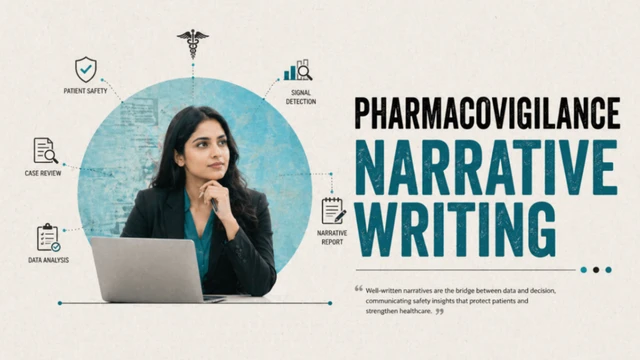
ZANE ProEd focuses on ICH-GCP international compliance and audit readiness. Their programs, like the Regulatory Affairs Writing Certification and Pharmacovigilance Narrative Writing, use practical trial simulation. You do not just watch videos; you complete assignments that mirror real-world tasks.
For example, the pharmacovigilance narrative writing program teaches you to craft safety narratives that meet global standards. This directly addresses the gap we discussed. Similarly, the regulatory affairs writing certification prepares you for document authoring in a regulated environment.
Learn more about the team's philosophy at ZANE ProEd About. Also, explore how chemistry graduates can enter pharmacovigilance here: Pharmacovigilance Jobs for Freshers Handbook.
Audit your industry readiness now
Do not wait for the perfect moment. Take a self-assessment: Can you list the sections of a CSR? Do you know the difference between an adverse event and a serious adverse event? Can you write a patient narrative in 30 minutes?
If any answer is no, it is time to act. Explore simulation workflows, build your portfolio, and practice until you can answer with confidence. Your medical writing career in India is closer than you think.
Build These Skills Now
Programs from ZANE ProEd Academy that directly address the skill gaps discussed above.
Follow Zane ProEd on Google
Preferred SourceAdd our publication as a preferred source to get the latest clinical research guides, industry updates, and career intel directly in your Google Top Stories & AI Overviews.