Pharmacovigilance Case Processing Jobs for Freshers: Step-by-Step Career Guide

Pharmacovigilance Case Processing Jobs for Freshers are entry-level roles in drug safety. Life science graduates review and process adverse event reports, enter data into safety databases, code medical terms with MedDRA, and write narratives. Starting salaries range ₹2.5–4.5 LPA in India, with high growth potential.
\nAre you a life science graduate (BSc/MSc in Biotechnology, Microbiology, Biochemistry) stuck in a non-healthcare job? Maybe you're working in IT or BPO because no one told you about pharmacovigilance case processing jobs freshers can actually get. Your degree is valuable. The pharma industry needs you. But if you wait too long, your career gap grows and recruiters will reject you as ‘lacking relevant experience’. Don't let fear stop you. This guide shows you exact steps to switch into pharmacovigilance, even with zero experience. The field is transforming rapidly—now is the time to enter.
\n\nWhat Do Pharmacovigilance Case Processing Jobs for Freshers Entail?
\nAs a pharmacovigilance case processor, you are the first line of drug safety. Your daily tasks include:
Build These Skills Now
Programs from ZANE ProEd Academy that directly address the skill gaps discussed above.
- \n
- Collecting Individual Case Safety Reports (ICSRs) from healthcare professionals, patients, or clinical trials. \n
- Entering data into safety databases like Oracle Argus or ArisGlobal’s LifeSphere. \n
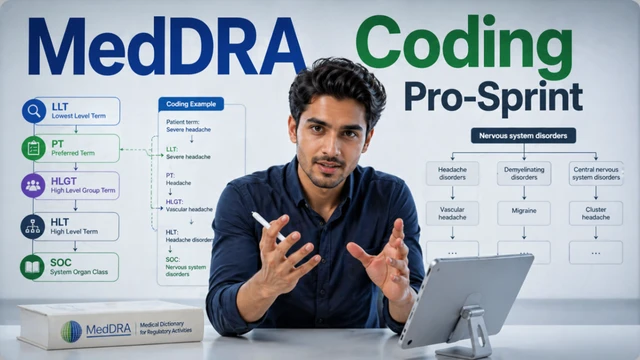
- MedDRA coding: Assigning standardized medical terms to adverse events, medical history, and indications. \n
- Writing detailed narratives that tell the story of what happened to the patient. \n
- Performing quality checks to ensure reports are accurate and complete. \n
- Following strict regulatory timelines set by agencies like FDA, EMA, and CDSCO. \n
This role demands attention to detail and a thorough understanding of guidelines like ICH E2B. It’s perfect for life science graduates who want a desk-based, analytical career.
\n\nWhat is the salary of a PV Case Processor in India?
\nPV case processor salary India depends on location, company, and your skills. Here’s a typical breakdown:
\n- \n
- Freshers: ₹2.5 – 4.5 lakhs per annum (LPA). \n
- After 2-3 years: ₹5 – 7 LPA. \n
- Senior roles or team leads: ₹8 – 12 LPA. \n
- Top cities: Hyderabad, Bengaluru, Mumbai, and Pune often pay higher. \n
- Companies hiring: Accenture, TCS, IQVIA, Wipro, Parexel, and Cognizant frequently hire case processors. \n
Even as a fresher, your salary can grow quickly once you master ICSR processing and MedDRA coding.
\n\nHow to get a PV case processing job as a fresher?
\nMost life science graduates don’t learn practical pharmacovigilance in college. That’s why you need a targeted plan. Follow these steps:
\n- \n
- Learn the basics: Understand what pharmacovigilance is and the lifecycle of a case report. Read the WHO pharmacovigilance guidelines. \n
- Get trained in ICSR processing and MedDRA: Enroll in a focused course that lets you practice on real-world tools. (See how ZANE’s simulation-based system can help below.) \n
- Build a portfolio: Create sample case reports and narratives to show during interviews. \n
- Apply smartly: Use job titles like ‘Drug Safety Associate’, ‘PV Case Processor’, or ‘Pharmacovigilance Associate’. Look for fresher openings on LinkedIn and pharma job boards. \n
- Ace the interview: Expect questions on case processing steps, MedDRA coding, and regulatory timelines. Practice handling a mock ICSR. \n
For a deeper dive, check this guide on pharmacovigilance case processing jobs for freshers.
\n\nWhat is ICSR processing in pharmacovigilance?
\nICSR processing is the backbone of drug safety. ICSR stands for Individual Case Safety Report. Processing includes:
\n- \n
- Triage: Classifying the case as serious or non-serious within 24 hours. \n
- Data entry: Entering patient details, drugs, and adverse events into a safety system. \n
- MedDRA coding: Converting reported symptoms into standard codes. \n
- Narrative writing: Summarizing the case in a clear, medical style. \n
- Quality review: Ensuring every field meets regulatory standards. \n
An ICSR processing career gives you a solid foundation to move into senior PV roles like case manager or signal detection expert.
\n\nWhat is MedDRA coding and how is it used in PV?
\nMedDRA (Medical Dictionary for Regulatory Activities) is a global standard for medical terminology. In PV, MedDRA coding for freshers is a critical skill. Here’s how it works:
\n- \n
- When a report says “heart attack”, you code it as “Myocardial infarction”. \n
- MedDRA has a five-level hierarchy: System Organ Class, High Level Group Term, High Level Term, Preferred Term, and Lowest Level Term. \n
- You must choose the most specific term and follow coding guidelines. \n
- Proper coding ensures data consistency and helps regulators like FDA and EMA analyze safety trends. \n
Learning MedDRA through practice is essential because small mistakes can lead to serious compliance issues.
\n\nWhy Freshers Often Get Rejected: The Skill Gap
\nYour college taught you microbiology, biochemistry, and genetics. But employers expect you to know:
\n- \n
- How to use Argus or LifeSphere safety databases. \n
- MedDRA coding on real cases. \n
- Narrative writing in medical English. \n
- Regulatory guidelines like ICH E2B and GVP modules. \n
This gap is why many BSc and MSc graduates miss out on adverse event reporting jobs. But you can bridge it with the right training.
\n\nYour Step-by-Step Roadmap to a PV Job
\n- \n
- Week 1-2: Read the ICH E2B and WHO pharmacovigilance guidelines. Familiarize yourself with the drug development lifecycle. \n
- Week 3-5: Take a simulation-based course that lets you process case reports end-to-end. Practice MedDRA coding with sample cases. \n
- Week 6-7: Write narratives for at least 5 different cases. Get feedback from a mentor or a peer group. \n
- Week 8-9: Prepare your resume with keywords like ‘ICSR processing’, ‘MedDRA coding’, and ‘narrative writing’. Apply to 10-15 companies. \n
- Week 10: Attend interviews. Walk them through a sample case you processed to demonstrate hands-on skill. \n
Bridge the Gap with Simulation-Based Learning
\nReading theory isn’t enough. You need to work on a mock safety database, code real adverse events, and write narratives that look like what you’d do on the job. That’s exactly what a simulation-based system offers.
\nBuild These Skills Now
Programs from ZANE ProEd Academy that directly address the skill gaps discussed above.
How ZANE ProEd Prepares You — The Right Way
\nZANE ProEd has built a learning system that mirrors a real pharmacovigilance department. The ICSR Case Processing & Triage program walks you through every step of handling a safety report. You’ll learn to triage cases, enter data, and write narratives. The MedDRA Medical Coding Certification module gives you deep practice in coding various medical conditions. Both courses include actual case scenarios, not just slides. You gain practical skills that recruiters look for. And because it’s self-paced, you can learn while working your current job.
\n\nReady to test your current knowledge? Check your job readiness with a quick self-assessment and see where you stand.
Build These Skills Now
Programs from ZANE ProEd Academy that directly address the skill gaps discussed above.
Follow Zane ProEd on Google
Preferred SourceAdd our publication as a preferred source to get the latest clinical research guides, industry updates, and career intel directly in your Google Top Stories & AI Overviews.