QA QC Pharma Jobs for Freshers: Your 2024 Step-by-Step Guide

QA/QC Executive (Pharma) jobs for freshers involve ensuring pharmaceutical products meet safety and quality standards. Quality Assurance (QA) focuses on preventing defects by managing processes, while Quality Control (QC) focuses on identifying defects through testing raw materials and finished products in a lab environment.
If you're a pharmacy graduate working in an unrelated job, stop sending out hundreds of random applications. This approach doesn't work. The competition for QA QC pharma jobs for freshers is intense in India, and a generic resume gets lost in the pile.
You have the degree, but you feel stuck. You see job postings for QA/QC roles but don't know how to stand out. The truth is, your college knowledge is just the starting point. Companies need practical skills that are rarely taught in a classroom.
Build These Skills Now
Programs from ZANE ProEd Academy that directly address the skill gaps discussed above.
This guide will give you a clear, step-by-step roadmap. We will break down what you actually need to do to leave your current job and start a successful pharma quality control career.
What is the difference between QA and QC in pharma?
Many freshers think Quality Assurance (QA) and Quality Control (QC) are the same. They are related, but very different. Understanding this is key to finding the right QA QC pharma jobs for freshers.
Think of it like cooking a meal.
- Quality Assurance (QA) is like the head chef who designs the recipe and the entire cooking process. They make sure the kitchen is clean, the ingredients are sourced correctly, and the steps are followed perfectly to prevent any mistakes. QA is proactive and process-oriented.
- Quality Control (QC) is like the food taster who tests the final dish before it goes to the customer. They check if it tastes right, looks good, and has the correct ingredients. QC is reactive and product-oriented.
In pharma, QA sets up the systems (like SOPs, audits) to ensure quality is built into the product from the start. QC performs the actual lab tests on raw materials and final drugs to check if they meet the specifications. QA prevents problems; QC finds problems.
What qualifications are needed for QA/QC in pharma?
To get into QA or QC, you need a solid educational foundation. But your degree is just the entry ticket. Companies look for more.
Essential Education:
- B.Pharm / M.Pharm: This is the most common and preferred qualification.
- B.Sc / M.Sc in Chemistry or Biotechnology: These degrees are also highly valued, especially for QC lab roles.
Skills Employers Actually Want:
- Knowledge of GMP: Good Manufacturing Practices are the rules of pharma manufacturing. You must know them.
- Understanding of Regulatory Guidelines: Familiarity with guidelines from bodies like the CDSCO in India and international standards from ICH is crucial.
- Documentation Skills: QA is all about documentation. You must be precise and detail-oriented.
- Analytical Skills: For QC, you need strong hands-on skills with lab instruments like HPLC, GC, and UV-Visible Spectrophotometers.
What does a QA/QC Executive do daily?
Your daily tasks will be very different depending on whether you are in QA or QC. Here’s a simple breakdown based on a typical QA QC executive job description.
A Day in Quality Assurance (QA):
- Reviewing Batch Manufacturing Records (BMRs).
- Preparing and reviewing Standard Operating Procedures (SOPs).
- Handling deviations and change controls.
- Investigating market complaints and performing root cause analysis.
- Conducting internal audits to ensure compliance.
- Preparing the facility for regulatory audits.
A Day in Quality Control (QC):
- Receiving and sampling raw materials.
- Performing chemical and physical tests on samples.
- Operating and calibrating lab equipment like HPLC and GC.
- Documenting test results accurately in lab notebooks.
- Preparing Certificates of Analysis (CoA).
- Ensuring the lab environment is clean and compliant.
What is the salary of a QA/QC Executive in India?
Salary is a major factor for freshers. The quality assurance pharma salary in India for a fresher can vary based on the company size and location.
For a fresher QA or QC Executive, you can expect a starting salary in the range of ₹2.5 Lakhs to ₹4.5 Lakhs per annum. Larger multinational companies (MNCs) generally offer higher packages than smaller domestic firms.
With 2-3 years of experience, this can increase to ₹5 Lakhs - ₹8 Lakhs. A good career path in quality can lead to roles like QA Manager or Head of Quality, where salaries are significantly higher. Your growth depends on your ability to learn and apply practical industry skills.
How to get a QA/QC job in pharma as a fresher?
Getting your first job is the hardest part. Here’s how you can move from just applying to actually getting hired.
First, you need to understand the gap between your college syllabus and what the industry demands. Then, you need a structured plan to fill that gap. Generic resumes and textbook knowledge won't work in a market with thousands of applicants. You need to show employers that you are job-ready from day one.
For interviews, be prepared for common QA QC interview questions that test your practical understanding. Questions like "What is a deviation?" or "How do you handle an Out-of-Specification (OOS) result?" are very common. Your answers must be practical, not just book definitions.
Why Your BPharm Degree Isn't Enough
The biggest shock for pharmacy graduates is realizing the massive gap between theory and reality. Your college teaches you about drug classifications and chemical structures. But it doesn't teach you how to manage a Quality Management System (QMS), handle a real-time manufacturing deviation, or prepare for an audit by the US FDA.
Employers know this. They receive thousands of resumes from BPharm freshers who all have the same theoretical knowledge. To stand out, you must demonstrate skills that solve real-world problems in a pharmaceutical plant.
Your Step-by-Step Roadmap to a QA/QC Career
Feeling overwhelmed? Don't be. Here is a simple, actionable plan to follow.
- Master the Core Concepts: Go beyond your textbooks. Deeply understand GMP, Good Documentation Practices (GDP), and the basics of QMS. Understand the 'why' behind every rule. Other related fields you could explore include Pharmaceutical Validation.
- Choose Your Path (QA vs. QC): Decide which role fits you better. Do you prefer hands-on lab work (QC) or process management and documentation (QA)? Tailor your resume and skill-building for that specific path.
- Build Practical, Verifiable Skills: This is the most critical step. You need skills that show up on a resume. Learn how to review a batch record, write an SOP, or manage a CAPA (Corrective and Preventive Action). These are the skills hiring managers are looking for.
- Optimize Your Resume and LinkedIn: Stop using a generic resume. Highlight your practical skills and knowledge of specific guidelines. Use keywords from job descriptions like "GMP," "QMS," "Deviation Handling," and "SOP."
- Prepare for a Practical Interview: Practice answering scenario-based questions. An interviewer is more interested in how you would handle a problem than your grades. Understanding the broader landscape, like Regulatory Affairs, can also give you an edge.
The Bridge from College to Career
How do you gain practical skills without having a job? This is the classic fresher's dilemma. The answer is not more theory. It's about experiencing real-world scenarios in a controlled environment.
This is where simulation-based learning changes everything. It allows you to work on real-world case studies and projects, like managing a batch release process or implementing a QMS, before you ever step into a company.
Build These Skills Now
Programs from ZANE ProEd Academy that directly address the skill gaps discussed above.
A System to Make You Job-Ready
At ZANE ProEd, we don't just offer courses. We provide a system designed to make you competent and confident. Our programs are built on industry simulations, not just video lectures.
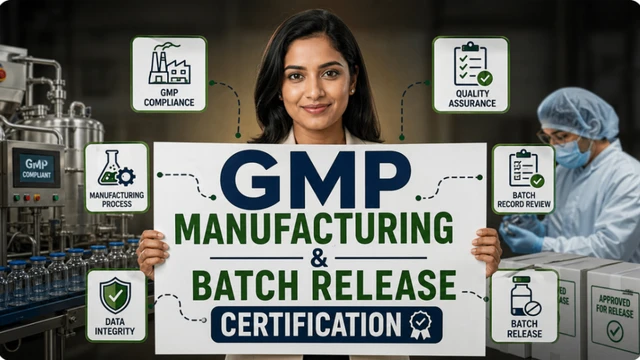
For aspiring QA/QC professionals, our GMP Manufacturing Batch Release Certification allows you to step into the shoes of a QA manager. You learn to review real BMRs and make critical release decisions. Similarly, the Quality Management System (QMS) Certification teaches you how to design and manage the entire quality framework of a pharma company.
This system builds the practical evidence of your skills that employers desperately seek. It turns your resume from a list of subjects into a portfolio of capabilities.
Ready to see if you have what it takes to succeed in a top pharma company?
Take the first step. See how your current skills compare to what the industry actually needs. It's time to stop guessing and start building a real career path.
Build These Skills Now
Programs from ZANE ProEd Academy that directly address the skill gaps discussed above.
Follow Zane ProEd on Google
Preferred SourceAdd our publication as a preferred source to get the latest clinical research guides, industry updates, and career intel directly in your Google Top Stories & AI Overviews.