QA QC Pharma Jobs for Freshers: Complete Career Guide for Medical Graduates

QA QC Pharma Jobs for Freshers are entry-level roles in pharmaceutical quality assurance and quality control. Freshers can enter by learning GMP, documentation, and audit basics. The typical salary starts at ₹2.5 LPA to ₹5 LPA in India.
If you are a BDS, BHMS, BAMS, or Nursing graduate, you already have a strong science foundation. But recruiters tell us that degrees alone do not open doors to QA QC pharma jobs for freshers. You need practical skills that match what pharma companies actually use every day.
You are overqualified on paper, but under-skilled in the eyes of a QA/QC hiring manager. Your medical degree proves you can learn complex topics. It does not prove you know how to handle a batch deviation or write a deviation report. That gap is why you get rejected.
Build These Skills Now
Programs from ZANE ProEd Academy that directly address the skill gaps discussed above.
I am a recruiter who has screened hundreds of freshers for quality roles. Let me give you the exact information you need to stand out in the next hiring cycle.
What is the difference between QA and QC in pharma? (QA QC pharma jobs for freshers)
The difference between QA and QC in pharma is simple. QA (Quality Assurance) focuses on preventing mistakes. QC (Quality Control) focuses on finding mistakes in finished products.
- QA builds systems, writes SOPs, and audits processes. It ensures the manufacturing process follows ICH Q7 guidelines.
- QC tests raw materials, in-process samples, and final products. It checks if the product meets specifications.
- QA is process-oriented. QC is product-oriented.
- QA is proactive. QC is reactive.
As a fresher, you need to understand both because most pharma companies combine them under one department. Your interview will likely ask you to explain this difference in your own words.
What is the salary of a QA/QC Executive in India?
The quality assurance pharma salary for freshers ranges from ₹2.5 LPA to ₹5 LPA. This depends on the city, company size, and your certification level.
- Fresher (0-1 year): ₹2.5 LPA to ₹3.5 LPA
- 1-3 years experience: ₹4 LPA to ₹6 LPA
- Senior Executive (3-5 years): ₹6 LPA to ₹9 LPA
Top pharma hubs like Hyderabad, Ahmedabad, and Mumbai pay slightly higher. But expect lower pay if you do not have any GMP certification. The good news? A small certification can push your starting salary up by 20%.
How to get a QA/QC job in pharma as a fresher?
Here is the recruiter's honest checklist. You need to show three things: GMP knowledge, documentation discipline, and interview confidence.
- Learn GMP basics: Study ICH Q7 and Schedule M. Know what a deviation, CAPA, and change control mean.
- Get a simulation-based certification: Employers prefer candidates who have practiced real tasks, not just read theory.
- Prepare for QA QC interview questions: Expect questions like:
- What is the difference between OOS and OOT?
- Explain CAPA with an example.
- What does ALCOA+ mean in documentation?
- Customize your resume: Use keywords like 'batch release', 'SOP review', 'line clearance', and 'audit readiness'.
- Apply to entry-level titles: QA Trainee, QC Analyst, Quality Executive, IPQA Officer.
What qualifications are needed for QA/QC in pharma?
Most pharma companies ask for B.Pharm, M.Pharm, B.Sc, or M.Sc in chemistry or life sciences. But BDS, BHMS, BAMS, and Nursing graduates are also eligible if they can prove quality system knowledge.
- Educational degree: Any science or medical degree works.
- GMP certification: This is not optional if you come from a non-pharma background. Look for courses that follow WHO GMP standards.
- Computer skills: Basic Excel, document management systems, and eQMS tools.
- Soft skills: Attention to detail, ability to follow SOPs, and clear communication.
The pharma quality control career path is open to you. But you must bridge the gap between your medical degree and pharma quality expectations.
What does a QA/QC Executive do daily?
Here is the QA QC executive job description in simple terms. Your day will rotate between documentation, inspection, and coordination.
- Morning: Review batch manufacturing records (BMR) from the previous shift.
- Mid-day: Perform line clearance for production areas. Check equipment calibration status.
- Afternoon: Handle a deviation reported by production. Write a short report and log it in the quality system.
- Weekly: Participate in internal audits and update SOPs as per US FDA 21 CFR Part 211 requirements.
- QC side: Collect samples, run HPLC or dissolution tests, and record results in LIMS.
You will not do all of this on day one. But you must understand the workflow to answer interview questions confidently.
Why do medical graduates struggle to get QA QC jobs?
Here is the uncomfortable truth. Your college taught you anatomy, physiology, and patient care. It did not teach you Good Manufacturing Practices, batch release, or CAPA.
Recruiters see two profiles:
- B.Pharm fresher: Knows the basics of pharma manufacturing but lacks practical depth.
- BDS/BHMS/BAMS/Nursing fresher: Has strong scientific fundamentals but zero pharma quality vocabulary.
Employers do not have time to teach you from scratch. They expect you to know what a deviation is on day one. This is why your degree alone is not enough. But you can close this gap in 4-6 weeks with the right system. Learn how validation fits into quality systems in our validation specialist career guide.
How can you become job-ready for QA/QC in the next hiring cycle?
Follow this exact 5-step roadmap. It is based on what recruiters like me want to see.
- Step 1: Build GMP vocabulary. Spend one week learning terms like SOP, BMR, CAPA, OOS, OOT, and ALCOA+.
- Step 2: Understand documentation flow. Study a sample batch record and a deviation form. Know who signs what and when.
- Step 3: Practice with simulations. Use case studies or online simulations to handle a mock batch release decision.
- Step 4: Prepare interview answers. Write short, clear answers for 10 common QA QC interview questions. Practice speaking them aloud.
- Step 5: Apply with a targeted resume. Replace generic lines with phrases like 'understands Schedule M compliance' and 'familiar with batch documentation review'.
Do not wait for the perfect degree. Start now. If you enjoy audit thinking, check out the GCP auditor career path to see how quality skills transfer across fields.
What is the fastest way to build real QA QC skills?
Textbooks are not enough. You need to practice what a QA/QC executive actually does on the job. That is where simulation-based learning comes in.
ZANE ProEd builds a system where you handle real pharma scenarios: a batch with a temperature excursion, a missing signature on a form, a deviation that needs CAPA. You make decisions in a safe environment and get instant feedback.
This is not about watching videos. It is about doing the job before you get the job. Our system bridges the gap between your medical degree and the pharma quality role.
Build These Skills Now
Programs from ZANE ProEd Academy that directly address the skill gaps discussed above.
Which ZANE ProEd certifications help you get QA QC jobs?
Two certifications are specifically designed for your situation.
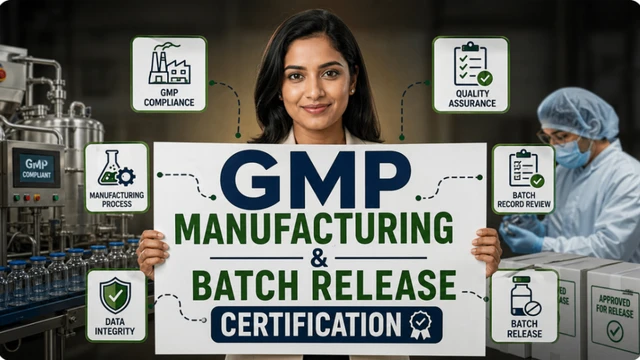
- GMP Manufacturing & Batch Release Certification: This course simulates the entire batch release process. You will review manufacturing records, decide if a batch passes, and handle investigations. This directly matches the daily work of a QA executive.
- Quality Management System Certification: This course covers SOP writing, CAPA management, internal audits, and change control. It builds the documentation mindset that pharma companies demand.
These are not just theory courses. They are part of the ZANE ProEd system that gives you repeatable practice. You can learn more about our approach on the about page. You do not need to buy anything today. You need to understand what real skill building looks like.
Are you ready to test your QA QC job readiness?
Before you apply for your first job, ask yourself these three questions:
- Can I explain the difference between QA and QC in one minute?
- Can I list three documents a QA executive reviews daily?
- Can I describe what CAPA means using a simple example?
If you answered 'no' to any of these, your skills are not ready yet. Check your job readiness by taking a short self-assessment or reviewing a sample batch record online. See how your skills compare to what recruiters expect. Start with one simulation today.
Build These Skills Now
Programs from ZANE ProEd Academy that directly address the skill gaps discussed above.
Follow Zane ProEd on Google
Preferred SourceAdd our publication as a preferred source to get the latest clinical research guides, industry updates, and career intel directly in your Google Top Stories & AI Overviews.