QA QC Pharma Jobs for Freshers: A Complete Career Guide

QA QC Executive (Pharma) jobs for freshers involve ensuring drug safety and quality. Quality Assurance (QA) focuses on preventing defects in processes, while Quality Control (QC) tests products to find defects. BPharm or MPharm graduates can start with salaries from ₹2.5 to ₹4.5 Lakhs per annum.
If you feel stuck after your BPharm or MPharm, you're not alone. You attended every placement drive, but the job offers aren't coming. This guide provides a clear roadmap for freshers looking for QA QC pharma jobs for freshers, moving you from a confused graduate to a confident, job-ready professional.
Many graduates face this problem because colleges teach theory, but pharma companies hire for practical skills. This article will show you exactly what skills you need and how to get them.
Build These Skills Now
Programs from ZANE ProEd Academy that directly address the skill gaps discussed above.
What is the difference between QA and QC in pharma?
This is one of the most common QA QC interview questions. Understanding the difference between QA and QC in pharma is the first step. Think of it like cooking a meal.
Quality Assurance (QA) is like the head chef who creates the recipe and sets up the kitchen rules. QA is proactive. It focuses on the entire process to prevent mistakes from happening. Its goal is to build quality into the system itself.
- Focus: Process-oriented.
- Goal: To prevent defects.
- Activities: Writing Standard Operating Procedures (SOPs), audits, documentation review, training, and managing the Quality Management System (QMS).
Quality Control (QC) is like the food taster who checks the final dish before it goes to the customer. QC is reactive. It focuses on testing the product to find any mistakes or defects. It's a lab-based role.
- Focus: Product-oriented.
- Goal: To identify defects.
- Activities: Testing raw materials and finished products, using instruments like HPLC and GC, calibration, and stability studies.
In short, QA ensures you are 'doing the right things', while QC ensures the 'results are what you expected'. Both are critical for patient safety and regulatory compliance according to guidelines from bodies like the CDSCO in India.
What is the salary of a QA/QC Executive in India?
For freshers, the quality assurance pharma salary is a key consideration. In India, a fresher QA or QC Executive can expect a starting salary between ₹2.5 Lakhs to ₹4.5 Lakhs per annum.
This amount can vary based on a few factors:
- Company Size: Multinational companies (MNCs) generally offer higher salaries than smaller, local companies.
- Location: Jobs in major pharma hubs like Mumbai, Hyderabad, Ahmedabad, and Bengaluru may pay more due to a higher cost of living.
- Your Skills: A candidate who can demonstrate practical knowledge of QMS, CAPA, and lab instruments has more negotiating power.
Your pharma quality control career has strong growth potential. With 3-5 years of experience, your salary can increase to ₹6-9 Lakhs per annum or more as you move into senior or managerial roles.
How to get a QA/QC job in pharma as a fresher?
Getting your first job feels tough, but you can succeed with the right strategy. Stop just sending your resume everywhere. Instead, focus on becoming the candidate companies want to hire.
- Strengthen Your Fundamentals: Go beyond your textbook definitions of Good Manufacturing Practices (GMP) and Good Laboratory Practices (GLP). Understand *why* these rules exist.
- Learn Industry-Standard Workflows: Companies don't want you to recite definitions. They want you to execute tasks. Focus on learning workflows like Deviation Handling, Change Control, and Corrective and Preventive Actions (CAPA). This is what the real job is about.
- Build a Skill-Based Resume: Instead of listing subjects you studied, list skills you have. For example, instead of "Studied Quality Assurance," write "Trained in executing QMS workflows including deviation and change control management."
- Prepare for Scenario Questions: Interviewers will ask, "What would you do if you found an out-of-specification result?" They are testing your thinking process. Preparing for these questions shows you are ready for the job.
What qualifications are needed for QA/QC in pharma?
While a degree is the entry ticket, it's the practical skills that get you hired. Here’s what you need.
Academic Qualifications
The basic requirement is a degree in a relevant science field:
- B.Pharm (Bachelor of Pharmacy)
- M.Pharm (Master of Pharmacy)
- B.Sc. or M.Sc. in Chemistry, Microbiology, or Biotechnology
Technical Skills Employers Demand
This is where most freshers have a gap. You need to know:
- For QC: Hands-on knowledge of instruments like HPLC, GC, UV-Vis Spectrophotometer, and Karl Fischer Titrator.
- For QA: Deep understanding of the Quality Management System (QMS), CAPA, change control, market complaints, and internal audits. Knowledge of regulatory guidelines from bodies like the ICH is crucial.
- For Both: Strong documentation skills. In pharma, 'if it wasn't documented, it didn't happen'.
What does a QA/QC Executive do daily?
The QA QC executive job description is not just about testing samples. It's a role with serious responsibility. Here's a look at the day-to-day tasks.
A Day in Quality Assurance (QA)
- Reviewing Batch Manufacturing Records (BMR) and Batch Packaging Records (BPR) to ensure procedures were followed correctly.
- Issuing and reviewing SOPs.
- Investigating deviations and out-of-specification (OOS) results.
- Managing the change control system for any changes in process or equipment.
- Preparing the facility for internal and regulatory audits.
As you can see, this is a process-focused job. For a deeper dive, check out our Pharma QA/QC Executive Playbook.
A Day in Quality Control (QC)
- Collecting samples of raw materials, in-process materials, and finished products.
- Performing chemical or microbiological tests on samples using various instruments.
- Calibrating and maintaining laboratory equipment.
- Accurately documenting all test results and calculations.
- Ensuring the lab complies with Good Laboratory Practices (GLP).
This is a hands-on, lab-based role where precision is everything. It's related to roles like a Validation Specialist, which also requires meticulous technical work.
The Skill Gap: What Your College Didn't Teach You
Your BPharm or MPharm degree gave you a strong foundation of theoretical knowledge. You learned the definitions of GMP, SOPs, and Deviations. But companies operate on execution, not definitions.
Employers expect you to know *how* to use a QMS software to log a deviation, *how* to conduct a root cause analysis for a CAPA, and *how* to manage the change control documentation from start to finish. This practical, workflow-based knowledge is the missing link for most freshers.
Your Step-by-Step Pathway to a QA/QC Job
Here is a simple, actionable plan to bridge that gap and become job-ready.
- Master the 'Why': Don't just memorize GMP rules. Understand the 'why' behind them. This helps you make better decisions on the job.
- Learn Core Workflows: Focus your learning on the 3-4 key workflows every QA/QC professional uses: Deviation Management, Change Control, CAPA, and Audit Preparation.
- Gain Hands-On Experience: The biggest challenge for freshers is the lack of experience. Reading about a workflow is not the same as doing it. You need to practice in a realistic environment.
- Build a 'Proof of Skill' Resume: Update your resume to highlight the workflows you can execute. This immediately makes you stand out from other candidates.
- Practice Scenario-Based Interviews: Prepare answers for questions that start with "Tell me about a time when..." or "What would you do if...".
The Bridge from Theory to Practice
How can you gain experience without a job? The answer is simulation. Just like pilots train in flight simulators before flying a real plane, you can train on pharma quality workflows using industry-grade simulations.
This approach allows you to work on realistic case studies, handle deviations, manage CAPAs, and make decisions in a risk-free environment. You build confidence and practical skills that employers are desperately looking for.
Build These Skills Now
Programs from ZANE ProEd Academy that directly address the skill gaps discussed above.
ZANE ProEd: A System for Building Job-Ready Skills
At ZANE ProEd, we don't just offer courses; we provide a system for you to become job-ready. Our mission, as you can learn on our about us page, is to bridge the gap between academic education and industry demands.
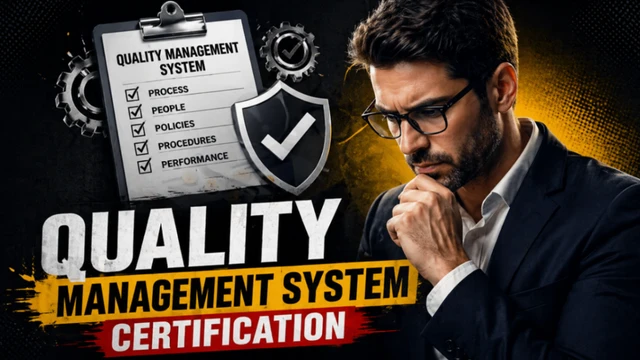
Our simulation-based programs like the Quality Management System Certification and CAPA Management Certification are designed for this exact purpose. They don't just teach you the theory; they put you in the role of a QA Executive. You will execute end-to-end workflows, use templates, and solve problems you will face in your first week on the job.
This method transforms your resume from a list of qualifications to a portfolio of skills, making you a top candidate for any QA/QC role.
Check Your Job Readiness Now
Stop feeling frustrated by job rejections. It's time to take control of your career path by building the practical skills the pharma industry demands.
See how your current skills compare to what hiring managers are looking for. Explore a real-world workflow simulation and find out if you have what it takes to succeed as a QA/QC Executive.
Build These Skills Now
Programs from ZANE ProEd Academy that directly address the skill gaps discussed above.
Follow Zane ProEd on Google
Preferred SourceAdd our publication as a preferred source to get the latest clinical research guides, industry updates, and career intel directly in your Google Top Stories & AI Overviews.