QA QC Pharma Jobs for Freshers: Complete Guide to Get Hired Fast

QA QC Pharma Jobs for Freshers QA QC pharma jobs for freshers involve ensuring medicine quality and safety. QA focuses on processes, QC tests products. Freshers from BSc, BPharm, or even non-healthcare backgrounds can enter with GMP knowledge and practical skills. Starting salary is ₹2.5-4 LPA.
Why is it so hard to get QA QC pharma jobs for freshers from Tier-2 or Tier-3 colleges?
If you're from a Tier-2 or Tier-3 college with a BSc, BCA, BTech, or a non-healthcare background, you might think QA QC pharma jobs for freshers are out of reach. That's a lie. The truth is worse: your degree alone is not enough, but the industry is desperate for job-ready freshers.
Companies are tired of training graduates who don't know basic GMP, documentation, or audit readiness. They want someone who can start on day one. The shock? Most freshers can't. That's why you're not getting callbacks, even with good marks.
Build These Skills Now
Programs from ZANE ProEd Academy that directly address the skill gaps discussed above.
This blog breaks down the brutal reality. You'll learn the exact salary, qualifications, daily tasks, and a step-by-step path to get hired in QA QC pharma jobs for freshers—even if you're switching from IT or BPO.
What is the difference between QA and QC in pharma?
The difference between QA and QC in pharma is simple: QA prevents mistakes, QC catches them. Both are critical for medicine safety, but they work differently.
- QA (Quality Assurance): Focuses on systems, processes, and documentation. QA executives write SOPs, conduct internal audits, and ensure compliance with ICH guidelines.
- QC (Quality Control): Focuses on testing raw materials, in-process samples, and finished products. QC executives run analytical tests like HPLC, dissolution, and sterility testing.
- QA is proactive: You design the process to prevent defects before they happen.
- QC is reactive: You test the final product to see if defects already happened.
In a pharma quality control career, you might start in QC lab testing, then move to QA for broader process oversight. Most freshers start in QC because it has more entry-level vacancies.
What is the salary of a QA/QC Executive in India?
The quality assurance pharma salary for freshers is modest but grows fast with skills. Here's the real range as of 2024-2025:
- Fresher QA/QC Executive (0-1 years): ₹2.5 LPA to ₹4 LPA
- 1-3 years experience: ₹3.5 LPA to ₹5.5 LPA
- 3-5 years experience: ₹5 LPA to ₹8 LPA
- Senior Executive / Assistant Manager: ₹8 LPA to ₹12 LPA+
Location matters. Ahmedabad, Hyderabad, Bangalore, and Mumbai pay higher. Companies like Sun Pharma, Cipla, Dr. Reddy's, and Mylan hire QA QC freshers regularly. But salary is not the issue—getting the first job is.
How to get a QA/QC job in pharma as a fresher?
Stop applying blindly. Follow this 5-step plan that actually works for BSc, BCA, BTech, and non-healthcare switchers.
- Learn GMP and documentation first. Companies reject freshers who don't know batch records, change control, or CAPA. Study FDA and CDSCO basics.
- Get a practical certification. A certificate showing you can handle batch release or quality management systems sets you apart. Look for simulation-based courses, not just theory.
- Prepare for QA QC interview questions. Expect questions like: What is the difference between QA and QC? What is a deviation? What is a CAPA? What is 21 CFR Part 11? Practice answers out loud.
- Build a pharma-specific resume. Replace generic skills with keywords like 'GMP', 'SOP', 'audit', 'HPLC', 'documentation'. Mention any lab or software exposure.
- Apply to contract manufacturing and small companies first. They hire freshers more readily than big pharma. Then switch after 1-2 years.
For a deeper dive into validation roles, read this guide on pharma validation specialist careers. Validation is closely linked to QA QC.
What qualifications are needed for QA/QC in pharma?
The minimum qualification for QA QC pharma jobs for freshers is usually a BSc in Chemistry, Microbiology, or Life Sciences, or a BPharm. But here's the shock: BCAs, BTechs, and even IT/BPO switchers can enter if they prove job-ready skills.
- BSc / BPharm: Preferred for QC lab roles. BPharm has a slight edge for QA documentation roles.
- BCA / BTech: Can enter QA IT systems, CSV (computer system validation), or data integrity roles.
- Non-healthcare switchers: Need a strong certification in GMP or QMS to compensate for lack of pharma degree.
- Key skills employers test: Understanding of GMP, SOP writing, batch release, CAPA, deviations, and audit readiness.
According to WHO and EMA guidelines, companies must train all staff in GMP. That's your entry point—if you already know it, you're ahead.
What does a QA/QC Executive do daily?
The QA QC executive job description varies by company, but here's a typical day for a fresher.
- QC Executive (Lab): Collect samples, run analytical tests (HPLC, UV, dissolution), record results in LIMS, report out-of-spec (OOS) results.
- QA Executive (Process): Review batch manufacturing records, check line clearance, conduct in-process checks, assist in internal audits, update SOPs.
- Common daily tasks: Fill logbooks, check calibration labels, verify cleaning records, attend daily quality meetings, investigate minor deviations.
- Software used: LIMS, SAP QM, TrackWise, and MS Excel for data trending.
It's not glamorous. It's repetitive, documentation-heavy work. But it's stable, pays well after 2 years, and every medicine you use has passed through QA QC hands.
Why do freshers from Tier-2 and Tier-3 colleges struggle in QA QC pharma jobs?
Colleges teach theory. Companies need execution. Here's the skill gap that kills interviews.
- College teaches: Organic chemistry reactions, microbiology fundamentals, generic lab experiments.
- Company expects: Read a batch record, identify a deviation, write a CAPA, understand data integrity (ALCOA+), use a QMS software.
- College teaches: How to pass written exams.
- Company expects: How to behave in an audit, how to document in real time, how to escalate quality issues.
If you're from a Tier-3 college, you probably never saw a real batch record or a deviation form. That's not your fault. But it is your responsibility to fill that gap before the interview.
What are the exact steps to become job-ready for QA QC pharma jobs?
Follow this roadmap. It's designed for non-pharma backgrounds and Tier-2/3 graduates who want to enter industry without experience.
- Step 1: Learn the language of GMP. Study ICH Q7, 21 CFR Part 210/211, and Schedule M. You don't need to memorise all, but know the logic.
- Step 2: Master documentation flows. Understand BMR, BPR, SOP, deviation, change control, CAPA, and market complaint handling.
- Step 3: Get hands-on with a simulation. Use a simulated batch release or QMS tool to practice real tasks. This replaces the 'experience' gap.
- Step 4: Prepare 20 common QA QC interview questions. Write answers, record yourself, and fix weak points.
- Step 5: Build a project portfolio. Create a sample deviation report, a CAPA plan, and a one-page SOP. Attach these to your resume.
- Step 6: Apply to 20 relevant jobs per week. Target QC analyst, QA trainee, documentation assistant roles. Follow up on LinkedIn.
These steps work. They have worked for BSc graduates from small towns and for BPO switchers who never stepped into a lab.
How can simulation-based learning bridge the gap?
You can't get experience without a job. But you can get simulated experience. That's the system bridge.
Simulation-based learning puts you inside a virtual pharma plant. You handle a batch record, face a deviation, and write a CAPA. You learn the exact workflow that QA QC executives use daily.
This is not watching videos. It's doing the job before you get the job. Employers notice this because you speak their language in interviews. You know what a line clearance is. You know how to review a BMR.
Build These Skills Now
Programs from ZANE ProEd Academy that directly address the skill gaps discussed above.
How do ZANE ProEd courses help you master QA QC skills?
ZANE ProEd designed two simulation-based certifications for exactly this gap.
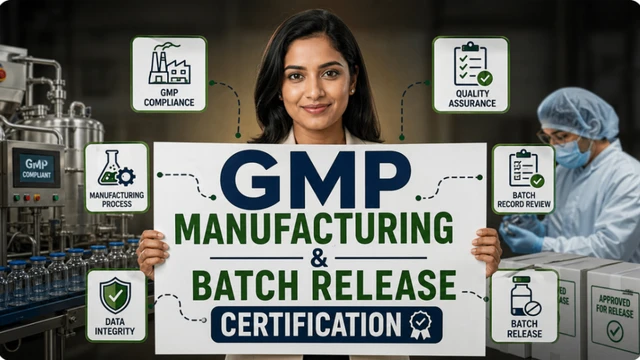
- GMP Manufacturing Batch Release Certification: You practice reviewing batch records, identifying critical process parameters, and releasing a batch for market. This directly maps to QA executive daily tasks.
- Quality Management System Certification: You build a QMS from scratch—SOPs, deviations, CAPA, change control, and audit readiness. This is what QA managers expect you to know.
These are not theory courses. They are systems that simulate real pharma plant scenarios. You can complete them from your Tier-3 city, on your own schedule. And you get a portfolio of work samples to show interviewers.
For related career paths, check this guide on regulatory affairs for freshers. Regulatory affairs works closely with QA documentation.
Are you ready to stop applying and start getting interviews?
Check your job readiness. See how your skills compare to what QA QC employers actually demand. If you find a gap, close it with a simulation. The first step is to know where you stand.
QA QC pharma jobs for freshers are not reserved for toppers or metro graduates. They are for freshers who prepare like professionals. That's you, after you finish this roadmap.
Build These Skills Now
Programs from ZANE ProEd Academy that directly address the skill gaps discussed above.
Follow Zane ProEd on Google
Preferred SourceAdd our publication as a preferred source to get the latest clinical research guides, industry updates, and career intel directly in your Google Top Stories & AI Overviews.