QA QC Pharma Jobs for Freshers: A Step-by-Step Career Guide

QA QC Pharma Jobs for Freshers are entry-level positions in pharmaceutical quality assurance and quality control. They involve checking raw materials, testing finished products, and ensuring manufacturing follows strict safety and quality standards like GMP. Freshers with a BSc, BPharm, or similar degree can apply.
If you recently graduated with a BSc, BCA, or BTech and feel lost about your career, you are not alone. Many freshers look for stable QA QC pharma jobs for freshers but don't know where to start. The gap between college and industry is massive. But there is a clear path you can follow to break in, even if you come from an IT or BPO background.
This guide will show you exactly what you need to know and do, step by step. No confusing jargon—just honest, practical advice from someone who has seen hundreds of people launch their quality careers.
Build These Skills Now
Programs from ZANE ProEd Academy that directly address the skill gaps discussed above.
What is the difference between QA and QC in pharma?
The difference between QA and QC in pharma is simple. QA (Quality Assurance) focuses on the entire manufacturing process to prevent mistakes. QC (Quality Control) focuses on testing the final product to find defects. Think of QA as building a car with a perfect blueprint, and QC as checking the finished car for scratches.
Here is a quick comparison:
- QA: Process-oriented. Ensures SOPs are followed, handles documentation, and manages quality systems.
- QC: Product-oriented. Tests raw materials, in-process samples, and finished drugs using lab instruments like HPLC.
Both work together to make sure medicines are safe for patients. Many companies hire freshers for either role, but you need to understand both basics.
What is the salary of a QA/QC Executive in India?
The quality assurance pharma salary for freshers typically ranges from ₹2.5 lakhs to ₹4 lakhs per year. With 2-3 years of experience, it can rise to ₹5-7 lakhs. Senior executives or managers can earn over ₹10 lakhs.
Salaries depend on:
- Location (Mumbai, Hyderabad, Ahmedabad pay higher).
- Type of company (MNCs like Sun Pharma, Cipla pay more than small manufacturers).
- Certifications and practical skills (candidates with simulation training often start higher).
As a fresher, don't expect a huge salary immediately, but the growth is steady and stable. Compared to many other industries, pharma offers better job security.
How to get a QA/QC job in pharma as a fresher?
Getting QA QC pharma jobs for freshers is possible even without experience if you follow a smart plan. Employers don't expect you to know everything, but they want to see that you understand the basics and are ready to learn.
Here is a step-by-step approach:
- Learn the fundamentals: Study GMP (Good Manufacturing Practices), quality systems, and common documentation like BMR and SOPs.
- Get certified: A certificate in GMP or quality management makes your resume stand out. It shows you have practical knowledge beyond theory.
- Practice with simulations: Hands-on simulation tools let you perform batch release and deviation handling virtually. This builds confidence for interviews.
- Prepare for QA QC interview questions: Expect questions like 'What is an SOP?' 'Explain OOS investigation' or 'Difference between API and excipient'. Practice answers out loud.
- Apply smartly: Use job portals like Naukri, indeed, and company websites. Customize your resume to highlight your certifications and any practical training.
With this roadmap, many freshers from non-pharma backgrounds have successfully entered the industry.
What qualifications are needed for QA/QC in pharma?
For pharma quality control career entry, you typically need a bachelor's degree in a science field. Acceptable degrees include:
- BSc (Chemistry, Microbiology, Biotechnology)
- BPharm (Bachelor of Pharmacy)
- MSc (Analytical Chemistry, Pharmaceutical Chemistry)
- BTech (Biotechnology, Chemical Engineering)
If you hold a BCA or non-science degree, don't lose hope. Some companies hire for documentation or data review roles. But you will need strong certification or training to bridge the knowledge gap. Age is not a barrier; what matters is your willingness to learn industry practices.
What does a QA/QC Executive do daily?
A QA QC executive job description includes a mix of paperwork and lab work. On a typical day, they might:
- Review batch manufacturing records for accuracy and compliance.
- Collect samples from the production line and test them in the QC lab using instruments like HPLC, UV spectrophotometer, or dissolution apparatus.
- Document deviations, out-of-specification results, and initiate investigations.
- Check that all equipment is calibrated and environments are clean.
- Prepare and follow Standard Operating Procedures (SOPs).
It's a detail-oriented job that requires focus and integrity. Mistakes can lead to product recalls, so the role carries real responsibility.
The Skill Gap: What College Misses
Your degree taught you the theory, but the industry runs on practical systems. Here is what employers actually expect:
- Documentation skills: You must know how to fill out BMRs, logbooks, and deviation reports precisely.
- Regulatory awareness: Understanding guidelines from ICH, WHO, and local regulators like CDSCO is crucial.
- Tool proficiency: Knowing how to use lab instruments or navigate QMS software is a big plus.
- Soft skills: Communication, attention to detail, and teamwork matter daily.
Without this practical exposure, even top graduates feel lost. The good news: you can build these skills through targeted training.
Your Step-by-Step Roadmap to a QA/QC Job
Here is a clear, action-based path to follow, starting today:
- Build foundational knowledge: Spend a week learning about GMP, quality systems, and common terms. Watch industry videos, read free resources, and understand how a pharmaceutical plant operates.
- Get certified in a specialist area: Enroll in a GMP or quality management certification. This signals to employers that you are serious. (We will talk about specific programs below.)
- Gain hands-on practice: Use simulation-based platforms that mimic real QC tasks. Practice batch release, documentation review, and handling non-conformances. This is where you convert knowledge into skill.
- Prepare your application materials: Tailor your resume to highlight your certification, simulation experience, and any lab projects. Write a cover letter that shows your understanding of the challenges in pharma quality.
- Apply and network: Reach out to alumni working in pharma, attend industry webinars, and connect on LinkedIn. Apply to positions that explicitly state "freshers welcome".
- Nail the interview: Practice mock interviews with a friend. Be ready to explain what you learned, why you chose this field, and how your training prepares you for the role.
For related career paths, you can also explore pharma validation specialist or regulatory affairs roles that share similar foundational skills.
Bridge the Gap with Simulation
Reading alone won't help you stand out. The most effective way to become job-ready is by doing realistic tasks in a safe environment. Simulation-based training lets you experience the actual work of a QA/QC executive before you step into a plant. You can make mistakes, learn from them, and repeat until you are confident. This is exactly what the ZANE ProEd system provides—not just theory, but a replica of industry workflows.
Build These Skills Now
Programs from ZANE ProEd Academy that directly address the skill gaps discussed above.
Once you complete such training, you will be able to speak with confidence about SOPs, CAPA, and batch release during interviews. Employers value this hands-on preview highly.
Courses That Make a Difference
Two power-packed programs can accelerate your entry into QA/QC:
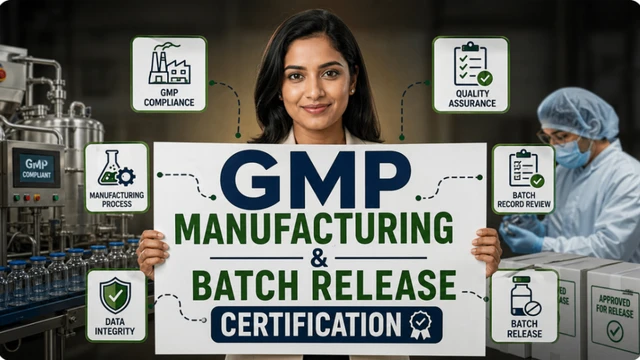
- GMP Manufacturing & Batch Release Certification: This course covers end-to-end GMP, focusing on the actual process of reviewing batch records and approving product release. You learn by doing—not by memorizing.
- Quality Management System Certification: Dive into QMS fundamentals like deviation management, change control, and audit readiness. You get virtual exposure to tools used in top pharmaceutical companies.
Both courses are built around the principle that the best learning happens when you practice. Instead of passive videos, you work through simulated real-world scenarios.
Your Next Move
If you feel stuck after college, remember: the industry needs thousands of quality professionals every year. The gap is not in jobs, but in the mismatch between what colleges teach and what companies need. You can fix that mismatch in weeks, not years.
Check your job readiness. Compare your current skills to what a typical QA/QC job demands. Then, take one small step today—whether it's reading about GMP, exploring a certification, or connecting with someone already in the field. Your career is waiting.
Build These Skills Now
Programs from ZANE ProEd Academy that directly address the skill gaps discussed above.
Follow Zane ProEd on Google
Preferred SourceAdd our publication as a preferred source to get the latest clinical research guides, industry updates, and career intel directly in your Google Top Stories & AI Overviews.