QA QC Pharma Jobs for Freshers: Complete Step-by-Step Career Guide

QA QC pharma jobs for freshers are entry-level roles in pharmaceutical quality. You check drug safety and quality. BDS, BHMS, BAMS, and Nursing graduates can apply. You need GMP knowledge and basic lab skills. Start as a QC analyst or QA trainee. Salary is ₹2.5–4 LPA.
You spent years earning your BDS, BHMS, BAMS, or Nursing degree. Now you feel lost. Maybe people say your degree is not for pharma. That is wrong.
Your healthcare background is a huge advantage for QA QC pharma jobs for freshers. You already understand human biology, drug effects, and patient safety. Employers need that.
Build These Skills Now
Programs from ZANE ProEd Academy that directly address the skill gaps discussed above.
In the next 6 months, you can land a quality role in the pharma industry. This guide shows you exactly how, step by step.
What is the difference between QA and QC in pharma?
Before you apply for QA QC pharma jobs for freshers, you must know the difference between QA and QC.
QA (Quality Assurance) is about preventing mistakes. QC (Quality Control) is about finding mistakes after they happen.
- QA checks the process: Are we making the drug correctly? Are the documents correct? Are we following GMP?
- QC checks the product: Does the tablet have the right amount of active ingredient? Is it free from contamination?
Think of QA as the architect who designs a safe building. QC is the inspector who checks the finished building. Both are important.
According to the ICH Q7 guideline (ICH), both roles are critical for drug quality.
What is the salary of a QA/QC Executive in India?
Salary depends on company, city, and your degree. But here is a realistic range for freshers.
Quality assurance pharma salary for a fresher QA/QC Executive is between ₹2.5 lakh and ₹4 lakh per year. In metro cities like Mumbai or Hyderabad, you might get ₹3.5–4.5 LPA. In smaller companies, it can be lower.
- QC Analyst (fresher): ₹2.2–3.5 LPA
- QA Executive (fresher): ₹2.5–4 LPA
- After 2-3 years: ₹4–6 LPA
- After 5 years: ₹6–10 LPA
Your BDS/BHMS/BAMS/Nursing degree can sometimes fetch a slightly higher starting salary because you have clinical knowledge. But skills matter more than the degree name.
Always check salary data from sources like WHO or industry reports. But these numbers are based on current Indian job portals.
How to get a QA/QC job in pharma as a fresher?
Getting a pharma quality control career is possible in 6 months if you follow a plan. Here is your roadmap.
- Learn GMP basics: Good Manufacturing Practices are the foundation. Read the WHO GMP guidelines.
- Get a certification: Employers want proof you know quality systems. A certification in GMP or quality management helps.
- Build a pharma resume: Highlight your lab skills, attention to detail, and any exposure to documentation.
- Apply to 50+ jobs: Use Naukri, LinkedIn, and company career pages. Look for 'QA trainee', 'QC analyst', 'quality executive fresher'.
- Prepare for interviews: Practice common QA QC interview questions like 'What is CAPA?' or 'What is OOS?'.
Do not wait for the perfect job. Start with a small company or a contract role. Experience matters more than brand.
What qualifications are needed for QA/QC in pharma?
Many allied health graduates ask: "Can I apply with my degree?" Yes, you can.
Required qualifications for QA/QC in pharma:
- Bachelor's degree in Pharmacy (BPharm), Science (BSc), or allied health fields like BDS, BHMS, BAMS, Nursing.
- Knowledge of GMP, GLP, and documentation practices.
- Basic computer skills: MS Word, Excel, and LIMS (Laboratory Information Management System).
- Soft skills: Attention to detail, discipline, and ability to follow SOPs.
Your medical degree already gives you strong fundamentals in anatomy, physiology, and pharmacology. You just need to add quality-specific training. Check CDSCO for Indian regulatory requirements.
What does a QA/QC Executive do daily?
Here is a typical QA QC executive job description for a fresher.
In QC, your daily tasks may include:
- Collect samples of raw materials, in-process materials, and finished products.
- Perform tests like dissolution, disintegration, pH, and assay using HPLC or UV.
- Record results in logbooks and software.
- Check if products meet specifications.
In QA, your daily tasks may include:
- Review batch manufacturing records for errors.
- Audit production areas for cleanliness and compliance.
- Handle change controls and deviations.
- Prepare SOPs and training documents.
Both roles need strong documentation skills. Everything you do must be recorded. If it is not documented, it did not happen.
For more detailed career paths, read our guide on pharma validation specialist careers.
What your college did not teach you about QA/QC
Your BDS, BHMS, BAMS, or Nursing degree taught you clinical care. But pharma quality is different.
In college, you learned how to treat patients. In pharma QA/QC, you must learn how to prevent product defects. You learned about drugs, but not about batch records, validation, or regulatory audits.
Here is the gap:
- College teaches: Anatomy, physiology, pharmacology, patient care.
- Employers expect: GMP, SOP writing, deviation handling, CAPA, audit readiness.
- You lack: Hands-on practice with quality management systems and lab documentation.
This gap is why many freshers get rejected. Your degree is not enough. You must add industry-specific skills.
Your 6-month step-by-step roadmap to a QA/QC job
Follow this plan. It is specific and time-bound.
- Month 1: Learn GMP and quality basics. Spend 2 hours daily. Read WHO GMP guidelines and ICH Q7. Make notes.
- Month 2: Enroll in a simulation-based certification. Practice creating SOPs, reviewing batch records, and handling deviations in a risk-free environment.
- Month 3: Build your resume and LinkedIn profile. Highlight your certification, lab skills, and clinical knowledge. Use keywords like QA, QC, GMP, documentation.
- Month 4: Apply to 50+ jobs. Target small and mid-sized pharma companies. Use job portals and walk-in interviews.
- Month 5: Prepare for interviews. Practice common QA QC interview questions: What is CAPA? What is OOS? Explain deviation handling.
- Month 6: Get the job and keep learning. Accept an offer, even if salary is low. On-the-job learning is the fastest way to grow.
This roadmap works if you stay consistent. Many freshers have done it.
Why simulation-based learning is the fastest way to bridge the gap
Reading theory is not enough. Employers want proof you can do the job. But how can you get experience without a job?
Simulation-based learning solves that. It puts you in real-world pharma scenarios: you review a batch record, find an error, and write a deviation. You practice audit responses. You create SOPs.
This is not a boring video course. It is active practice. You make mistakes safely and learn from them.
ZANE ProEd has designed a system that replicates pharma quality workflows. You learn by doing, not just watching.
Build These Skills Now
Programs from ZANE ProEd Academy that directly address the skill gaps discussed above.
How ZANE ProEd turns your degree into a job-ready skill set
ZANE ProEd is a learning system, not a typical course provider. It combines expert-led theory with hands-on simulations.
Two programs are relevant for QA/QC freshers:
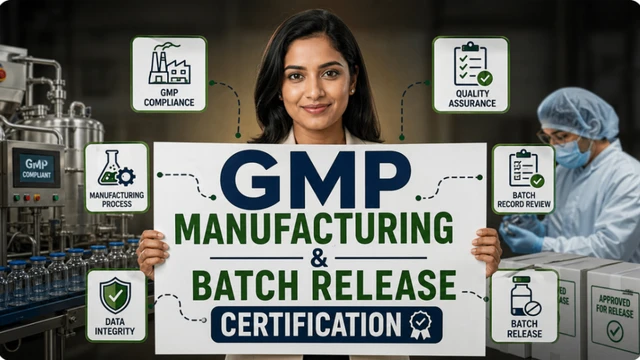
- GMP Manufacturing & Batch Release Certification: Learn how drugs are made, documented, and released. You practice reviewing batch records and ensuring compliance.
- Quality Management System Certification: Master SOPs, CAPA, deviations, change control, and audit preparation. This is the core of QA work.
These programs are built for graduates like you. They focus on practical skills, not just theory. After completing them, you can answer interview questions with confidence because you have done the tasks.
Read our guide on GCP auditor career path to see how quality skills open more doors.
Check your job readiness. See how your skills compare to what employers want. Visit our about page to learn more about the ZANE ProEd system.
Build These Skills Now
Programs from ZANE ProEd Academy that directly address the skill gaps discussed above.
Follow Zane ProEd on Google
Preferred SourceAdd our publication as a preferred source to get the latest clinical research guides, industry updates, and career intel directly in your Google Top Stories & AI Overviews.