QA QC Pharma Jobs for Freshers: Roadmap | ZANE ProEd

QA QC Pharma Jobs for Freshers offer a direct entry into the pharmaceutical industry for life science graduates. With the right skills in GMP, documentation, and quality systems, freshers can secure roles in quality assurance or quality control within 3-6 months, earning competitive salaries.
If you’re a BSc or MSc graduate in Biotechnology, Microbiology, or Biochemistry, you know the feeling—you’ve studied hard, but companies keep asking for 'experience' you don’t have. The gap between college theory and industry reality feels like a wall. You’re not alone. Every year, thousands of life science freshers face the same challenge. But there’s a clear path to your first QA QC pharma jobs for freshers, and this guide will show you exactly how to break in.
Why validation? Because this isn’t your fault. The pharma industry needs Quality professionals, but it wants them job-ready from day one. The good news is, you can build that readiness faster than you think. Let’s walk through every step, answer every question, and get you hired.
Build These Skills Now
Programs from ZANE ProEd Academy that directly address the skill gaps discussed above.
What is the difference between QA and QC in pharma?
When you’re targeting QA QC pharma jobs for freshers, understanding this difference is crucial because it shapes your entire career path.
This is the most common question freshers ask, and it’s important to know before you apply. QA (Quality Assurance) and QC (Quality Control) are two sides of the same coin, but they have different jobs:
- QA focuses on preventing mistakes. It sets up systems like SOPs, audits, and documentation so that the manufacturing process always meets standards. You’re the guardian of the process.
- QC focuses on finding mistakes. You test raw materials, in-process samples, and finished products in the lab using instruments like HPLC or spectrophotometers. You’re the detective of the product.
A simple way to remember: QA is about the process, QC is about the product. For QA QC pharma jobs for freshers, both paths are open, but you’ll need to choose based on your interest—do you prefer systems or lab work?
What is the salary of a QA/QC Executive in India?
The quality assurance pharma salary for freshers varies, but here’s a realistic picture:
- Small pharma companies (contract manufacturers): ₹2.5 – ₹3.5 LPA
- Mid-sized Indian companies: ₹3 – ₹5 LPA
- Top MNCs (Sun Pharma, Dr. Reddy’s, Cipla): ₹4 – ₹6 LPA
Your salary jumps with certifications, hands-on skills, and knowledge of regulations like ICH or WHO guidelines. In just 2–3 years, you can reach ₹6–8 LPA or higher.
How to get a QA/QC job in pharma as a fresher?
This is the step-by-step roadmap that works for life science graduates with no experience:
- Learn GMP and Quality Systems: Most pharma companies work under Good Manufacturing Practices. Without this knowledge, your CV gets ignored. A focused certification bridges this gap fast.
- Build a CV that speaks industry language: Use keywords from the QA QC executive job description—terms like 'batch release', 'CAPA', 'OOS investigation', and 'documentation'. Showcase any projects or simulations you’ve done.
- Apply smartly: Don’t just spray resumes. Target companies in hubs like Hyderabad, Ahmedabad, Pune, and Goa. Use portals like Naukri, LinkedIn, and pharma-specific job boards.
- Prepare for QA QC interview questions: Common ones include 'What’s OOS?' 'Explain ALCOA+ principles' and 'Walk me through a change control.' We’ve got you covered with a list later.
- Network and get referrals: Join pharma groups on LinkedIn, attend webinars, and connect with QA/QC professionals. A referral can get your foot in the door.
What qualifications are needed for QA/QC in pharma?
For QA QC pharma jobs for freshers, the baseline is a degree in life sciences:
- BSc / MSc in Biotechnology, Microbiology, Biochemistry, Chemistry, or BPharm.
- No engineering degree required—pure science graduates are hired daily.
But a degree alone rarely suffices. Companies expect you to understand:
- Good Manufacturing Practices (GMP)
- Quality Management Systems (QMS)
- Regulatory guidelines from FDA, CDSCO, and EMA
- Basic documentation (SOPs, BMRs, deviation reports)
The fastest way to prove this knowledge is through a structured program that simulates real scenarios. We’ll talk about that soon.
What does a QA/QC Executive do daily?
Here’s a real day in the life, so you know exactly what to expect:
- QA Executive: Review batch records, approve SOPs, conduct internal audits, handle deviation and CAPA, train operators on GMP.
- QC Executive: Perform sampling and testing (HPLC, dissolution test, microbial limits), calibrate instruments, document results in LIMS, investigate OOS results.
Both roles demand attention to detail, integrity, and comfort with repetitive documentation. You’re the reason drugs are safe.
College vs. Company: The Skill Gap That Holds Freshers Back
Your college taught you theory—biochemistry pathways, microbiology techniques. But here’s what a QA/QC interview really tests:
- Can you write a clear SOP?
- Do you know the 21 CFR Part 11 rule for electronic records?
- Have you ever handled a mock audit?
Companies don’t expect years of experience, but they demand job-readiness. This is where simulation-based learning changes the game. Instead of just reading, you practice real tasks in a safe environment—like a flight simulator for pharma professionals.
Your 5-Step Plan to Land a QA/QC Job as a Fresher
If you follow this, you can be interview-ready in 3–6 months.
- Pick Your Path: QA or QC? Reread the difference section. If you love systems and processes, go QA. If you love lab work and instruments, go QC.
- Get Industry-Aligned Training: Enroll in a program that gives you hands-on practice with GMP documentation, batch release, and quality management. Avoid theory-only courses—look for ones with simulated projects.
- Build a Project Portfolio: After training, you’ll have sample SOPs, audit checklists, and investigation reports. Add these to your CV and LinkedIn. They are proof of skill when experience is zero.
- Master the Interview: Practice top QA QC interview questions like 'What is a deviation?' or 'Explain CAPA with an example.' Use the STAR method for behavioral questions.
- Apply with a Targeted List: Make a list of 50 companies in your preferred cities. Visit their career pages weekly. Follow up. Persistence pays.
The System That Bridges the Gap
Trying to learn GMP and QMS from textbooks is like learning to drive by reading a manual—you need to be behind the wheel. Simulation-based learning puts you in realistic pharma situations, so when you walk into your first day on the job, you already know the systems.
Build These Skills Now
Programs from ZANE ProEd Academy that directly address the skill gaps discussed above.
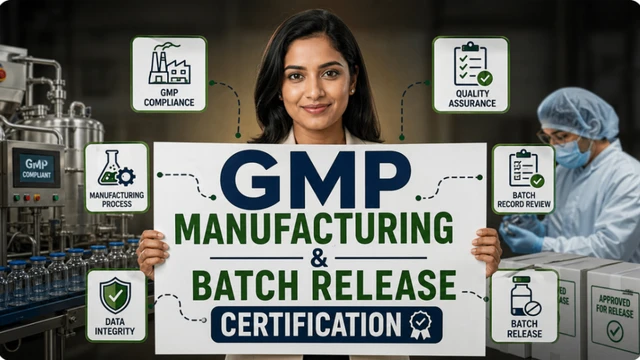
ZANE ProEd offers a system designed exactly for this purpose. For example, the GMP Manufacturing and Batch Release Certification simulates the entire process from raw material receipt to product release. You’ll review batch records, handle deviations, and understand documentation as if you were in a real plant. The Quality Management System Certification trains you on audit readiness, CAPA, and change management—the skills that make you a preferred QA candidate. These aren’t just courses; they’re career accelerators built with input from industry experts. Learn more about how ZANE’s approach works here.
Also, if you’re interested in a related field, check our guide on pharma validation specialist careers.
Ready to Take the First Step?
Don’t let the experience paradox stop you. Check your job readiness with our quick self-assessment, or explore the programs that turn freshers into industry-ready professionals.
Build These Skills Now
Programs from ZANE ProEd Academy that directly address the skill gaps discussed above.
Follow Zane ProEd on Google
Preferred SourceAdd our publication as a preferred source to get the latest clinical research guides, industry updates, and career intel directly in your Google Top Stories & AI Overviews.