QPPV Career Path and Pharmacovigilance Salary Europe: Deputy QPPV vs Medical Safety Decision Framework

Deputy QPPV / Signal Detection Specialist The QPPV career path and pharmacovigilance salary Europe typically starts with a life sciences degree, 5+ years in PV, and certification. Deputy QPPV roles in Europe pay €80,000–€150,000. Signal detection specialists earn €50,000–€90,000. Key skills: PBRER/PSUR writing, EMA guidelines, and Argus Safety.
If you feel stuck between two career paths, this was written for you. As a health data or bioinformatics graduate aiming for European clinical data careers, you’ve likely heard about the QPPV career path and pharmacovigilance salary Europe — but you’re unsure whether to pursue Qualified Person for Pharmacovigilance (QPPV) or Medical Safety. You’re not alone.
Colleges don’t teach the real industry skills. They don’t show you how signal detection, PBRER writing, or post-marketing surveillance actually work in a CRO or pharma company. That’s why so many graduates feel lost.
Build These Skills Now
Programs from ZANE ProEd Academy that directly address the skill gaps discussed above.
This decision framework will help you choose the right path and understand the salary benchmarks, qualifications, and steps to get there.
What is a Qualified Person for Pharmacovigilance (QPPV) in Europe and What is the QPPV Career Path and Pharmacovigilance Salary Europe?
The QPPV is the individual responsible for a company’s pharmacovigilance system in the EU. They ensure compliance with EMA regulations. The QPPV must have a medical, pharmacy, or life sciences degree, plus extensive PV experience. The QPPV career path and pharmacovigilance salary Europe typically progresses from PV scientist to Deputy QPPV to QPPV. Salaries range from €90,000 to €180,000 for QPPV roles, depending on location and company size.
What qualifications and experience are required to become a Deputy QPPV?
To become a Deputy QPPV, you need:
- A degree in life sciences, pharmacy, or medicine.
- 5+ years in pharmacovigilance, including signal detection and aggregate reporting.
- Experience with ICH guidelines and EMA GVP modules.
- Hands-on knowledge of Argus Safety or ArisG.
- Strong understanding of PBRER and PSUR writing EMA.
- Leadership and audit experience.
Many Deputy QPPVs also have certifications in signal detection or medical writing.
How does signal detection protect patient safety under EMA guidelines?
Signal detection is the process of identifying new safety concerns from adverse event reports. Under EMA guidelines, companies must continuously monitor post-marketing safety surveillance EU data. Signal detection specialists use tools like Empirica Signal, Oracle Argus, and Excel to analyze data. They then validate signals and recommend actions like label changes or risk management plans. This role is critical for patient safety.
What is the difference between PSUR and DSUR reports in the EU?
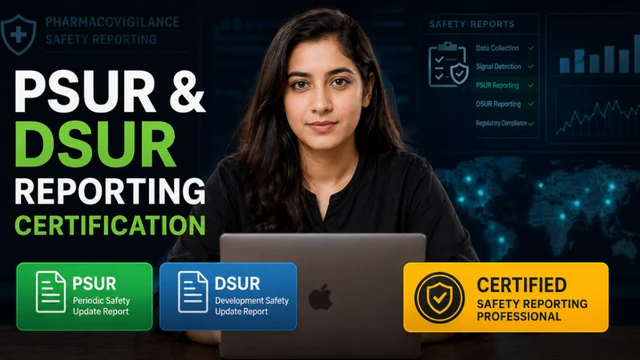
PSUR (Periodic Safety Update Report) is for marketed products, submitted to EMA every 6 months to 3 years. DSUR (Development Safety Update Report) is for investigational drugs, submitted annually to regulators. Both require PBRER and PSUR writing EMA skills. PSURs focus on post-marketing safety, while DSURs cover clinical trial safety. Knowing both is essential for PV careers.
What is the salary of senior pharmacovigilance specialists in Europe?
Salaries vary by country and role. Here are typical ranges:
- Signal detection specialist salary Europe: €45,000–€80,000.
- Senior PV scientist: €60,000–€95,000.
- Deputy QPPV: €80,000–€130,000.
- QPPV: €100,000–€180,000.
Hubs like Basel, Cambridge, Dublin, and Frankfurt pay at the higher end. NHS roles pay less (Band 7–8a: £40,000–£55,000), while private CROs and pharma pay significantly more. Pharmacovigilance physician and scientist roles also command premium salaries.
What skills do employers expect that your degree didn't teach you?
Universities teach theory, but employers want hands-on skills. For a health data / bioinformatics graduate, you learn about data analysis, but not how to process an ICSR in Argus Safety or write a PBRER. Employers expect:
- Proficiency in Argus Safety, ArisG, or Veeva Vault.
- Knowledge of EMA GVP modules and ICH E2B.
- Experience with signal detection tools.
- Ability to write PSURs, DSURs, and RMPs.
- Understanding of post-marketing safety surveillance EU.
Without these, you'll struggle to get hired.
What is the step-by-step pathway to become a Deputy QPPV or Signal Detection Specialist?
Follow this roadmap:
- Build foundational knowledge: Learn PV regulations (EMA, ICH) and medical terminology.
- Get certified: Complete industry-recognized certifications like signal detection with AI or PSUR/DSUR reporting.
- Gain practical experience: Use simulation tools to process ICSRs, write reports, and detect signals.
- Apply for entry-level roles: PV associate, drug safety coordinator, or signal detection analyst.
- Progress to Deputy QPPV: After 3–5 years, move into deputy roles.
- Network and specialize: Join PV societies, attend conferences, and consider an MBA or MSc.
How can simulation-based learning give you an unfair advantage?
Traditional education doesn't provide real-world practice. ZANE ProEd Academy offers simulation toolkits that mimic Argus Safety, Medidata Rave, and Veeva Vault. You'll work on realistic case studies, build an audit-ready portfolio, and demonstrate your skills to employers. This is how you close the gap.
Build These Skills Now
Programs from ZANE ProEd Academy that directly address the skill gaps discussed above.
Which ZANE ProEd programs accelerate your PV career?
Two flagship programs stand out: Pharmacovigilance Signal Detection with AI and PSUR/DSUR Reporting Certification. These are designed by industry experts to give you job-ready skills. You'll learn to use AI for signal detection, write compliant reports, and master EMA requirements. The ROI is clear: certification leads to higher salaries and faster promotions. ZANE ProEd is a premier professional career-certification platform, not a generic course provider. We focus on industry-grade simulation and portfolio building.
Ready to move from confusion to clarity?
Explore professional certification blueprints, audit your industry readiness, or review the simulation curriculum. Visit our About page to learn more. You can also read our guides on Clinical Data Manager Salary and Career Path and Deputy QPPV Career Path. For regulatory updates, check MHRA and WHO.
Build These Skills Now
Programs from ZANE ProEd Academy that directly address the skill gaps discussed above.
Follow Zane ProEd on Google
Preferred SourceAdd our publication as a preferred source to get the latest clinical research guides, industry updates, and career intel directly in your Google Top Stories & AI Overviews.