Real World Evidence Career India: Step-by-Step Guide for Life Sciences Freshers
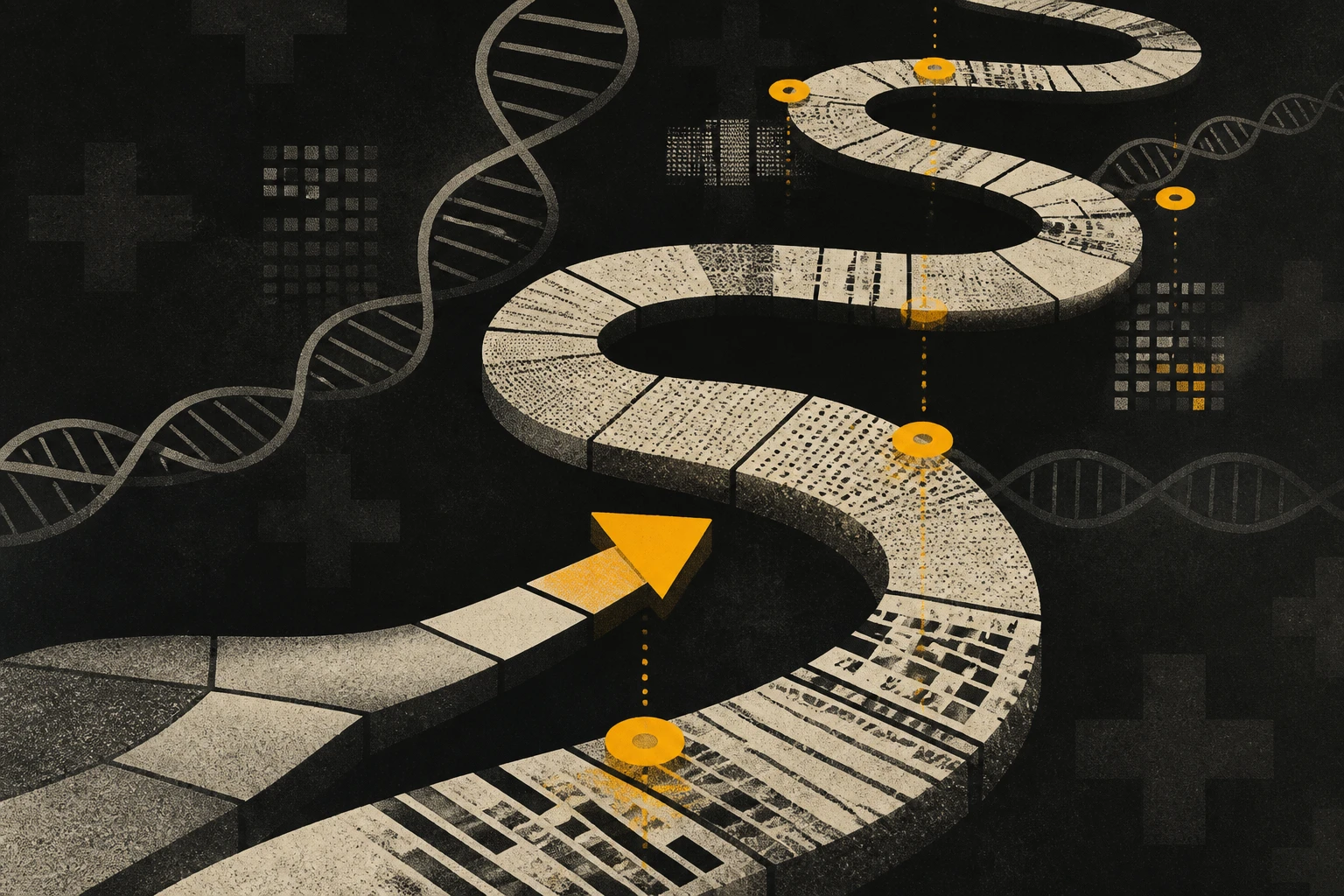
Real World Evidence Career India is a growing field for life sciences graduates. RWE analysts study patient data from hospitals, insurance claims, and wearables to see how drugs work in real life. You need data skills, biology knowledge, and practical training. Starting salary ranges from ₹4 to ₹8 lakh per year.
If you are a BSc or MSc Biotechnology, Microbiology, or Biochemistry graduate in India, you probably feel stuck. Your degree taught you theory but not practical skills. Real world evidence career India is one hidden path that can change that.
\n\nColleges give you textbooks. Employers want people who can handle messy patient data. In today's AI-driven healthcare industry, degrees alone are not enough anymore. But RWE is an opportunity where your life science background plus new data skills can get you hired.
Build These Skills Now
Programs from ZANE ProEd Academy that directly address the skill gaps discussed above.
What is Real-World Evidence (RWE) in pharma?
\nRWE in pharma means using data from outside controlled clinical trials to understand how medicines work in everyday life. This data comes from electronic health records, insurance claims, patient registries, and even mobile health apps.
\nPharma companies use RWE for drug safety monitoring, market access, and proving a drug's value to regulators. Organizations like FDA and EMA now encourage RWE for decision-making. In India, CDSCO is also moving towards real-world data for post-marketing surveillance.
\n\nWhat is the salary of an RWE Analyst in India?
\nThe RWE analyst salary in India varies by city and experience. For freshers, it is competitive compared to traditional lab jobs.
\n- \n
- Entry-level (0-2 years): ₹4 to ₹8 lakh per year \n
- Mid-level (3-5 years): ₹8 to ₹15 lakh per year \n
- Senior level (5+ years): ₹15 to ₹30 lakh per year \n
Top employers include global pharma companies, contract research organizations (CROs), and health tech startups. Bangalore, Hyderabad, Mumbai, and Pune offer the most openings.
\n\nHow to start a career in Real-World Evidence?
\nYou do not need a PhD to enter this field. Follow these steps to become an RWE analyst:
\n- \n
- Build data literacy: Learn basic statistics, Excel, SQL, and one visualization tool like Tableau or Power BI. \n
- Understand healthcare data: Study ICD-10 codes, medical terminologies, and claims data structure. \n
- Get practical training: Work on simulated datasets from post-marketing surveillance or electronic health records. \n
- Create a portfolio: Show a project where you analyzed drug safety signals or patient outcomes. \n
- Apply for internships: Target CROs, pharma companies, or health analytics firms in India. \n
This is a practical roadmap. You can learn these skills without quitting your current job or studies.
\n\nWhat is the difference between RWE and clinical trial data?
\nThis is a common question. Knowing real world data vs clinical trial data helps you understand your daily work.
\n- \n
- Clinical trial data: Collected in controlled settings, strict inclusion criteria, small sample size, short duration. \n
- Real world data: Collected from actual patients, diverse populations, large sample size, long follow-up. \n
RWE answers questions like: Does this drug work in elderly patients with diabetes? Clinical trials often exclude such patients. RWE fills that gap. This is why pharma companies invest heavily in RWE teams.
\n\nWhat skills are needed for RWE analytics?
\nThe real world evidence job description typically asks for a mix of biology and data skills. As a fresher, focus on these:
\n- \n
- Data manipulation: SQL, R, or Python for cleaning and transforming datasets. \n
- Statistical concepts: Basic hypothesis testing, regression, survival analysis. \n
- Domain knowledge: Understanding of disease pathways, drug mechanisms, and regulatory guidelines from ICH or WHO. \n
- Communication: Presenting findings to non-technical stakeholders like doctors or marketing teams. \n
You do not need to be a coding expert on day one. But you must be comfortable with data and eager to learn.
\n\nWhat colleges teach vs what employers expect
\nYour BSc or MSc in Biotechnology, Microbiology, or Biochemistry gives you a strong biology base. But employers say freshers lack practical exposure. Here is the gap:
\n- \n
- Colleges teach: Cell biology, enzyme kinetics, lab techniques, memorizing pathways. \n
- Employers expect: Querying patient databases, spotting adverse event signals, generating reports for regulators. \n
You may have never touched a real-world dataset. That is the biggest hurdle. But it is fixable with simulation-based practice.
\n\nA Step-by-Step Roadmap to Become Job-Ready
\nUse this 5-step plan designed for life sciences freshers in India:
\n- \n
- Assess your current skills: Make a list of what you know in biology vs data. Identify gaps. \n
- Learn the basics of clinical data: Understand how data flows from hospitals to pharma companies. See this guide on RWE career paths. \n
- Practice on simulated datasets: Use open-source healthcare datasets or platforms that mimic real-world claims data. \n
- Build a mini project: Choose a common drug (e.g., metformin), find public data, and analyze patient outcomes. Document your steps. \n
- Apply with evidence: Instead of just a resume, show your project link or GitHub. Employers value proof of work. \n
This pathway is realistic. It does not require a second degree. Just focused effort for 3-6 months.
\n\nWhy Simulation-Based Learning Changes Everything
\nTheoretical courses tell you what RWE is. But they do not let you work on real patient data. That is why simulation-based learning is the bridge you need.
\nSimulations give you safe, realistic datasets with known outcomes. You practice cleaning data, running analyses, and writing reports. You make mistakes without real-world consequences. This builds the confidence employers look for.
\nAt ZANE ProEd, we embed simulation into every module. You do not just watch videos. You complete tasks like a real RWE analyst would.
\n\nBuild These Skills Now
Programs from ZANE ProEd Academy that directly address the skill gaps discussed above.
Two specific programs can fast-track your RWE career:
\n- \n
- Post-Marketing Surveillance and Real-World Evidence: This course covers safety signal detection, regulatory requirements, and RWE study design using actual case studies. \n
- Clinical Data Management with AI: Learn how AI is used to clean and analyze clinical and real-world data, a skill in high demand. \n
These are not just theory courses. They simulate the exact tasks you will do on the job. You work with datasets that mirror Indian healthcare scenarios. By the end, you have a portfolio, not just a certificate.
\n\nRemember, employers hire problem-solvers, not degree-holders. The path from life sciences to RWE is clear. Start today.
\n\nCheck your job readiness or see how your skills compare to what pharma companies need. Take the free assessment on our platform.
Build These Skills Now
Programs from ZANE ProEd Academy that directly address the skill gaps discussed above.
Follow Zane ProEd on Google
Preferred SourceAdd our publication as a preferred source to get the latest clinical research guides, industry updates, and career intel directly in your Google Top Stories & AI Overviews.