Regulatory Affairs Career Path India: Step-by-Step Guide for Chemistry Freshers

Regulatory Affairs Associate in India: a career path that starts with understanding drug laws and submission processes. Freshers with a BSc/MSc in Chemistry can enter as associates, earn ₹3-6 LPA, and grow into managers. Key steps: learn CTD/eCTD, gain CDSCO knowledge, and get hands-on training.
If you have a BSc or MSc in Chemistry, you are probably searching for a regulatory affairs career path India. The good news? Your science background is a perfect fit. The challenge? Most job ads demand experience. But here’s what no one tells you: with the right skills, you can land a role in 3-6 months – even as a fresher.
Colleges teach the theory, but industries want practical know-how. This guide gives you a step-by-step roadmap to close that gap and start your career.
Build These Skills Now
Programs from ZANE ProEd Academy that directly address the skill gaps discussed above.
What does a Regulatory Affairs Associate do?
A regulatory affairs associate ensures that pharmaceutical products meet all legal and scientific requirements before they reach the market. The regulatory affairs job description includes:
- Preparing and submitting drug registration dossiers to agencies like CDSCO
- Managing the CDSCO registration process for new drugs and generics
- Reviewing product labels and promotional materials for compliance
- Keeping up with changes in regulations from bodies like ICH, FDA, and EMA
- Coordinating with R&D, clinical, and manufacturing teams to compile data
In simple terms, you are the bridge between the drug developers and the government authorities. Without your work, a medicine cannot be sold legally.
What is the salary of a Regulatory Affairs Associate in India?
The regulatory affairs associate salary in India varies by experience, company, and location. Here’s a typical breakdown:
- Fresher (0-1 year): ₹3,00,000 – ₹5,00,000 per annum
- 1-3 years: ₹5,00,000 – ₹7,00,000 per annum
- 3-5 years: ₹7,00,000 – ₹10,00,000 per annum
Metro cities like Mumbai, Hyderabad, and Bengaluru offer higher pay. With experience, you can move into managerial roles earning ₹12 LPA and above. For a deeper look at the career journey, check out this regulatory affairs career path breakdown.
How to get into regulatory affairs without experience?
This is the biggest worry for chemistry freshers. The key is to build ‘on-paper’ skills before your first job. Follow these steps:
- Understand the basics: Study ICH guidelines, CDSCO rules, and common submission formats. Free resources are available on official websites.
- Take a regulatory affairs course for freshers: Look for programs that include practical projects, not just theory. A certification can make your resume stand out.
- Learn eCTD software: Tools like eCTDmanager or Lorenz docuBridge are used daily. Even a demo version helps.
- Work on a sample dossier: Create a mock CTD dossier for a generic drug. This shows employers you can handle real tasks.
- Network and apply: Use LinkedIn to connect with industry professionals. Target roles like ‘Trainee Regulatory Affairs’ or ‘Junior Associate’.
Remember, companies value hands-on ability more than a degree alone. Show them you have practiced what the job demands.
What is CTD/eCTD in drug registration?
CTD/eCTD submissions are the backbone of modern regulatory affairs. CTD stands for Common Technical Document, a standardized format for drug applications agreed upon by ICH. eCTD is its electronic version.
When you submit a new drug for approval, you compile data into five modules:
- Module 1: Regional administrative information (specific to India, CDSCO)
- Module 2: Quality overall summary
- Module 3: Chemical, pharmaceutical, and biological documentation (your chemistry knowledge helps here!)
- Module 4: Nonclinical study reports
- Module 5: Clinical study reports
Mastering eCTD is a must for any regulatory professional. It speeds up reviews and reduces errors. You can learn more about global standards from ICH.
What skills are required for regulatory affairs?
Employers look for a mix of technical and soft skills. As a chemistry graduate, you already have a head start – but you need to build on it.
Technical Skills:
- Knowledge of CDSCO registration process and Indian Drug & Cosmetic Act
- Understanding of CTD/eCTD submissions
- Familiarity with DMF (Drug Master File) and ANDA (Abbreviated New Drug Application) filings
- Basic computer tools: MS Office, Adobe Acrobat, and eCTD software
Soft Skills:
- Attention to detail – one wrong document can delay a launch
- Strong communication – you’ll write emails to regulators and explain requirements to teams
- Time management – multiple projects with tight deadlines
The Skill Gap: College vs Industry
Your BSc/MSc Chemistry syllabus covered organic synthesis, spectroscopy, and thermodynamics. But it likely missed:
- Regulatory frameworks and submission lifecycles
- Practical use of eCTD tools
- How to read and interpret official guidelines from FDA or EMA
This is the gap that stops freshers from getting hired. The industry expects you to know these from day one. The solution? Bridge it before you apply.
Your 5-Step Roadmap to a Regulatory Affairs Job
Here is a clear path to follow, starting today:
- Build Regulatory Foundations (Weeks 1-2): Read ICH Q8, Q9, Q10 guidelines. Visit CDSCO website regularly. Understand the flow of a new drug application in India.
- Get Certified (Weeks 3-4): Enroll in a specialized regulatory affairs course for freshers that offers hands-on dossier compilation and eCTD training. A certification proves your readiness.
- Simulate Real Work (Weeks 5-8): Use practice databases to fill eCTD forms. Write a sample drug registration application. Review it with a mentor if possible.
- Create a Portfolio (Week 9): Document one complete mock submission: from Module 1 to Module 5. Highlight your work on LinkedIn. Recruiters notice such initiative.
- Apply Strategically (Weeks 10-12): Target small to mid-sized pharma companies and CROs. They often hire freshers. Use keywords like ‘regulatory affairs associate’ and ‘CDSCO’ in your job search.
This timeline is realistic. Many of our learners have used it to secure roles in under 6 months.
Why Simulation-Based Learning Works
Reading a textbook about eCTD is not enough. You must practice with real-life scenarios. Simulation-based training lets you:
- Compile an eCTD dossier without pressure
- Respond to a mock regulatory query from CDSCO
- Review labeling violations in a simulated environment
This method builds confidence and practical skill. It’s the closest you can get to on-the-job experience before actually joining a company.
Build These Skills Now
Programs from ZANE ProEd Academy that directly address the skill gaps discussed above.
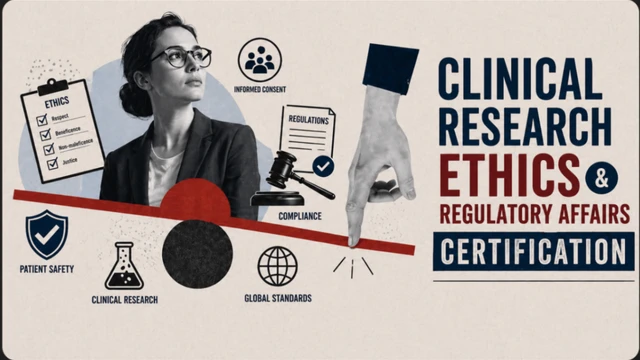
At ZANE ProEd, our Clinical Research, Ethics & Regulatory Affairs Certification puts you in the driver’s seat with over 200 simulation hours. You work on real-world dossiers, navigate CDSCO guidelines, and master eCTD tools. It’s not a course – it’s a system that transforms your chemistry background into job-ready expertise. Hear from our alumni who started just like you, with no experience, and now work at leading firms.
Curious where you stand? Check your regulatory readiness with our free skill assessment.
Build These Skills Now
Programs from ZANE ProEd Academy that directly address the skill gaps discussed above.
Follow Zane ProEd on Google
Preferred SourceAdd our publication as a preferred source to get the latest clinical research guides, industry updates, and career intel directly in your Google Top Stories & AI Overviews.