Site Management Associate Job Profile: A Clear Guide for Allied Health Graduates

Site Management Associate (SMA) The site management associate job profile involves managing clinical trial site activities, document collection, and regulatory compliance from study start to close. SMAs act as a key link between sites and sponsors, ensuring data quality and patient safety in clinical research.
Are you a BDS, BHMS, BAMS, or nursing graduate feeling stuck? You see many career options but none feel right. The site management associate job profile might be the clear path you need. It offers a stable, growing role in clinical research without requiring a medical practice setup.
Many allied health graduates struggle because degrees alone are not enough in today's competitive Indian market. Employers want practical skills. The role of an SMA is perfect for those who want to work in clinical operations without direct patient contact. You get to use your medical knowledge in a behind-the-scenes, highly organized job.
Build These Skills Now
Programs from ZANE ProEd Academy that directly address the skill gaps discussed above.
What does a Site Management Associate do?
A Site Management Associate (SMA) supports clinical trial sites to make sure they follow the study plan. You work remotely or travel to sites, guiding them from startup to closeout. Your job is to keep everything on track. For a deeper dive, check this detailed SMA job guide.
- Help sites prepare regulatory documents like ethics committee submissions
- Track site performance and solve issues
- Verify data entered by site staff for accuracy
- Ensure patient safety and protocol adherence
- Coordinate between the site and the Clinical Research Associate (CRA)
The site management associate role in clinical trials is often the first step into the clinical operations world. You gain deep insight into how trials are run from the ground up.
What is the salary of an SMA in India?
The SMA salary in India varies by city and experience. Freshers can expect to earn between ₹3.5 – 5 lakhs per annum. With 2-4 years of experience, salaries rise to ₹6 – 9 lakhs. Senior SMAs or those moving into management can earn ₹10 lakhs+.
- Entry-level: ₹3.5 – 5 LPA
- Mid-level: ₹6 – 9 LPA
- Senior-level: ₹10 LPA and above
The demand for SMAs is high in CROs and pharma companies across India, especially in cities like Bangalore, Mumbai, Hyderabad, and Delhi NCR. This growth is driven by increased clinical trial activity.
What is the difference between SMA and CRA?
Many graduates confuse the SMA and CRA roles. Here is an SMA vs CRA comparison:
| Factor | SMA (Site Management Associate) | CRA (Clinical Research Associate) |
|---|---|---|
| Primary Focus | Site support and document management | On-site monitoring and data verification |
| Travel | Less travel, often remote | Frequent travel to sites (60-80%) |
| Career Entry | Good entry point with less experience | Usually requires prior clinical research experience |
| Responsibility | Helping sites comply and operate smoothly | Ensuring data integrity and patient safety through direct oversight |
SMAs often work under the guidance of CRAs and can later transition into CRA roles with experience. For a roadmap to CRA, see how to become a CRA in India. The SMA role is ideal if you want to start in clinical operations without being on the road all the time.
How to become a Site Management Associate?
If you are a BDS, BHMS, BAMS, or nursing graduate, you already have a strong foundation. Here are the steps on how to become an SMA:
- Understand the role: Read job descriptions and talk to industry professionals. Know what employers expect.
- Build foundational knowledge: Learn about Good Clinical Practice (GCP), clinical trial phases, and regulatory guidelines. Free resources from ICH and the FDA are a great start.
- Get certified in clinical operations: A practical certification bridges the gap between your degree and job requirements. Look for courses that offer hands-on training, not just theory.
- Apply for internships: Internships at CROs or clinical trial sites give you real-world exposure. Even short stints help.
- Tailor your resume: Highlight any research projects, data handling skills, and computer proficiency. Show you can manage documents and communicate well.
What are the daily tasks of an SMA in a CRO?
The site management associate responsibilities are diverse and keep every day different. In a CRO setting, your typical day may include:
- Document Collection: Gather essential documents like investigator CVs, site initiation checklists, and financial disclosure forms.
- Ethics and Regulatory Submissions: Prepare and submit documents to Ethics Committees and DCGI following CDSCO guidelines.
- Site Support: Answer queries from site staff about the protocol, patient enrollment, and data entry.
- Data Review: Perform remote data checks to catch errors early. Use systems like electronic data capture (EDC) tools.
- Meeting Coordination: Help organize investigator meetings and site initiation visits.
- Status Tracking: Update trackers for trial milestones like enrollment numbers, query resolution, and monitoring reports.
This role requires strong organizational skills and attention to detail. It is perfect for those who like a structured work environment.
What Colleges Don't Teach You About the SMA Role
Your BDS, BHMS, BAMS, or nursing degree gives you medical knowledge. But employers look for these practical skills that colleges rarely cover:
- Clinical trial documentation: How to fill a CRF, manage a Trial Master File, or submit to an Ethics Committee.
- Regulatory guidelines: ICH-GCP is the bible of clinical research. Most graduates have never read it.
- Software tools: EDC systems like Medidata Rave, Oracle InForm, and project management tools.
- Communication protocols: Writing professional emails to site coordinators and sponsors.
Without these, your application gets overlooked. The good news is you can learn these quickly with the right training.
A Step-by-Step Roadmap to Land an SMA Job
Stop feeling confused. Follow this clear path:
- Step 1: Learn the Fundamentals (4-6 weeks) - Study ICH-GCP guidelines, clinical trial phases, and key roles. Free resources are on WHO and ICH websites.
- Step 2: Get Hands-On Practice (2-3 months) - Join a simulation-based training program that mimics real CRO workflows. You will work on mock site activation, document processing, and data queries.
- Step 3: Earn a Certification (within the training) - Choose a certification that employers recognize. It shows you are job-ready.
- Step 4: Apply Strategically - Target CROs and pharma companies with SMA openings. Use LinkedIn and job portals. Highlight your simulation experience.
- Step 5: Ace the Interview - Prepare for questions on GCP, document handling, and scenario-based problems. Practice your answers out loud.
Why Simulation-Based Training Changes Everything
Reading theory is not enough. You need to practice real SMA tasks before you face an interview. Simulation-based programs let you work on real-world scenarios like site activation, regulatory submissions, and data review. This builds confidence and fills your resume with actual experience.
Build These Skills Now
Programs from ZANE ProEd Academy that directly address the skill gaps discussed above.
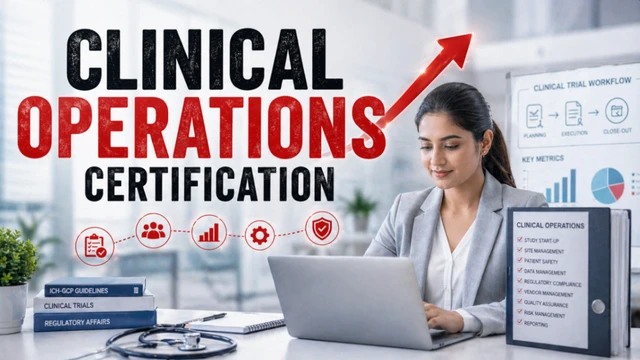
At ZANE ProEd, the Clinical Trial Site Activation Fast-Track and Clinical Operations Certification are built exactly for this. They are not just courses. They are systems that simulate a CRO environment. You will work on documents, use templates, and get feedback just like on the job. Many graduates from BDS, BHMS, BAMS, and nursing have used these to move into SMA roles smoothly. It is about being ready, not just qualified.
Want to know if you are ready for an SMA role? Check your job readiness with our free self-assessment. Or explore how our simulation training can give you the edge. Remember, clarity comes from action.
Build These Skills Now
Programs from ZANE ProEd Academy that directly address the skill gaps discussed above.
Follow Zane ProEd on Google
Preferred SourceAdd our publication as a preferred source to get the latest clinical research guides, industry updates, and career intel directly in your Google Top Stories & AI Overviews.