Site Management Associate Job Profile: A Fresher's Guide to Starting in Clinical Research

Site Management Associate job profile involves preparing and tracking clinical trial documents, ensuring sites follow rules, and supporting monitors. SMAs are the backbone of trial operations. They handle paperwork, regulatory checks, and site readiness. This behind-the-scenes role keeps clinical trials running smoothly.
If you have a BSc or MSc in Chemistry, you might think clinical research is only for medical graduates. But the site management associate job profile is a hidden gem for science freshers like you. This role lets you step into the industry without a hospital background.
Most colleges never mention this career. You learn theory, not the real-world skills companies need. Right now, as hiring standards rise globally, the gap between your degree and the job market has never been wider. Let me show you what happens behind the scenes in this role—and how you can fill that gap.
Build These Skills Now
Programs from ZANE ProEd Academy that directly address the skill gaps discussed above.
What does a Site Management Associate do?
A Site Management Associate (SMA) works inside a Clinical Research Organization (CRO) or pharmaceutical company. Your main job is to support clinical trial sites—the hospitals or clinics where patients receive study treatments. You are not a doctor or nurse; you are the operational expert.
Think of an SMA as the central hub for information. You collect, review, and organize documents from trial sites. You make sure everything follows strict rules like ICH Good Clinical Practice guidelines. Without accurate documentation, a trial can fail an audit.
Key site management associate responsibilities include:
- Preparing and maintaining the Trial Master File (TMF) and Investigator Site File (ISF).
- Tracking regulatory documents like ethics approvals, investigator CVs, and financial disclosures.
- Assisting Clinical Research Associates (CRAs) with site monitoring visit reports and follow-ups.
- Updating clinical trial management systems (CTMS) and electronic TMF (eTMF) platforms.
- Communicating with site staff about missing documents or data queries.
This is not a patient-facing role. It is a desk-based job that demands strong attention to detail and a process-driven mindset—perfect for chemistry graduates who are analytical and systematic.
What is the salary of an SMA in India?
Let’s talk numbers. The SMA salary in India depends on your location, company size, and any prior internship experience.
- Fresher (no experience): ₹2.5 – 4.0 lakh per annum (LPA).
- 1-3 years: ₹4.0 – 6.0 LPA.
- Senior SMA or Lead SMA: ₹6.0 – 9.0 LPA.
These figures are from top CROs like IQVIA, PPD, Parexel, and Syneos Health operating in India. In metro cities like Bengaluru, Mumbai, or Hyderabad, fresher offers often start around ₹3.0 LPA. With global demand for Indian talent rising, these numbers are growing year on year.
Even as a fresher, you can negotiate a better package if you show practical knowledge—like understanding eTMF workflows or regulatory guidelines. That’s why hands-on training matters more than a traditional degree.
What is the difference between SMA and CRA?
Many newcomers mix up the SMA and CRA roles. While they work together, the jobs are distinct. Understanding this SMA vs CRA difference helps you choose the right path.
| Aspect | Site Management Associate | Clinical Research Associate |
|---|---|---|
| Work location | Office-based (CRO/pharma office) | Travel-based (visits sites) |
| Interaction | Remote coordination with site staff | In-person monitoring visits |
| Core task | Document management and regulatory tracking | Source data verification and patient safety checks |
| Travel | Minimal to none | Frequent (60-80% travel) |
| Career progression | Can become Lead SMA, Project Associate, or move to CRA | Typically moves to Senior CRA, Clinical Team Lead |
If you prefer a stable office job with less travel, the SMA role is a better fit. It also offers a clearer entry for life science graduates who don’t have clinical experience. Check our guide on becoming a CRA if you’re curious about that path.
How to become a Site Management Associate?
You don’t need a nursing qualification. Here’s a step-by-step roadmap for how to become an SMA as a chemistry graduate:
- Know the landscape. The SMA role in clinical trials is governed by international standards. Start by reading the ICH GCP E6(R2) guidelines. Also, visit the CDSCO website to understand Indian regulations.
- Close your skill gaps. Employers expect you to know how a Trial Master File is structured, how to use an eTMF, and what a site initiation visit involves. Formal certification programs that simulate real-world tasks are the fastest way to learn.
- Build an industry-relevant resume. Highlight any document management, data entry, or research project experience. Use keywords like “ICH-GCP,” “TMF,” “regulatory documents,” and “site activation.”
- Apply strategically. Target CROs and pharmaceutical companies with entry-level SMA or “Site Start-Up Associate” openings. Use LinkedIn, company career pages, and clinical research job boards.
- Ace the interview. Be ready to explain the lifecycle of an essential document, how you would handle a missing audit finding, or how you prioritize multiple site tasks. Practical answers beat textbook definitions.
Remember, recruiters test your applied knowledge—not just your memory of theories.
What are the daily tasks of an SMA in a CRO?
A typical day in a CRO is fast-paced and document-heavy. Here’s what a real SMA’s day might look like:
- Morning check-in (9:00 AM): Open the CTMS and eTMF to scan for new site documents uploaded overnight. Check your task list from the project management system.
- Document review (9:30 AM – 12:00 PM): Review investigator CVs, medical licenses, and signed protocol pages for accuracy. Flag discrepancies to the CRA or site coordinator.
- Regulatory tracking (12:00 PM – 1:00 PM): Update the regulatory tracking spreadsheet. Follow up with sites on expired documents or pending ethics committee approvals.
- Lunch break (1:00 PM – 2:00 PM)
- Meeting and reporting (2:00 PM – 3:30 PM): Join a project team call to discuss site activation progress. Prepare site status reports for the Project Manager.
- Vendor coordination (3:30 PM – 5:00 PM): Coordinate with central labs or equipment vendors to ensure site supplies are on track. File correspondence in the eTMF.
- Wrap-up (5:00 PM – 6:00 PM): Answer pending emails from sites, update your daily log, and plan the next day’s priorities.
This is a repetitive but highly responsible job. Every document you process directly impacts patient safety and trial integrity. Small mistakes can cause major audit findings.
What colleges teach vs. what employers actually expect
Your chemistry degree gave you strong analytical skills. But did you ever touch a Trial Master File? Learn about FDA or EMA inspections? No. That’s the skill gap.
College curriculum: Theoretical concepts, broad science, maybe a single module on clinical trials.
Employer demands: Hands-on knowledge of eTMF systems like Veeva Vault, ability to manage site start-up activities, and awareness of global regulatory requirements.
You don’t need another degree. You need a bridge—a way to transform your scientific brain into an industry-ready professional.
Your 5-step pathway from chemistry lab to CRO office
- Absorb the language. Spend a week learning clinical research terminology. Read free resources from WHO and ICH.
- Get certified knowledge. Enroll in a program that covers clinical operations end-to-end—not just theory, but document-based assignments and simulated scenarios.
- Build a portfolio. Create sample TMF indexes, site activation checklists, and regulatory tracking logs. Share these on your LinkedIn.
- Network smartly. Join clinical research groups on LinkedIn. Connect with SMAs and CRAs. Ask about their daily work.
- Apply with confidence. Use your portfolio and certification to prove you can handle the job from day one.
Move beyond theory with a real-world system
Reading about clinical trials won’t prepare you for an audit. Simulation will. The most effective way to enter the SMA role is to practice in a controlled, industry-mirroring environment. That’s where structured, task-based learning systems come in. They let you manage mock trial documents, navigate eTMF platforms, and solve compliance puzzles—all before your first interview.
Build These Skills Now
Programs from ZANE ProEd Academy that directly address the skill gaps discussed above.
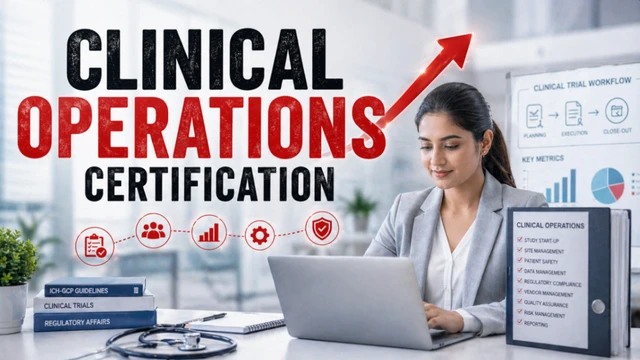
At ZANE ProEd, we built a system, not a course library. The Clinical Operations Certification immerses you in the full lifecycle of a clinical trial—from site feasibility to close-out. You’ll handle real-world scenarios like preparing for an inspection or updating a TMF post-monitoring visit. The Clinical Trial Site Activation Fast Track focuses specifically on the SMA’s core domain: getting a site ready to enroll patients. You’ll master document collection, regulatory submissions, and vendor coordination. Both programs use simulation, not just lectures. You learn by doing.
This approach flips the traditional model. Instead of memorizing definitions, you build a work portfolio that proves your readiness.
Is your job readiness keeping pace with industry needs?
Hiring norms are shifting. Freshers who only know textbook theory get left behind. Those who can demonstrate applied competence stand out. Check your job readiness—see how your current skills match what top CROs demand for an SMA role today. You might be closer than you think, once you bridge the gap.
Build These Skills Now
Programs from ZANE ProEd Academy that directly address the skill gaps discussed above.
Follow Zane ProEd on Google
Preferred SourceAdd our publication as a preferred source to get the latest clinical research guides, industry updates, and career intel directly in your Google Top Stories & AI Overviews.