Clinical Data Management Career for Freshers: A Step-by-Step Guide

Clinical Data Manager: A clinical data management career for freshers is a great path for life science graduates. It involves managing and ensuring the quality of data from clinical trials. To start, freshers must learn industry standards like CDISC, master Electronic Data Capture (EDC) tools, and gain practical skills beyond their degree.
Are you a life science graduate tired of job rejections? The truth is, over 90% of freshers fail to land a job because their academic knowledge doesn't match what companies need. A clinical data management career for freshers is an excellent opportunity, but you need the right roadmap to get there.
Many BSc and MSc graduates in Biotechnology, Microbiology, or Biochemistry feel burnt out. You apply for hundreds of jobs but hear nothing back. It's not because you aren't smart; it's because there's a specific skill gap recruiters spot immediately.
Build These Skills Now
Programs from ZANE ProEd Academy that directly address the skill gaps discussed above.
This guide is your step-by-step plan. We will break down exactly what you need to do to stop getting rejected and start getting hired in the competitive Indian job market.
What does a Clinical Data Manager do?
A Clinical Data Manager (CDM) is the guardian of clinical trial data. Their main job is to make sure all the data collected from patients during a study is accurate, complete, and reliable. Think of them as data quality police for new medicines.
The clinical data manager job description includes several key tasks:
- Data Validation: Creating rules to check if the data entered makes sense (e.g., a patient's age cannot be 200).
- Query Management: Finding errors or inconsistencies in the data and sending questions (queries) to the hospital staff to get them corrected.
- Database Lock: Finalizing and locking the database after all data is clean, so it can be sent for statistical analysis.
- Compliance: Ensuring all data activities follow strict guidelines like ICH-GCP, which are international quality standards. You can learn more about these standards directly from the source at ICH.org.
Essentially, a CDM ensures the data used to decide if a new drug is safe and effective is perfect. Without their work, the entire drug approval process would fail.
What is the salary of a CDM in India?
The CDM salary in India for freshers is quite competitive and offers great growth potential. As a fresher with the right skills, you can expect a starting salary that reflects the technical nature of the role.
Here is a typical breakdown:
- Entry-Level (0-1 year experience): The average starting salary for a Clinical Data Manager in India is between ₹3.5 Lakhs and ₹5.5 Lakhs per annum. This can vary based on the company (CRO vs. Pharma) and your location.
- Mid-Level (2-4 years experience): With a few years of solid experience, your salary can increase significantly to around ₹6 Lakhs to ₹9 Lakhs per annum.
- Senior-Level (5+ years experience): Senior CDMs and managers can earn well over ₹12 Lakhs per annum, with some leadership roles commanding much higher packages.
Your ability to quickly learn new tools and understand data standards will directly impact how fast your salary grows.
How to start a career in clinical data management?
Starting a clinical data management career for freshers requires a focused plan. Your BSc or MSc degree is the foundation, but you need to build on it with industry-specific skills. Here’s how you can begin.
First, understand the difference between roles. Many freshers confuse CDM with a Clinical Research Associate (CRA). A CDM vs CRA career comparison is simple: CDMs are office-based and work with data, while CRAs travel to hospitals to monitor trials. If you love data and technology, CDM is the right choice.
Here is a simple plan to get started:
- Learn the Basics: Go beyond your college syllabus. Understand the drug development process and ICH-GCP guidelines thoroughly.
- Master the Standards: Learn about CDISC, the global standard for clinical data. This is non-negotiable for recruiters.
- Gain Tool Experience: You must have hands-on experience with at least one Electronic Data Capture (EDC) system.
- Build a Strong Resume: Your resume should highlight practical projects and skills, not just your degree.
A structured clinical data management course that offers practical, simulation-based training can help you cover all these steps efficiently.
What is CDISC and why is it important for CDM?
CDISC stands for Clinical Data Interchange Standards Consortium. In simple terms, it is a set of rules that decides how clinical trial data should be collected, organized, and submitted. It is the 'common language' for clinical research worldwide.
For a beginner, the most important CDISC model to know is SDTM (Study Data Tabulation Model). Think of CDISC SDTM for beginners as a template for organizing your final, clean data. When a company submits data to regulatory bodies like the US FDA, they expect it in this standard format. Following these standards is mandatory for global trials, as confirmed by regulatory agencies like the FDA.
Why is it so important for a CDM?
- Global Acceptance: All major pharma companies and CROs use CDISC. Knowing it makes you a valuable candidate.
- Efficiency: It makes data review much faster for both the company and regulatory authorities.
- Job Requirement: Job descriptions for CDM roles almost always list 'knowledge of CDISC standards' as a mandatory skill.
Without knowing CDISC, your resume will likely be rejected before you even get an interview.
What tools does a Clinical Data Manager use?
A Clinical Data Manager uses specialized software to manage and clean trial data. Just knowing the theory from your degree is not enough; you must be familiar with the tools that companies use every day.
Here are the main categories of tools you need to know:
- Electronic Data Capture (EDC) Systems: This is the most critical tool. It's the software used to collect patient data electronically from hospitals. Examples include Medidata Rave, Oracle Clinical, and Veeva Vault EDC. Experience with any of these is a huge advantage.
- Data Validation and Cleaning Tools: These are often part of the EDC system, but sometimes external tools are used. They help run checks to find errors in the data.
- Reporting Tools: Software like J-Review or Spotfire is used to create reports and visualize data to track the progress of data cleaning.
- Statistical Software (Basic Knowledge): While a Clinical SAS Programmer does the heavy analysis, a CDM should have a basic understanding of how data is structured for analysis.
The Skill Gap: What Your Degree Didn't Teach You
Recruiters reject freshers because of a clear gap between academics and industry needs. Your BSc or MSc in a life science field gave you strong theoretical knowledge of biology and research principles. That is valuable.
However, companies expect you to be job-ready from day one. They need you to understand practical concepts like 21 CFR Part 11 compliance, how to write and resolve a data query in Medidata Rave, and what CDISC SDTM domains are. Your college curriculum likely never covered these execution-level skills.
Your 5-Step Roadmap to Becoming a Clinical Data Manager
Feeling overwhelmed? Don't be. Here is a clear, actionable path to bridge that gap and stand out from the crowd.
- Step 1: Master Clinical Trial Fundamentals: Go deep into the drug development life cycle and ICH-GCP. You must speak the language of the industry.
- Step 2: Learn the Language of Data (CDISC): Focus on CDASH (for data collection) and SDTM (for data tabulation). Understand why these standards are critical.
- Step 3: Get Hands-On Experience with an EDC System: This is the most important step. You need to work on simulated projects using a major EDC tool like Medidata Rave or Oracle Clinical. Learn how to design eCRFs, create edit checks, and manage users.
- Step 4: Practice Real-World CDM Tasks: Work through case studies on data validation, query management, and medical coding. Document your work to show recruiters.
- Step 5: Build a Skill-Based Resume: Re-write your resume to focus on your new, practical skills. List the tools you've used and the projects you've completed. This shows you are job-ready.
How to Get Experience Without a Job?
This is the classic problem for freshers. Companies want experience, but you can't get experience without a job. The solution is simulation-based learning. You need a system that puts you in a virtual CRO environment where you work on real-world projects and solve the same problems a CDM faces daily.
This is the fastest way to build the confidence and skills that recruiters are looking for. You move from being a 'fresher' to a 'skilled professional' before your first interview.
Build These Skills Now
Programs from ZANE ProEd Academy that directly address the skill gaps discussed above.
A System to Build Your CDM Career
At ZANE ProEd, we don't just offer courses; we provide a system designed to make you job-ready. Our approach is built on hands-on, simulation-based training that mirrors the work you'll do at a top CRO or pharma company.
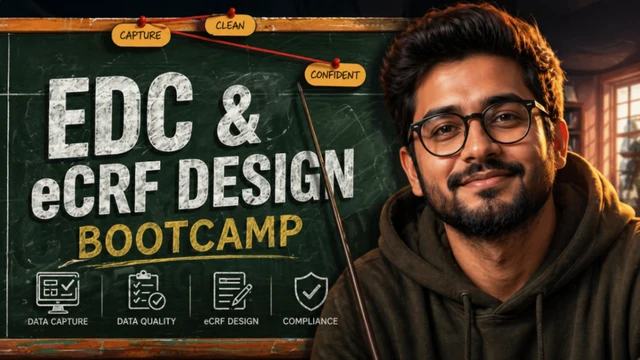
Our Clinical Data Management & EDC Certification program is an end-to-end pathway that covers everything from GCP to advanced EDC operations and CDISC standards. For those looking to specialize further, the EDC & eCRF Design Bootcamp provides deep, practical skills in designing the very forms used to collect clinical data.
This system is designed to turn your academic knowledge into a professional skill set that gets you hired.
Are Your Skills Ready for the Job Market?
Stop the cycle of applying and getting rejected. It's time to find out exactly where your skill gaps are and build a plan to fix them.
Take the first step towards a successful career in clinical data management. See how your skills compare to what top companies are demanding from freshers today.
Build These Skills Now
Programs from ZANE ProEd Academy that directly address the skill gaps discussed above.
Follow Zane ProEd on Google
Preferred SourceAdd our publication as a preferred source to get the latest clinical research guides, industry updates, and career intel directly in your Google Top Stories & AI Overviews.