How to Become a Clinical Research Associate in India: A Guide for Chemistry Graduates

To become a Clinical Research Associate (CRA) in India, a BSc/MSc Chemistry graduate needs to master Good Clinical Practice (GCP) guidelines, understand clinical trial processes, and gain practical skills in site monitoring and data verification. Focusing on job simulation training over simple certifications is key for freshers.
If you have a BSc or MSc in Chemistry and are wondering how to become a Clinical Research Associate in India, you need to stop one thing right now: stop collecting useless certificates. Many graduates think another PDF certificate is the answer, but they end up stuck in the same place.
The truth is, companies don't hire certificates. They hire people who can do the job from day one. This guide is your playbook to becoming a skilled, job-ready CRA, even without a medical background.
Build These Skills Now
Programs from ZANE ProEd Academy that directly address the skill gaps discussed above.
We will break down the exact steps to build practical skills that get you noticed in a very competitive Indian market. Let's get you ready for the real work.
What does a Clinical Research Associate do?
A Clinical Research Associate (CRA) is the main link between the sponsor of a clinical trial (like a pharma company) and the clinical trial site (the hospital or clinic). The core of the CRA job description is to ensure the trial is conducted safely, ethically, and according to the rules.
The official guidelines for this are called Good Clinical Practice (GCP), which you can learn more about from the source at the International Council for Harmonisation (ICH). A CRA's job is to make sure everyone follows these rules.
Here are the main clinical research associate roles and responsibilities:
- Site Monitoring: Traveling to hospitals and clinics to check on the progress of the clinical trial.
- Data Verification: Ensuring the data collected from patients is accurate and matches the source documents. This is called Source Data Verification (SDV).
- Protocol Compliance: Making sure the doctors and hospital staff are following the clinical trial protocol exactly as written.
- Regulatory Compliance: Checking that the site complies with all local and international regulations, like those from the CDSCO in India.
- Reporting: Writing detailed reports after each site visit to document findings, issues, and action items.
- Training Site Staff: Educating doctors, nurses, and coordinators on the trial protocol and procedures.
Essentially, you are the quality manager for the clinical trial at the ground level.
What is the salary of a CRA in India?
The CRA salary in India is very attractive, especially as you gain experience. The salary depends on the company (CRO or pharma company), location (major cities like Mumbai, Bangalore, Hyderabad pay more), and your experience level.
Here is a general breakdown:
- CRA I (Fresher / 0-2 years experience): The starting salary typically ranges from ₹4 Lakhs to ₹6.5 Lakhs per annum. Freshers often start as a Clinical Trial Assistant (CTA) or in-house CRA before moving to a field-based role.
- CRA II (2-5 years experience): With a few years of solid monitoring experience, your salary can increase significantly to ₹7 Lakhs to ₹12 Lakhs per annum.
- Senior CRA / Lead CRA (5+ years experience): Senior CRAs with extensive experience can earn ₹12 Lakhs to ₹20+ Lakhs per annum.
The job also includes a lot of travel, and allowances for travel and accommodation are usually provided on top of the base salary.
What qualifications do you need to become a CRA?
The basic clinical research associate qualification is a degree in life sciences, pharmacy, or a related scientific field. Your BSc or MSc in Chemistry absolutely qualifies you for this role.
However, your degree is just the entry ticket. To actually get hired, you need more:
- Education: A Bachelor's or Master's degree in Chemistry, Life Sciences, Biotechnology, Microbiology, or Pharmacy (BPharm/MPharm).
- GCP Knowledge: A deep and practical understanding of ICH-GCP guidelines is non-negotiable. You must know these rules inside and out.
- Regulatory Knowledge: Familiarity with Indian regulations (CDSCO) and international ones (like from the FDA) is a huge plus.
- Practical Training: This is the most important part. You need training on how to actually perform monitoring visits, write reports, and use industry software.
A simple certification that only covers theory is not enough. Employers want to see that you can apply your knowledge.
How to get a CRA job with no experience?
This is the biggest challenge for freshers. Most companies ask for 1-2 years of monitoring experience. So, how do you get experience if no one will hire you without it? This is where most people get stuck.
The common mistake is to just apply for CRA jobs directly. The better strategy is to build a CRA career path for freshers step-by-step.
- Don't just chase the CRA title: Look for related entry-level roles like Clinical Trial Coordinator (CTC), Clinical Trial Assistant (CTA), or in-house CRA. These roles give you exposure to trial documents and processes.
- Focus on skills, not just knowledge: Your resume should highlight practical skills. Instead of saying "I know GCP," say "Trained on performing Source Data Verification as per ICH-GCP E6(R2)."
- Get hands-on practice: This is where traditional courses fail. You need to practice on real-world case studies and simulations. You need to fill out monitoring reports, review informed consent forms, and use a mock CTMS (Clinical Trial Management System).
- Build a strong, skill-based CV: Your CV should scream 'job-ready'. List the tools you've trained on (e.g., Veeva, Oracle Clinical) and the tasks you've simulated (e.g., Site Initiation Visit, Interim Monitoring Visit).
For more ideas on how to start, you can explore the broader career paths in clinical operations to find your entry point.
What skills are required for a Clinical Research Associate?
A successful CRA has a mix of technical (hard) skills and professional (soft) skills. As a Chemistry graduate, you already have a strong analytical foundation. Now you need to build the clinical research-specific skills.
Hard Skills (Technical Skills)
- Expertise in ICH-GCP: Not just knowing the terms, but knowing how to apply them during a site visit.
- Clinical Trial Protocol Understanding: Ability to read, understand, and ensure adherence to a complex scientific document.
- Knowledge of Regulatory Affairs: Understanding the rules set by bodies like CDSCO and FDA.
- Proficiency with Industry Software: Experience with CTMS, eTMF (electronic Trial Master File), and EDC (Electronic Data Capture) systems is highly valued.
- Medical and Scientific Writing: Ability to write clear, concise, and accurate monitoring visit reports.
Soft Skills (Professional Skills)
- Attention to Detail: You cannot miss small errors in patient data or site documentation.
- Strong Communication: You need to communicate clearly with doctors, nurses, and project managers.
- Problem-Solving: Clinical trials never go perfectly. You must be able to identify issues and propose solutions.
- Time Management: Juggling multiple trial sites and travel schedules requires excellent organization.
- Integrity and Ethics: You are responsible for patient safety and data integrity, so ethics are paramount. Becoming a GCP Auditor later in your career relies heavily on this foundation.
The Skill Gap for Chemistry Graduates
Your Chemistry degree gave you a great scientific mindset. You understand molecules, reactions, and data analysis. But it didn't teach you the language of clinical trials.
What Your BSc/MSc Taught You:
- Strong understanding of chemical principles.
- Laboratory techniques and data recording.
- Analytical and critical thinking.
What Employers Expect from a CRA:
- Practical application of ICH-GCP guidelines.
- How to verify medical records against trial data (SDV).
- How to manage communication with a busy hospital team.
- How to use clinical trial software like CTMS and eTMF.
- How to write a professional Site Visit Report.
This gap is why so many graduates with certificates feel unprepared for interviews.
Your Step-by-Step Playbook to Become a CRA
Here is a structured pathway to bridge that gap and become job-ready.
- Build a Rock-Solid Foundation: Go beyond memorizing GCP. Understand the 'why' behind each rule. Focus on patient safety and data integrity.
- Learn the CRA's Toolkit: Get trained on the software used every day in the industry. Learn how an eTMF is structured and how a CTMS tracks trial progress.
- Practice Through Job Simulation: This is the game-changer. Work on realistic case studies where you act as a CRA. Review mock patient files, identify protocol deviations, and write a monitoring visit report. This is active learning, not passive listening.
- Create a Skill-First Resume: Rebuild your resume to showcase the practical tasks you can perform. Use keywords from job descriptions. Quantify your achievements from the simulations (e.g., "Reviewed 50+ mock patient records for data accuracy").
- Prepare for Competency-Based Interviews: Practice answering questions like, "Tell me about a time you found a discrepancy during monitoring." Your simulation experience will give you real stories to tell.
The Bridge from Theory to Performance
The biggest mistake is thinking that knowledge equals skill. Knowing the definition of a 'Serious Adverse Event' is different from knowing what to do when you find one at a site.
The only way to build real-world skills is by doing real-world work. Job simulation is the bridge. It allows you to practice the duties of a CRA in a controlled environment, so you can make mistakes, learn, and build confidence before your first day on the job.
This practical experience is what makes you stand out from hundreds of other applicants who just have a theoretical certificate.
Build These Skills Now
Programs from ZANE ProEd Academy that directly address the skill gaps discussed above.
Becoming Job-Ready with a System
At ZANE ProEd, we don't just sell courses. We provide a system designed to make you job-ready. Our training programs are built on the principle of job simulation.
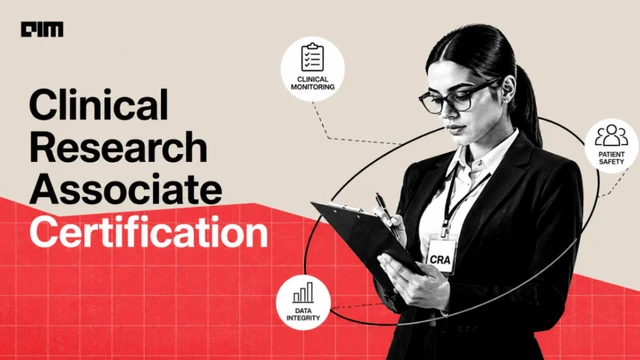
Our Clinical Research Associate Certification program isn't about watching videos. It's about performing the tasks of a CRA. You work on real-world projects, use industry tools, and get feedback from experts. The goal is to build a portfolio of work that proves your skills to employers.
For those looking for a comprehensive understanding of the entire drug development lifecycle, the End-to-End Clinical Research Certification provides a broader perspective, ensuring you know how your role as a CRA fits into the bigger picture.
This system turns you from a chemistry graduate with a certificate into a confident professional ready to manage a clinical trial site.
Check Your Readiness
Are you ready to stop collecting certificates and start building real skills? The industry needs CRAs who can solve problems and ensure quality from day one.
See how your current skills compare to what top CROs and pharma companies are looking for. Take the first step towards a successful career as a Clinical Research Associate.
Build These Skills Now
Programs from ZANE ProEd Academy that directly address the skill gaps discussed above.
Follow Zane ProEd on Google
Preferred SourceAdd our publication as a preferred source to get the latest clinical research guides, industry updates, and career intel directly in your Google Top Stories & AI Overviews.