Clinical Trial Coordinator Jobs in India for Freshers: A Step-by-Step Guide

Clinical Trial Coordinator (CTC) jobs in India for freshers are an excellent entry point into clinical research for BPharm or BSc graduates. A CTC supports the Principal Investigator at the research site, managing daily trial activities, patient data, and ensuring compliance with protocols and regulations.
If you're a BSc or MSc Chemistry graduate, you might feel like your only options are in labs or manufacturing. But there's a huge, growing field where your scientific knowledge is in high demand. We're talking about clinical research, and one of the best starting points is looking for clinical trial coordinator jobs India freshers can apply for.
This isn't just another job; it's a career path that puts you at the heart of medical innovation. You're not just mixing chemicals; you're helping bring new, life-saving drugs to people who need them. It's a role that combines your scientific background with management and communication skills.
Build These Skills Now
Programs from ZANE ProEd Academy that directly address the skill gaps discussed above.
Many graduates don't even know this role exists. They assume you need years of experience to enter clinical research. This guide will show you the step-by-step roadmap to land a job as a Clinical Trial Coordinator (CTC), even with no prior industry experience.
What does a Clinical Trial Coordinator do?
A Clinical Trial Coordinator (CTC), often called a Site Coordinator or Clinical Research Coordinator, is the backbone of a clinical trial at the hospital or research site. They work directly under the Principal Investigator (the main doctor running the trial) and handle the day-to-day operations.
Think of them as the project manager of the trial at a specific location. The clinical trial coordinator job description includes a mix of administrative, clinical, and ethical tasks. They are the primary point of contact for patients, doctors, and the Clinical Research Associate (CRA) from the sponsoring company.
Key responsibilities include:
- Patient Management: Screening and recruiting eligible patients for the trial, explaining the process, and scheduling their visits.
- Data Collection: Accurately collecting and entering patient data into Case Report Forms (CRFs), both paper and electronic (eCRF).
- Regulatory Compliance: Maintaining all trial-related documents in the Investigator Site File (ISF) and ensuring the trial follows Good Clinical Practice (ICH-GCP) guidelines and local rules from bodies like CDSCO.
- Coordination: Liaising with the ethics committee, laboratory staff, and the CRA to ensure smooth trial conduct.
- Drug & Supplies Management: Managing the inventory of the investigational product (the new drug) and other trial supplies at the site.
Essentially, a CTC ensures the trial is conducted safely, ethically, and produces high-quality data. It's a hands-on role perfect for freshers who want to learn the fundamentals of clinical research from the ground up.
What is the salary of a Clinical Trial Coordinator in India?
The clinical trial coordinator salary for a fresher in India is a common question. As an entry-level position, the salary is competitive and provides a strong foundation for future growth in the clinical research industry.
For a fresher with a BSc, BPharm, or other life sciences degree, the starting salary typically ranges from ₹2.5 Lakhs to ₹4.5 Lakhs per annum. This can vary based on the city (metro cities like Mumbai, Bangalore, and Hyderabad often pay more), the size of the hospital or research site, and the scale of the clinical trial.
With 2-4 years of experience, a CTC can expect their salary to increase to ₹5 Lakhs to ₹7 Lakhs per annum. This experience makes you highly valuable and opens doors to more senior roles, such as a Clinical Research Associate (CRA), which comes with a significant pay jump.
How to become a Clinical Trial Coordinator?
Becoming a CTC is a straightforward process if you follow the right steps. Your degree is the first requirement, but practical knowledge is what gets you hired in this competitive market.
The minimum clinical trial coordinator qualification is a bachelor's degree in a relevant field. This includes:
- Bachelor of Pharmacy (B.Pharm)
- Master of Pharmacy (M.Pharm)
- Bachelor of Science (BSc) in Chemistry, Life Sciences, Biology, Biotechnology, or a related field
- Master of Science (MSc) in the fields mentioned above
- Bachelor of Dental Surgery (BDS) or other medical degrees
Simply having the degree is not enough. Employers look for candidates who understand the practical aspects of clinical trials. You need to know about regulations like ICH-GCP, trial documentation, and the roles of different stakeholders. A certification focused on clinical research operations can bridge this gap and make your resume stand out.
What is the difference between CTC and CRA?
This is a crucial question for anyone planning a career in clinical operations. The CTC vs CRA career paths are related but distinct, especially in their roles and responsibilities.
The key difference is where they work and who they work for.
- Clinical Trial Coordinator (CTC): A CTC is based at the 'site' – the hospital or clinic where the trial happens. They are typically employed by the hospital or the Principal Investigator. Their main job is to run the trial on a daily basis at that one location. This is why they are also called a site coordinator clinical research professional.
- Clinical Research Associate (CRA): A CRA works for the sponsor (the pharmaceutical company) or a Contract Research Organization (CRO). Their job is to 'monitor' multiple trial sites. They travel to different hospitals to check on the CTC's work, verify data, and ensure the trial is being conducted according to the protocol and regulations.
Think of it this way: the CTC is the person 'doing' the work on the ground, and the CRA is the person 'checking' the work from the sponsor's side. Many people start as a CTC to gain essential site-level experience before moving into a higher-paying, travel-intensive CRA role. We have a detailed guide on how to become a Clinical Research Associate that explores this path further.
What skills are needed for a clinical trial coordinator role?
To succeed as a CTC, you need a mix of scientific knowledge, organizational skills, and soft skills. Your BSc or MSc in Chemistry gives you a great foundation, but employers look for more.
Here are the essential skills you must develop:
- Attention to Detail: Clinical trials are built on accurate data. A small mistake in data entry or documentation can have serious consequences. You must be meticulous in your work.
- Organizational Skills: You will be juggling multiple tasks at once – patient appointments, paperwork, ethics committee submissions, and communication with the CRA. Strong time management is non-negotiable.
- Knowledge of GCP and Regulations: You must have a solid understanding of Good Clinical Practice (GCP). This is the international standard for conducting clinical trials. Familiarity with Indian regulations from CDSCO is also vital.
- Communication Skills: You will be talking to patients, doctors, nurses, and CRAs. You need to be able to explain complex information clearly and build good relationships.
- Problem-Solving Ability: Things don't always go as planned in a clinical trial. You need to be able to think on your feet and find solutions to unexpected issues.
The Gap: Your Chemistry Degree vs. The Job Requirement
Your BSc or MSc in Chemistry taught you about molecules, reactions, and analytical techniques. But it probably didn't teach you about informed consent forms, source data verification, or Investigator Site Files. This is the gap that freshers face. Employers need you to understand the 'process' of clinical research, not just the science behind the drug.
A Step-by-Step Roadmap for Freshers
Feeling overwhelmed? Don't be. Here is a clear, actionable plan to land a CTC job:
- Master the Fundamentals: Go beyond your college syllabus. Learn the entire clinical trial process from Phase I to Phase IV. Understand the roles of the sponsor, investigator, ethics committee, and regulatory bodies like the FDA and EMA.
- Get Certified in GCP: Good Clinical Practice (GCP) is the language of clinical research. A certification in GCP is often a minimum requirement listed in job descriptions. It proves you understand the ethical and scientific quality standards.
- Build a Job-Ready Skillset: Focus on the practical skills employers want. Learn how to manage trial documentation, understand a clinical trial protocol, and how data flows from the patient to the final report. This is where you can also learn about related fields like Clinical Data Management to broaden your understanding.
- Optimize Your Resume: Tailor your CV for CTC roles. Instead of just listing your degree, highlight keywords like 'ICH-GCP', 'Clinical Trial Documentation', 'Patient Recruitment', and 'Regulatory Compliance'. Mention any projects or training that demonstrate these skills.
- Prepare for the Interview: Be ready to answer questions about the CTC's role, ethical challenges in clinical trials, and how you would handle specific situations, like a patient reporting an adverse event.
How Simulation Training Bridges the Gap
Reading about clinical trials is one thing. Doing it is another. The biggest challenge for freshers is the lack of hands-on experience. How can you manage an Investigator Site File if you've never even seen one? This is where simulation-based training changes everything.
Instead of just memorizing theory, you work on real-world case studies and projects. You learn by performing the exact tasks you will do on the job, like reviewing a protocol or filling out a Case Report Form. This practical experience is what makes you confident during interviews and competent from day one on the job.
Build These Skills Now
Programs from ZANE ProEd Academy that directly address the skill gaps discussed above.
ZANE ProEd: Your System for a Successful Career
At ZANE ProEd, we don't just offer courses; we provide a system designed to get you hired. Our programs are built to give you the practical, job-ready skills that companies are desperately looking for.
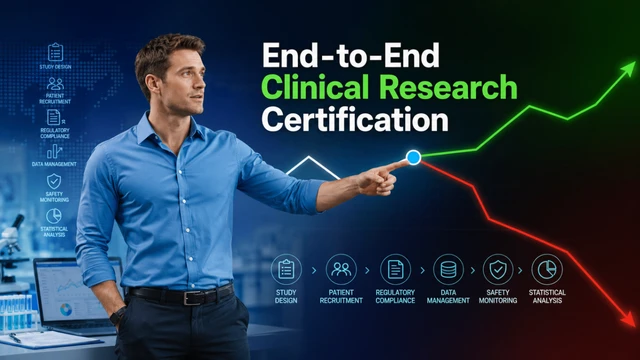
Our End-to-End Clinical Research Certification is perfect for freshers who want a comprehensive understanding of the entire industry. For those who know they want to start at the site level, the Clinical Operations Certification provides a deep dive into the specific skills needed for CTC and CRA roles.
We focus on a simulation-based learning model. This means you won't just listen to lectures; you'll actively work on projects that mimic the real work of a Clinical Trial Coordinator. This approach builds the practical experience you need to stand out in the competitive Indian job market.
Are You Ready for a Career in Clinical Research?
A degree in Chemistry or Life Sciences is a great start, but it's not the finish line. The next step is to build the specific skills that the clinical research industry demands. A career as a Clinical Trial Coordinator is an achievable goal for a fresher if you follow a structured path.
See how your current skills compare to what top pharmaceutical companies are looking for. Understanding your gaps is the first step toward building a successful and rewarding career that goes beyond the lab.
Build These Skills Now
Programs from ZANE ProEd Academy that directly address the skill gaps discussed above.
Follow Zane ProEd on Google
Preferred SourceAdd our publication as a preferred source to get the latest clinical research guides, industry updates, and career intel directly in your Google Top Stories & AI Overviews.