Clinical Trial Coordinator Jobs for Freshers in India: Step-by-Step Guide

Clinical Trial Coordinator: Freshers with BDS, BHMS, BAMS, or Nursing degrees can land clinical trial coordinator jobs in India within 3-6 months by building practical skills in site coordination, regulatory compliance, and patient data management. Entry-level roles are available at CROs, hospitals, and pharmaceutical companies across major cities.
If you’ve tried multiple courses but still feel stuck, you’re not alone. Many BDS, BHMS, BAMS, and Nursing graduates face the same challenge. Your degree proves you understand the human body, but employers want hands-on skills that most colleges never taught you. The good news? Clinical trial coordinator jobs for freshers in India are growing fast, and the gap between where you are and your first job is smaller than you think.
In the next 5 minutes, you’ll see a step-by-step roadmap to land a Clinical Trial Coordinator role—even if your previous attempts failed. No fluff, just the real demands of the industry and how to meet them.
Build These Skills Now
Programs from ZANE ProEd Academy that directly address the skill gaps discussed above.
What does a Clinical Trial Coordinator do?
A Clinical Trial Coordinator (CTC) is the backbone of any research site. They ensure clinical trials run smoothly, ethically, and according to strict protocols. Every day, a CTC manages patient recruitment, schedules visits, collects data, maintains regulatory documents, and communicates with investigators and sponsors. They are also called site coordinators because they work at hospitals or clinics where the trial is conducted. The job is detail-oriented and patient-facing. If you enjoy organization and healthcare, this role fits you perfectly.
What is the salary of a Clinical Trial Coordinator in India?
Entry-level clinical trial coordinator salary in India ranges from ₹2.5 Lakhs to ₹4.5 Lakhs per year. With 2-3 years of experience, salaries rise to ₹5-8 Lakhs. Senior coordinators or those in metro cities like Mumbai, Bangalore, and Delhi can earn up to ₹10 Lakhs. Compared to clinical research associates (CRAs), CTCs start lower but have stable hours and less travel. For freshers, the focus should be on gaining experience, not just the starting pay.
How to become a Clinical Trial Coordinator?
The traditional path—a degree plus a generic certificate—often fails. Here’s what actually works:
- Understand the role: Study the clinical trial coordinator job description on job portals like Naukri and LinkedIn. Note common requirements: ICH-GCP knowledge, regulatory binder management, electronic data capture (EDC) systems.
- Get hands-on practice: Employers test your ability to handle source documents, informed consent forms, and safety reporting. Simulation-based training fills this gap.
- Earn a recognized certification: Look for programs that teach site activation, feasibility, and close-out procedures. Avoid theory-only courses.
- Apply smartly: Target contract research organizations (CROs) like IQVIA, Parexel, Syneos Health, and hospital-based research departments. Highlight practical skills on your resume.
What is the difference between CTC and CRA?
CTC (site coordinator) works at the trial site—hospitals, clinics—interacting with patients and investigators. CRA (Clinical Research Associate) works for the sponsor or CRO, monitoring sites for compliance. The CTC vs CRA career choice depends on your preference: CTC offers stability, less travel, direct patient contact. CRA involves frequent travel, higher starting salaries (₹4-7 Lakhs), but more pressure. Many start as CTCs and later move to CRA roles after gaining experience. For BDS/BHMS/BAMS/Nursing graduates, the CTC path is often the easiest entry point.
What skills are needed for a clinical trial coordinator role?
Beyond your medical degree, employers look for:
- ICH-GCP guidelines: The global standard for clinical trials. (Learn from ICH)
- Regulatory documentation: Knowing essential documents, how to maintain a trial master file.
- Patient recruitment and retention: Soft skills to build trust and keep patients in the study.
- Data management tools: Familiarity with EDC systems like Medidata Rave, Oracle Clinical.
- Good documentation practices: ALCOA principles (Attributable, Legible, Contemporaneous, Original, Accurate). (See FDA guidelines.)
- Communication: With investigators, ethics committees, and sponsors.
Colleges rarely cover these practically. That’s why many graduates feel stuck.
Why your degree alone isn’t enough
Your BDS/BHMS/BAMS/Nursing degree gave you foundational knowledge—anatomy, pharmacology, patient care. But clinical research employers don’t expect you to treat patients; they expect you to manage clinical trial operations. The gap is huge: colleges teach theory of GCP, but not how to actually prepare a site for an audit or handle a trial protocol deviation. They don’t let you practice with real-world documents like 1572 forms, financial disclosure forms, or adverse event logs. This gap is why multiple courses didn’t lead to a job—they were just theory.
Your 5-step roadmap to a Clinical Trial Coordinator job
Here is a practical plan to land a site coordinator clinical research role in India as a fresher:
- Build certification with hands-on simulation. Choose a program that mimics real trial scenarios—site initiation, patient enrollment, safety reporting.
- Master the essential tools. Learn EDC, CTMS, and document management through practice.
- Create a skill-based resume. Instead of just listing degrees, highlight specific tasks: “Performed feasibility analysis for a mock phase III trial,” “Managed informed consent process for 20 virtual patients.”
- Network with industry professionals. Join LinkedIn groups, attend webinars by WHO or CDSCO, connect with CRAs and CTCs.
- Apply to entry-level roles. Search for “clinical trial coordinator”, “site coordinator clinical research”, or “clinical operations associate” on job sites. Be prepared for interviews that test your practical knowledge.
The missing link: simulation-based learning
Traditional courses give you information. But a job interview demands proof of skill. You need to show you’ve already done the work. That’s where simulation-based systems come in. Instead of memorizing definitions, you practice real tasks: reviewing a trial file, entering data in an EDC mock, handling a protocol deviation. This approach builds true confidence and a strong resume. At ZANE ProEd, we see this shift as moving from 'knowing' to 'doing'. Our system is built on that principle.
Build These Skills Now
Programs from ZANE ProEd Academy that directly address the skill gaps discussed above.
Programs designed to close the skill gap
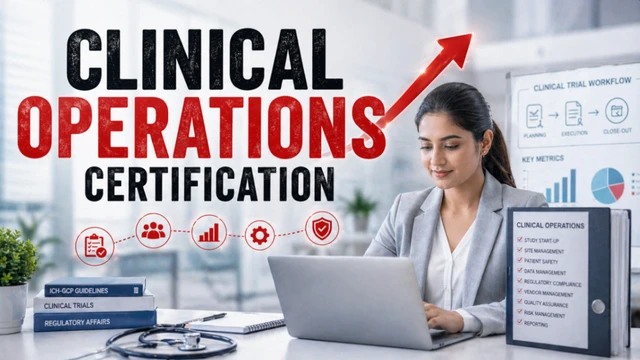
The programs at ZANE ProEd, like the Clinical Operations Certification and the Clinical Trial Site Activation Fast-Track, are designed to close the practice gap. They use immersive simulations that replicate India-specific trial scenarios. You’ll work on site feasibility assessments, regulatory binder setup, and patient recruitment strategies. This isn’t about buying a course; it’s about equipping yourself with a system that employers recognize. Graduates of these programs have successfully entered roles at CROs and hospitals because they walked into interviews with a portfolio of completed tasks, not just a certificate.
Are you ready for the next hiring cycle?
Employers are hiring right now across India. The demand for skilled CTCs is rising, but they want candidates who can contribute from day one. You’ve already invested in your degree. Now it’s time to bridge the gap with practical, simulation-based training. Check your job readiness—compare your current skills against industry expectations. Or, dive deeper into the clinical operations career path in India for a full picture. Your first job is within reach.
Explore more: Clinical Operations Career Path India: Step by Step
Build These Skills Now
Programs from ZANE ProEd Academy that directly address the skill gaps discussed above.
Follow Zane ProEd on Google
Preferred SourceAdd our publication as a preferred source to get the latest clinical research guides, industry updates, and career intel directly in your Google Top Stories & AI Overviews.