The Drug Regulatory Strategist Roadmap Your University Forgot

Stop Collecting Certificates. Start Building Strategy.
Let's be blunt. If your plan to become a Drug Regulatory Strategist involves collecting another degree or a dozen generic online certificates, you’re on the wrong path. The market is saturated with candidates who are academically “overqualified” but practically useless. They can recite drug laws from memory but can't formulate a single coherent argument for a pre-submission meeting with the FDA.
This isn't an attack; it's a diagnosis. You feel the gap every time you read a job description that demands “5+ years of strategic submission experience” for an entry-level role. Your qualifications list is long, but your skill set feels thin. This friction is the single biggest barrier between your current reality and a high-impact career in global regulatory affairs, a field where strategic thinking, not just procedural knowledge, dictates success.
The urgency is escalating. As regulatory bodies like the European Medicines Agency (EMA) and India's CDSCO adapt to new drug modalities like cell and gene therapies, the definition of a qualified strategist is being rewritten in real-time. Your academic knowledge from three years ago is already becoming obsolete.
Build These Skills Now
Programs from ZANE ProEd Academy that directly address the skill gaps discussed above.
The Great Disconnect: Why Your Degree is Just the Entry Fee
The transition from university to a high-stakes regulatory career is not a gap; it's a chasm. Your pharmacology degree taught you what a drug does. Your M.Pharm might have taught you the basic structure of a dossier. But neither taught you how to think like a strategist. They gave you a library of facts, not a framework for decision-making under pressure.
Hiring managers at top pharmaceutical companies aren't looking for walking encyclopedias. They are looking for strategic operators who can navigate the complex, unwritten rules of the industry. They need professionals who can do more than just fill out a form; they need people who can anticipate a regulator's questions, mitigate submission risks before they arise, and build a global registration strategy that saves the company millions of dollars and years of time.
Inside the Hiring Room: What VPs of Regulatory Actually Want
From the other side of the hiring desk, the pattern is painfully clear. We see hundreds of resumes from bright graduates who list “Knowledge of ICH Guidelines” as a skill. But when asked a simple situational question—like how to manage a major quality-related variation for a product marketed in the US, EU, and Japan—they freeze.
Why? Because university teaches you the 'what' (the existence of ICH Q10 for Pharmaceutical Quality Systems), but the job demands the 'how' and 'why' (how to strategically implement a CAPA to satisfy multiple health authorities simultaneously without disrupting the supply chain). This is the level of operational thinking expected on Day 1. As we've detailed before, the unwritten rules of regulatory affairs are what truly determine interview success.
The Skill Gap Exposed: Academia vs. Industry Reality
- Academia Teaches: The names and numbers of different regulatory forms.
- Industry Expects: The ability to author Module 3 (Quality) of a Common Technical Document (CTD), ensuring the narrative aligns with data from disparate manufacturing and QC teams.
- Academia Teaches: The definition of a New Drug Application (NDA).
- Industry Expects: The ability to analyze an FDA deficiency letter, coordinate a cross-functional response team, and draft a compelling response that avoids a Complete Response Letter (CRL).
- Academia Teaches: The different phases of clinical trials.
- Industry Expects: The ability to contribute to an Investigational New Drug (IND) application by integrating nonclinical and clinical data into a cohesive safety argument.
The Regulatory Strategy Stack™: A Framework for Real-World Competence
To bridge this chasm, you need a new model. At ZANE ProEd, we call it the Regulatory Strategy Stack™. It visualizes the three layers of competence required to become an effective Drug Regulatory Strategist:
- Layer 1: Foundational Knowledge (The Base): This is your degree (B.Pharm, M.Pharm, PhD). It's the non-negotiable entry ticket. It proves you understand the core science, but it’s just the foundation.
- Layer 2: Procedural Fluency (The Framework): This is the ability to execute core regulatory operations. It's not just knowing about an IND or an MAA; it's the muscle memory of how to compile one, manage its lifecycle, and communicate with health authorities. This is where most graduates are weakest.
- Layer 3: Strategic Synthesis (The Apex): This is the highest level, where you combine foundational knowledge and procedural fluency to make high-value business and regulatory decisions. It’s about seeing the entire global chessboard—understanding how a decision in one market impacts another, advising on clinical trial design to meet multiple regulatory endpoints, and creating a submission strategy that maximizes the probability of first-cycle approval.
Your degree only builds Layer 1. The entire industry operates at Layers 2 and 3.
Your Roadmap from Academic to Strategist
Here is a structured pathway to deliberately build your stack, moving from theory to strategic application.
Phase 1: Master the Core Deliverable (Build Layer 2)
Forget trying to learn everything. Focus on the single most important unit of work in regulatory affairs: the submission. Deconstruct the CTD. Understand not just the sections, but the narrative flow. Learn how the story of a drug is told through data, from nonclinical studies in Module 4 to the Clinical Overview in Module 2. This is the playbook that even experienced medical writers must master to transition into regulatory roles.
Phase 2: Develop Global Procedural Fluency (Expand Layer 2)
A drug is rarely approved in just one country. You must understand the procedural nuances between major markets. How does an IND in the US differ from a Clinical Trial Application (CTA) in the EU? What are the specific data requirements for Japan's PMDA versus Health Canada? This isn't about memorization; it's about building mental models for navigating global systems in parallel.
Phase 3: Cultivate Strategic Foresight (Activate Layer 3)
This is where you become a strategist. Start analyzing real-world regulatory decisions. Read public assessment reports from the EMA and FDA summary review documents. Ask critical questions: Why was this drug given accelerated approval? What were the key deficiencies cited in this company's CRL? What precedents do these decisions set for future submissions? You begin to anticipate agency thinking, which is the core of strategic value.
Micro-Scenario: The Cross-Regional Strategy Test
Imagine your company has a novel biologic that just received positive Phase II data. The CEO wants to know the fastest path to global market. The US team is pushing for a Breakthrough Therapy Designation. The EU team is arguing for a PRIME scheme application. Your job as the emerging strategist is to provide a recommendation.
A textbook-trained person would just list the definitions of both programs. A true strategist would analyze the data against the specific criteria for each, weigh the resource implications, consider the long-term benefits of enhanced agency interaction offered by each program, and deliver a data-backed recommendation that aligns with the company's global commercial goals. This is the job. It’s a simulation of high-stakes problem-solving, not a test of memory.
Bridging the Gap with High-Fidelity Simulation
How do you get this experience without having the job first? Reading textbooks and watching video lectures won't work. You can't learn to swim by reading a book about water. You need a system that simulates the pressures, decisions, and documentation of a real regulatory environment. You need to work on projects that mirror the complexity of a global submission, forcing you to make strategic choices and defend them. This is the only way to build the procedural muscle memory and strategic judgment the industry demands.
Build These Skills Now
Programs from ZANE ProEd Academy that directly address the skill gaps discussed above.
The ZANE ProEd System: Integrating Strategy into Your Skillset
This is precisely why we built our programs as a complete system, not just a collection of courses. Our training is architected around the Regulatory Strategy Stack™ to move you from foundational knowledge to strategic application.
Our Regulatory Affairs Strategy Certification is designed to build the critical Layer 2—Procedural Fluency. Through high-fidelity simulations, you don't just learn about the CTD; you build one. You author key sections, manage submission timelines, and handle simulated agency queries, developing the hands-on skills for your first role.
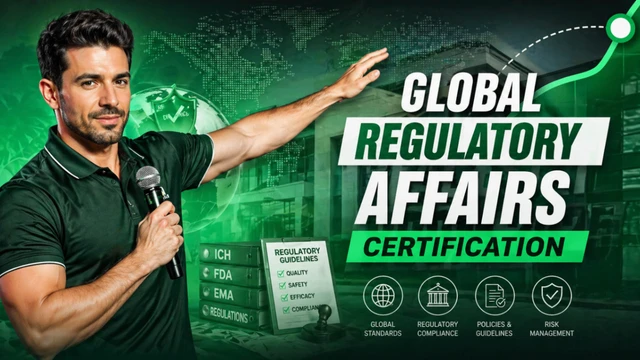
For those ready to operate on a global stage, the Global Regulatory Affairs Certification develops Layers 2 and 3 in parallel. You'll navigate complex multi-regional submission scenarios, compare strategies for the US, EU, and emerging markets, and learn to make the high-level strategic decisions that define a leader in the field. This is where you transform from a regulatory operator into a true Drug Regulatory Strategist.
Your Next Move Defines Your Trajectory
The path to becoming a top-tier regulatory strategist is not about accumulating more passive knowledge. It’s about actively building a new set of skills. It requires a deliberate, structured approach to bridge the gap your formal education left behind.
Start by honestly assessing your own position in the Regulatory Strategy Stack™. Where are your biggest gaps? Don't just look for another certificate. Look for a system that will build your competence. Your career trajectory depends on it.
Build These Skills Now
Programs from ZANE ProEd Academy that directly address the skill gaps discussed above.
Follow Zane ProEd on Google
Preferred SourceAdd our publication as a preferred source to get the latest clinical research guides, industry updates, and career intel directly in your Google Top Stories & AI Overviews.