Drug Regulatory Strategy Career India: Salary, Skills & Step-by-Step Roadmap

Drug Regulatory Strategist A drug regulatory strategy career in India means planning CDSCO, FDA and EMA approval pathways for pharmaceutical products. Life science graduates enter through regulatory affairs roles at ₹3.5–6 LPA, build dossier and eCTD skills, and move into strategist roles paying ₹12–25 LPA within 6–9 years.
Why does a drug regulatory strategy career in India feel out of reach right now?
If you are a BSc or MSc Biotechnology, Microbiology or Biochemistry graduate sitting on a pile of rejection emails, hear this clearly: nothing is wrong with your degree. Something is missing in your drug regulatory strategy career India preparation — and it is fixable.
Recruiters are not rejecting your intelligence. They are rejecting your resume because it shows subjects, not skills. They see 'Molecular Biology' and 'Biostatistics' — not eCTD Module 3, CDSCO Form CT-04 or ICH CTD structure.
Build These Skills Now
Programs from ZANE ProEd Academy that directly address the skill gaps discussed above.
Regulatory strategy is one of the few life-science careers where a focused 9–12 month skill build can genuinely change how often you get shortlisted. Here is the structured way out.
What does a Drug Regulatory Strategist do?
A Regulatory Strategist decides how and where a drug will be approved — the country sequence, the pathway, the timeline and the risk plan. The regulatory strategy job description is strategic, not clerical.
- Market entry sequencing: Choosing whether to file first with CDSCO, US FDA or EMA based on commercial priorities.
- Pathway selection: Deciding between a full NDA, 505(b)(2), ANDA, or an abridged route in each market.
- Gap analysis: Reviewing module drafts against ICH guidelines before submission.
- Health authority interaction: Preparing briefing packages, pre-submission meetings and deficiency responses.
- Lifecycle strategy: Planning variations, renewals, post-approval changes and patent-linked timelines.
- Cross-functional leadership: Advising R&D, clinical, CMC and commercial teams on what regulators will accept.
In short: Regulatory Affairs submits the dossier. Regulatory Strategy decides what goes into it and why.
What is the salary of a Regulatory Strategist in India?
The regulatory strategist salary in India climbs fast once you have dossier exposure. Freshers with only a degree start low; freshers with a verifiable skill portfolio start noticeably higher.
- Entry level (0–2 years): ₹3.5 LPA – ₹6.5 LPA — Regulatory Affairs Associate, Dossier Trainee.
- Mid level (3–5 years): ₹7 LPA – ₹12 LPA — Regulatory Affairs Executive, Publishing Specialist.
- Senior (6–9 years): ₹12 LPA – ₹20 LPA — Regulatory Strategist, Global Submission Lead.
- Leadership (10+ years): ₹22 LPA – ₹35 LPA+ — Head of Regulatory, RA Director.
Location matters. Hyderabad, Bangalore, Pune and Mumbai pay the strongest packages because global capability centres and CROs sit there. A CMC-heavy skillset in Hyderabad can add 20–30% over a generic profile.
How to build a career in regulatory strategy?
There are three realistic entry gates for life science graduates, and all of them are skill-gated, not degree-gated.
- Regulatory Affairs Associate → dossier compilation → strategist track. Most common route.
- Medical Writing / Publishing → eCTD and Veeva Vault exposure → submission strategy.
- Quality Assurance / CMC → module authoring → regulatory strategy for manufacturing changes.
What gets you hired is proof you can read a guideline and produce a submission-ready document. That means knowing CTD modules, eCTD publishing, 21 CFR Part 11 and Veeva Vault — not just theory.
For a deeper walkthrough of role options, read the drug regulatory strategy career roadmap on our blog.
What is the drug registration process in India (CDSCO)?
The drug registration process India follows the Central Drugs Standard Control Organisation framework, aligned broadly with CDSCO and WHO expectations.
- Classification check: Confirm whether the product is a new drug, generic, biologic or medical device.
- Form CT-04 / CT-21 filing: Submit application with chemical, manufacturing and clinical data via the SUGAM portal.
- CTD dossier assembly: Build Modules 1–5 in the Common Technical Document format.
- Technical review: CDSCO and the subject expert committee review data; queries may follow.
- Plant inspection: GMP verification of manufacturing sites.
- Approval and import licence: Form 45/46 or manufacturing licence granted, with conditions.
- Post-approval lifecycle: Variations, renewals and pharmacovigilance obligations.
Because a global strategist compares the CDSCO, FDA and EMA regulatory pathway side by side, you must understand all three — not just the Indian one.
What is the difference between regulatory affairs and regulatory strategy?
Regulatory strategy vs regulatory affairs is the single most misunderstood distinction for freshers.
- Regulatory Affairs: Execution. Compiling dossiers, publishing submissions, tracking timelines, responding to queries. Process-driven.
- Regulatory Strategy: Direction. Deciding which markets, which pathways, which data packages, and in what sequence. Decision-driven.
- Career implication: Affairs gets you in the door. Strategy is where the ₹15 LPA+ roles live.
You cannot skip straight into strategy without affairs fundamentals — but you can signal strategic thinking from day one through portfolio work.
What skills do employers expect that your degree does not teach?
This is where most life science graduates lose the shortlisting battle. Your university syllabus and the hiring bar are two different documents.
- Your degree teaches: Pharmacology, microbiology, biochemistry, genetics, biostatistics, lab techniques.
- Employers ask for: eCTD publishing, CTD Module 2–3 authoring, 21 CFR Part 11 compliance, Veeva Vault RIM, ICH Q guideline interpretation, deficiency response writing.
- Your degree teaches: Report writing and journal formatting.
- Employers ask for: Regulatory intelligence summaries, gap assessment reports, HA briefing documents.
- Your degree teaches: Group projects and vivas.
- Employers ask for: Audit-ready documentation discipline and traceability.
That gap is exactly why recruiters screen you out in 30 seconds. They are not looking for more marks — they are looking for evidence you can be productive in week one.
What is the step-by-step roadmap to build a drug regulatory strategy career in India?
Follow this sequence. Do not skip steps.
- Master the regulatory vocabulary (Month 1): Learn ICH M4 CTD structure, Module 1–5, and the difference between NDA, ANDA and 505(b)(2).
- Pick your first market triad (Month 2): Build working knowledge of CDSCO, FDA and EMA filing basics, forms and timelines.
- Build tool fluency (Month 3–4): Get hands-on with eCTD publishing workflows, Veeva Vault eTMF and Argus Safety ICSR case processing.
- Create a mock submission portfolio (Month 5–6): Author a Module 3 CMC section, a deficiency response letter and a regulatory gap assessment for a sample product.
- Learn to defend your work (Month 7–8): Practise explaining your strategy choices in mock interviews. See our regulatory affairs interview guide for the exact questions asked.
- Apply with proof, not promises (Month 9+): Lead your resume with the portfolio, not the degree. Target Associate and Executive roles in Hyderabad, Bangalore, Pune and Mumbai.
How does simulation-based training close the shortlisting gap?
Reading guidelines creates knowledge. Simulated submissions create evidence. Recruiters can verify evidence; they cannot verify knowledge.
Simulation-based learning means you process real-format records inside industry-grade toolkits — Argus Safety ICSR case processing, Medidata Rave EDC, Veeva Vault eTMF and FDA 21 CFR submissions. You produce outputs that look exactly like what a pharma company produces internally.
That is the difference between saying 'I know regulatory affairs' and showing a completed dossier, a tracked case and a published submission sequence. The second one survives screening.
Build These Skills Now
Programs from ZANE ProEd Academy that directly address the skill gaps discussed above.
Which ZANE ProEd programs build audit-ready regulatory portfolios?
ZANE ProEd Academy is a professional career-certification platform built for life science graduates moving into regulated industries. Two flagship pathways map directly to this career.
- Regulatory Affairs Strategy Certification — CTD authoring, submission strategy, global pathway planning and deficiency management, studied through simulation toolkits.
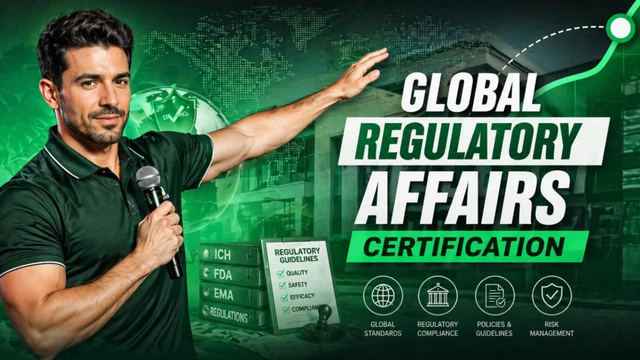
- Global Regulatory Affairs Certification — multi-market depth across CDSCO, FDA and EMA, with lifecycle and regulatory intelligence modules.
The return on a professional certification is not the certificate itself. It is the qualification gap closed, the audit-ready portfolio built, and the interview confidence earned. These programs are structured professional preparation for high-paying industry roles — learn more about ZANE ProEd.
What should you do before the next hiring cycle?
Rejections are not a verdict on your potential. They are a signal that your proof of skill is missing. The next hiring cycle rewards the candidate who prepared deliberately.
- Audit your industry readiness — list every tool and regulation you can actually demonstrate.
- Review the simulation curriculum — check which toolkits map to the roles you are targeting.
- Explore Professional Certification Blueprints — plan your 9–12 month skill build before applications open.
Start with structure, not more applications. Structure is what gets you shortlisted.
Build These Skills Now
Programs from ZANE ProEd Academy that directly address the skill gaps discussed above.
Follow Zane ProEd on Google
Preferred SourceAdd our publication as a preferred source to get the latest clinical research guides, industry updates, and career intel directly in your Google Top Stories & AI Overviews.